
Workplace success is built through small actions employees repeat every day, like helping teammates, solving problems, supporting customers, and sharing ideas. The problem is that many of these efforts go unnoticed, especially in busy, remote, or fast-moving teams. When people feel unseen, motivation can fade. It gives managers and teams a simple way to celebrate good work as it happens.
Used well, it can improve engagement, support retention, strengthen culture, and help employees feel more connected to the work they do.
Key Takeaways
- Employee recognition software helps companies make appreciation consistent, visible, and easier to measure.
- Strong recognition connects daily work to business impact, which can improve engagement and belonging.
- The best recognition programs are timely, specific, inclusive, and tied to company values.
- Recognition software supports retention by helping employees feel valued before they disengage.
- A successful rollout depends on manager training, clear recognition examples, and regular participation reviews.
Why Employee Recognition Software Matters for Workplace Success
Employee recognition often starts with good intentions, but without a system, it becomes inconsistent. Some managers recognize employees often. Others forget. Some teams celebrate wins publicly. Others move straight to the next deadline.
That inconsistency can quietly affect morale, performance, and trust.
For consistent recognition, make use of Kudoboard employee recognition software, which gives organizations a central place to make appreciation easier, more visible, and more consistent across departments, locations, and work styles.
It Turns Recognition Into a Repeatable Habit
Informal praise is valuable, but it often depends on memory and timing. A manager may mean to thank someone after a busy week, then get pulled into another meeting.
Recognition software reduces that friction. Employees can recognize someone quickly, managers can keep appreciation top of mind, and HR can support a culture where recognition happens more often.
It Makes Good Work Visible Across the Company
Many important contributions happen behind the scenes, from preventing a customer issue to coaching a new hire through a difficult first month.
Recognition software creates a shared record of meaningful work. When employees see peers recognized for collaboration, customer care, problem-solving, or leadership, they understand what the company values in practice.
It Gives Leaders Better Culture Signals
Recognition data can help leaders see patterns that may otherwise be hidden. HR teams can review which departments give recognition frequently, which teams rarely participate, and which values show up most often.
These signals do not replace engagement surveys or manager conversations, but they add useful context for improving workplace culture.
How Recognition Software Improves Employee Engagement
Recognition Software is an excellent way to boost employee engagement. Recognition Software is a great tool for increasing employee participation.
When individuals feel seen, trusted, and connected to the people around them, they remain more engaged at work. Those moments occur more often with recognition software that makes it easier to appreciate and share, even on a busy day.
It Connects Daily Effort to Business Impact
A good recognition is more than just saying “good job.” Acknowledges someone for their contribution.
For instance, a manager might have said, ‘Great job on the project, but reply with, ‘Your project timeline enabled sales and support to prepare for launch without last-minute hassles.
The fact that the praise is coming from such an intimate angle makes it genuine. It also enables the employee to understand the direct link between their day-to-day work and a true business objective.
It Supports Remote and Hybrid Employees in Feeling Included
When working remotely or in a hybrid environment, the little things that occur organically in the workplace can be missed. They can go unnoticed in a quick thanks for a meeting or the team cheer following a victory.
Recognition software provides a way to share in celebrating successes, thanking fellow team members, and recording accomplishments. This is important because trust is the key to having people cooperate, and when they do, they are more likely to be included.
It Repeats the Behaviors Leaders Want to See
People know what the company values when they are recognized.
With leaders praising only sales numbers, employees might believe that is the only thing that matters. However, when leaders also see the importance of working as a team, mentoring others, being patient with customers, and solving problems, employees will have a clearer understanding of what success is.
How Recognition Software Can Help With Employee Retention
There are many reasons why people quit their jobs, such as salary, workload, management, and limited growth. No recognition can solve all those problems, but it can help solve one big problem: feeling invisible.
Once employees think that their work doesn’t matter, they gradually step back. By reminding people that their work is noticed and valued, recognition can help to prevent that slide.
It Helps Employees Feel Valued Before They Disengage
Disengagement typically occurs gradually. An employee refrains from contributing ideas. They cease to assist. They only get involved if it is necessary.
That can be disrupted by regular, specific recognition. A brief statement of “I saw what you did, and it helped the team,” can help restore connection before distance occurs.
It Enhances Manager Follow-Through
The majority of managers desire to reward their teams. Unfortunately, busy days get in the way.
Recognition software puts the power of good intentions into the hands of managers. It can assist them to recall the milestones, to identify who might be missing out on being noticed, and to offer praise on the spot.
This sort of structure can help new managers develop good management practices as well.
It Documents Valuable Service
Often, performance appraisals rely heavily on the recent past. This is why work from the beginning of the year must be remembered as good work.
Recognition records provide managers with tangible exemplars for use in their reviews. They can refer to times they have worked as a team player, leader, customer service or proactive person rather than general statements.
It makes reviews seem fairer and helps employees feel their contribution is fully visible.
How Recognition Software Strengthens Workplace Culture
Culture is not only what a company says in its values statement. It is what people see, reward, and repeat.
Recognition software helps turn values into real examples. Employees do not just hear that teamwork matters. They see a teammate thanked for helping another department solve a tough problem.
It Connects Recognition to Company Values
Values become easier to follow when employees can see what they look like in real work.
A company that values collaboration should recognize people who share knowledge, step in to help, or make another team’s work easier. A company that values customer care should recognize patience, follow-through, and honesty with clients.
Over time, those examples build trust. People know what matters, and they see that good work is noticed.
| Company Value | Recognition Example |
| Collaboration | “You helped the marketing team troubleshoot the launch issue even though it was outside your normal workload.” |
| Accountability | “You caught the reporting mistake early and fixed it before the client meeting.” |
| Innovation | “You tested a new process that reduced weekly admin work for the team.” |
| Customer care | “You stayed patient and helpful during a difficult customer call.” |
This kind of recognition teaches culture through examples, not slogans.
It Encourages Peer-to-Peer Appreciation
Managers do not see everything. Coworkers often notice the small actions that keep teams moving: answering questions, covering a shift, sharing knowledge, or giving honest feedback before a mistake grows.
Peer-to-peer recognition makes those contributions more visible. It also helps employees feel trusted to participate in shaping culture, rather than waiting for appreciation to come only from the top.
It Makes Recognition More Inclusive
Without structure, recognition can favor employees who are more visible, more vocal, or closer to leadership. Quiet contributors, remote employees, newer hires, and support roles may receive less praise even when their work is essential.
Recognition software can help HR teams identify and address those gaps. Leaders can review participation by team, location, role, or department and adjust the program to make appreciation more balanced.
What Makes Recognition Software Effective
Recognition software works best when it supports a clear strategy. A platform alone will not fix culture. The organization still needs thoughtful habits, manager support, and clear expectations.
The goal is not to recognize everything. The goal is to recognize the right things consistently.
Useful metrics include:
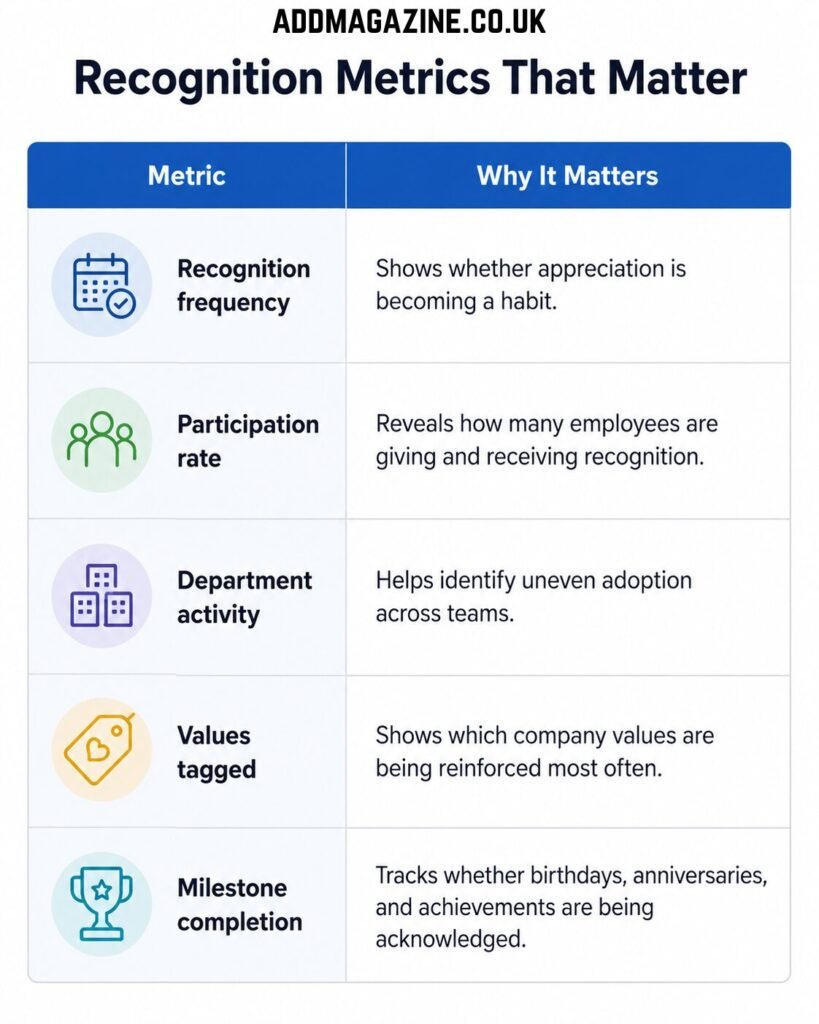
Measurement helps companies improve the program instead of assuming it is working.
How to Choose the Right Recognition Software
The best recognition software depends on the organization’s size, culture, budget, and goals. A small company may need simple peer recognition and milestone celebrations. A large organization may need admin controls, reporting, integrations, and structured programs.
Before comparing tools, define what success looks like.
Identify the Recognition Problem First
Different companies need recognition software for different reasons.
Some want to increase peer appreciation. Others want to celebrate milestones consistently. Some need better visibility into culture across locations. Others need a system that helps managers build stronger habits.
Start with the problem, then choose the tool.
Look for Features Employees Will Actually Use
A long feature list does not matter if employees find the platform confusing. The software should make recognition quick, clear, and easy to access.
Helpful features may include:
- Peer-to-peer recognition
- Manager recognition
- Milestone celebrations
- Social recognition feeds
- Value tagging
- Reporting dashboards
- Remote-friendly access
- Integrations with workplace tools
The right mix depends on how your employees already work.
Plan the Rollout Before Launch
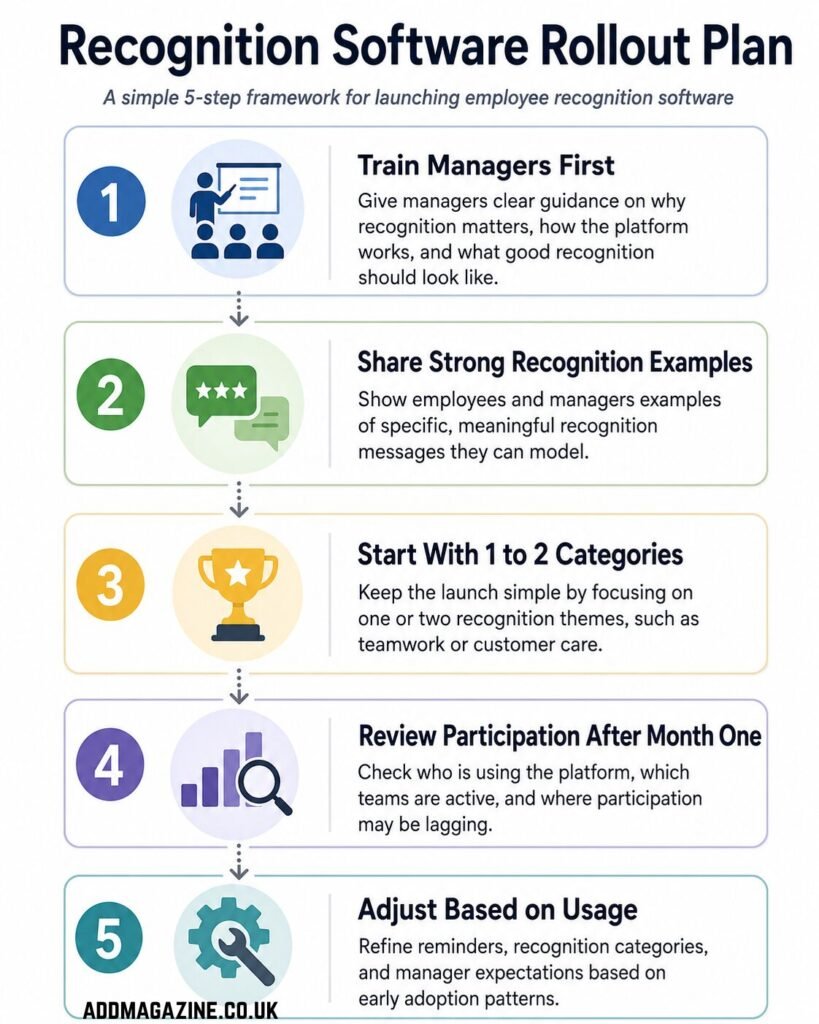
Recognition software needs a rollout plan. HR should explain why the company is using it, what types of behavior should be recognized, and how managers are expected to participate.
A simple rollout plan might include:
Making Recognition a Part of Everyone’s Work
Recognition software increases the rate of success in the workplace when it is an everyday part of work. It shouldn’t be something special reserved solely for the annual award, promotion, or milestone.
Try to build up good habits little by little. Encourage managers to acknowledge a particular contribution each week. Praise team achievements. After working together with peers, encourage peers to acknowledge positive behavior.
Recognition becomes larger as participation increases. It becomes a part of the communication of what’s important to the company.
Recognition is A Key to a Stronger Workplace
Employee recognition software makes it easier to appreciate, easier to see, and easier to measure employee success in the workplace. It can make employees feel the importance of their work, provide managers with good habits, and provide HR leaders with clearer signals of the culture.
The best programs address specific topics, at the right time, for everyone, and are linked to company values. They are not a substitute for good leadership, good pay, or healthy workloads, but they augment the employee experience.
A sense of being seen for the work that drives the business forward leads to a greater sense of belonging, a stronger sense of engagement, a stronger sense of camaraderie, and a stronger sense that success is shared.
FAQs
1. How Does Employee Recognition Software Help in Achieving Success in the Workplace?
Employee recognition software makes it easier to succeed in the workplace by making appreciation consistent, visible, and measurable. It makes employees feel appreciated, enhances behaviours aligned with company objectives, enables managers to follow up, and provides HR teams with departmental recognition trends.
2. What are the most crucial elements of employee recognition software?
Peer-to-peer recognition, manager recognition, milestone celebrations, value tagging, reporting, and easy employee access are the most crucial features of employee recognition software. Digital participation and workplace tool integrations are also crucial for remote and hybrid teams.
3. Why is employee recognition software so vital to employee engagement?
Employee recognition software is essential to employee engagement because it links workers’ contributions to tangible recognition and business results. A sense of their work being important leads to a sense of belonging, motivation, and commitment to the organization.