Walk around any trade show and you will find no shortage of people ready to sell you a machine. What is harder to find is a clear answer to the question that should come first. What does your business actually need? Buy the wrong equipment and you carry the cost for a decade. Buy the right equipment and it quietly pays for itself shift after shift. The following approach can help simplify this decision and make the process clearer.
Start With the Deposit, Not the Brochure
Everything begins with what is in the ground. Hard rock, sand and gravel, and recycled demolition material all demand different processing routes, and even two quarries in the same postcode can throw up very different feeds. Before looking at any equipment, get the material tested. Grading analysis, clay and silt content, abrasiveness, and moisture all shape the answer. A deposit with heavy clay contamination points towards washing. High fines might mean scalping. Hard, abrasive stone changes which crushers will survive the duty. Skipping this step is how operators end up with machinery that fights the material instead of working with it.
Work Backwards From Your Customers
The other end of the question matters just as much. Which products do you want on the stockpile, and who is buying them? Concrete sand, Type 1 sub base, single sized chippings, and pipe bedding all carry different specs and different margins. List the products, the tonnages, and the tolerances your customers demand, then design the plant to hit those numbers. A plant built around real orders will always outperform one built around what the equipment happened to offer.
Separation Problems Are Not Size Problems
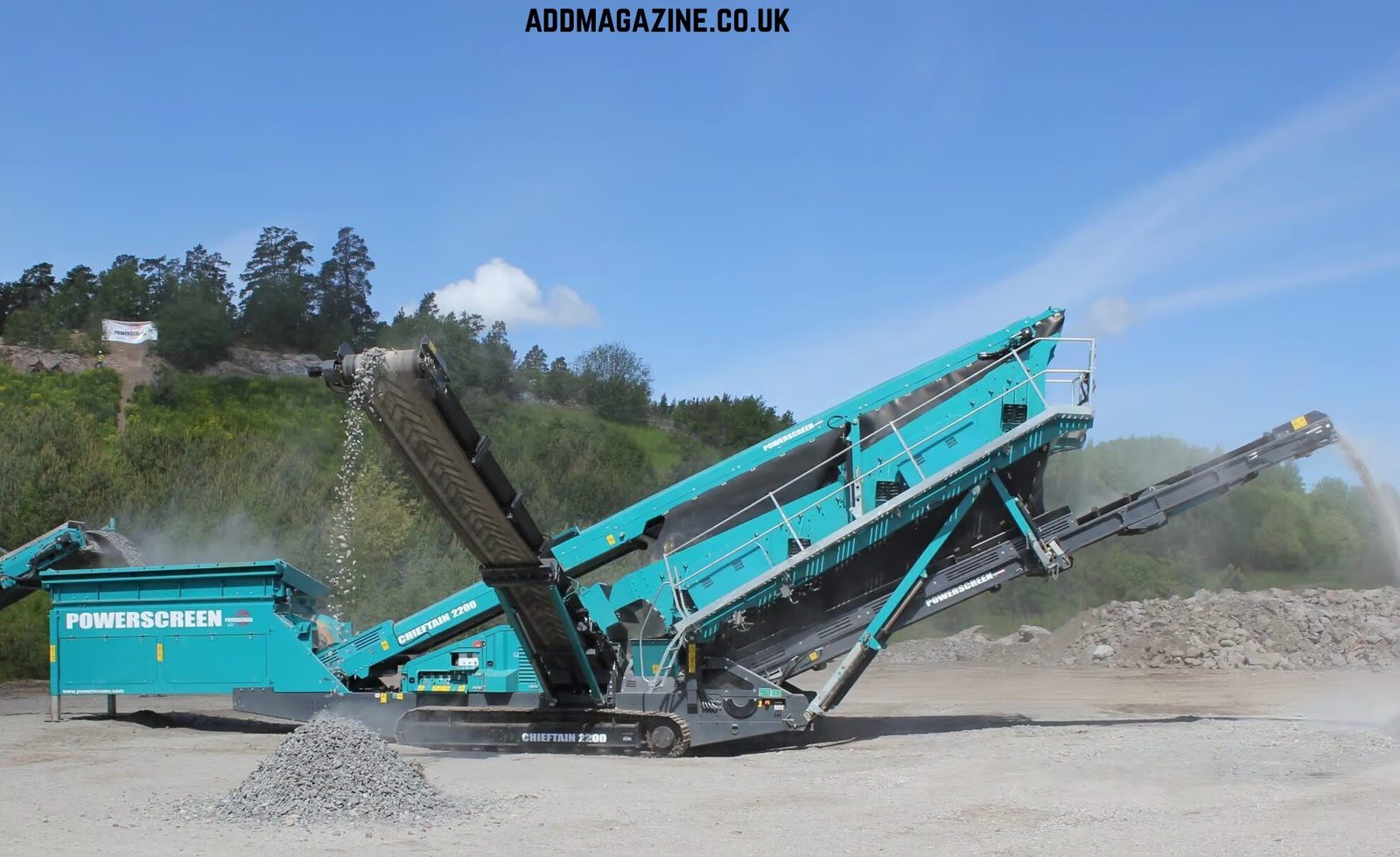
Here is a mistake that costs operators dearly. When product quality slips, the instinct is often to blame the crusher, when the real issue is separation. If your material is already the right size but the wrong grades are ending up in the wrong stockpiles, the answer lies in aggregate screens rather than more crushing capacity. Modern screening equipment with accurate cut points and quick change media can transform product consistency without touching the rest of the plant. Equally, a scalping screen ahead of a struggling crusher often frees up capacity by removing material that never needed crushing in the first place.
When Crushing Is the Answer
If the feed genuinely needs size reduction, the choice becomes which crusher suits the job. Jaw crushers remain the workhorse for primary duty on hard rock, taking large feed and shrugging off tough conditions. Cone crushers excel at secondary and tertiary stages where cubical shape and tight product control matter, particularly for concrete and asphalt aggregates. Impact crushers earn their place on softer stone and recycled material, where their shaping ability shines. Matching aggregate crushing equipment to the feed size, throughput, and target product is where supplier experience really counts, because an undersized or badly matched crusher becomes the bottleneck for the entire operation.
Washing, and Whether You Need It
Not every operation needs a wash plant, but for those that do, nothing else will substitute. If silts, clays, or lightweight contaminants are keeping your sand out of concrete specs, washing and classification is the route to higher value markets. The test results from the deposit will tell you. If minus 63 micron content is pushing you out of spec, dry processing alone will not get you there.
New, Used, or Hire
The final question is how to acquire the kit. New equipment brings warranty, the latest features, and a long service life. Good used machinery can slash the capital outlay for a growing business. Hire suits short term contracts, seasonal peaks, or trialling a process before committing. Many operators blend all three across a single site, and a supplier offering every route can advise without steering you towards whatever happens to be in stock.
Pulling the Decision Together
Test the material, define the products, and let those two fixed points drive every equipment choice between them. Question whether a problem is really about crushing, screening, or washing before spending on any of the three. And lean on suppliers who ask about your deposit and your order book before they open a catalogue. Businesses that follow that order rarely buy the wrong machine, and the ones that skip it rarely buy the right one.