Workplace head protection is not only for construction sites or heavy industrial zones. Even roles that appear simple or low-risk can still involve unexpected contact with shelves, equipment, low ceilings, tools, or moving machinery during normal work activities. These small incidents may not sound serious, but they can still lead to cuts, bruises, or mild concussions.
When the risk is limited to minor bumps rather than falling objects or electrical exposure, workers often ask a practical question: what type of head protection is actually needed?
The answer depends on how serious the hazard is.In low-impact environments, lighter head protection such as a bump cap or Class C hard hat is often selected. Knowing how these choices vary makes it easier to maintain safety standards while also keeping workers comfortable during daily tasks.
Understanding Why Even Minor Head Injuries Matter
It is easy to underestimate minor head injuries in the workplace. A light impact from a metal rack or low beam may not appear serious initially. However, even small impacts can lead to problems such as:
- Headaches that last for hours or days
- Dizziness or temporary confusion
- Small cuts or swelling
- Mild concussions in repeated impact cases
- Reduced focus and work performance
Over time, frequent small head knocks can lead to ongoing problems, particularly in active roles where contact with surfaces occurs repeatedly.
Because of this, employers consider not just severe hazards but also smaller, everyday risks in the workplace. They also consider low-level risks that occur repeatedly throughout the workday.
The Real Function of a Hard Hat in the Workplace
A hard hat is protective headgear made to reduce the risk of injury from direct physical impacts to the head. Its main purpose is to protect the skull and reduce force from impacts.
Hard hats are commonly used in environments such as:
- Construction sites
- Warehouses
- Manufacturing plants
- Maintenance areas
- Utility and field operations
They are designed to protect against:
- Falling objects
- Accidental head impacts
- Contact with fixed structures
- In some cases, electrical hazards
However, not every workplace requires the same level of protection.
When Minor Bumps Are the Only Risk
If the only hazard in a workplace is occasional minor head contact, the protection needed is much lower than in construction or electrical environments.
Typical situations include:
- Walking under low shelves or pipes
- Working inside vehicles or machinery compartments
- Moving through tight storage areas
- Light maintenance tasks indoors
- Office-style industrial spaces with low collision risk
In these situations, workers are not exposed to falling tools or heavy objects. Instead, the risk comes from accidental contact with fixed surfaces.
For these environments, full industrial hard hats may not always be necessary. Instead, lighter head protection is usually recommended.
Bump Caps: The Lightest Form of Head Protection
A bump cap is designed specifically for low-impact environments. It looks similar to a baseball cap but contains a thin protective insert inside the crown.
What bump caps protect against:
- Minor head bumps
- Scrapes from low ceilings
- Light contact with equipment or shelving
What bump caps do NOT protect against:
- Falling tools or materials
- Heavy impacts
- Construction-level hazards
- Electrical risks
Because of these limitations, bump caps are not classified as industrial hard hats. They are meant exclusively for work settings where the risk of serious impact hazards is not present.
Common workplaces for bump caps:
- Warehousing and storage
- Automotive repair interiors
- Maintenance corridors
- Tight mechanical spaces
They are valued for comfort and flexibility, especially in jobs where workers move frequently in confined areas.
Hard Hat Classes Explained Clearly
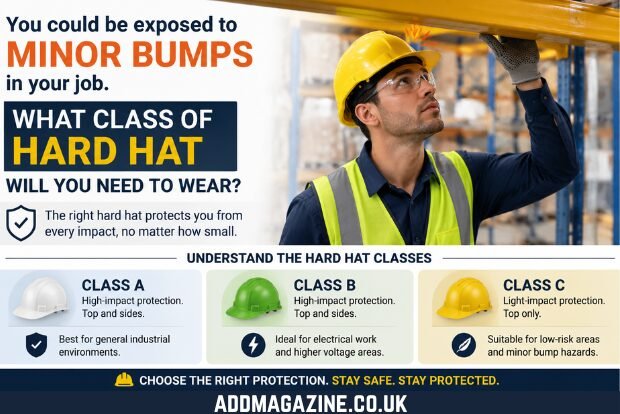
In workplaces where a true hard hat is required, safety standards divide them into three main classes. Each class provides a different level of protection depending on the hazard.
Class C – Conductive Protection
Class C hard hats are designed for comfort and light impact protection.
They provide:
- Protection against minor impacts
- Lightweight structure
- Ventilation for long shifts
They do NOT provide:
- Electrical protection
Best suited for:
- General labor with minor impact risk
- Warehouses
- Manufacturing floors without electrical exposure
Class G – General Protection
Class G hard hats are more versatile and commonly used in mixed-risk environments.
They provide:
- Impact protection
- Limited electrical resistance
They are commonly used in:
- Construction work
- General industrial settings
- Maintenance operations
This class is a middle-ground option when hazards are not extreme but still present.
Class E – Electrical Protection
Class E hard hats are designed for high-risk electrical environments.
They provide:
- Strong electrical insulation
- High-voltage protection
- Standard impact resistance
They are used by:
- Electricians
- Utility workers
- High-voltage field technicians
This is the highest level of electrical protection in standard hard hat classifications.
Comparison of Head Protection Options
| Type | Main Protection | Electrical Protection | Best Use Case |
|---|---|---|---|
| Bump Cap | Minor bumps only | No | Low-risk indoor work |
| Class C Hard Hat | Impact protection | No | Minor hazard environments |
| Class G Hard Hat | Impact + limited electrical | Moderate | General construction |
| Class E Hard Hat | Impact + high electrical insulation | High | Electrical and utility work |
This comparison shows that protection increases as workplace risk increases.
Situations Where a Class C Hard Hat Is the Appropriate Safety Choice
If a job only involves light impact risk and no electrical exposure, a Class C hard hat is often sufficient.
It is commonly used when:
- There is no risk of falling objects
- Impacts are minor and occasional
- The workplace is controlled and predictable
Advantages include:
- Lightweight design reduces fatigue
- Comfortable for long working hours
- Better airflow compared to heavier models
However, it is important to understand its limitation: it does not protect against electrical hazards or falling debris.
When a Bump Cap May Be Enough
A bump cap may be suitable in very low-risk environments where even Class C protection is more than necessary.
It is appropriate when:
- Only accidental bumps are expected
- There are no overhead hazards
- Work is performed in confined but controlled spaces
However, bump caps should never replace hard hats in environments where industrial hazards exist. They are a comfort-based solution, not a full safety helmet.
When You Must Wear a True Hard Hat
A certified hard hat becomes necessary when there is any risk of serious injury. This includes:
- Falling tools or equipment
- Construction activity overhead
- Electrical exposure
- Heavy industrial operations
- Moving cranes or lifting systems
In these situations, bump caps or lightweight protection is not enough. Proper industrial head protection must be used.
OSHA Expectations and Workplace Responsibility
Safety regulations such as those from workplace safety authorities require employers to provide proper protective equipment when hazards exist.
Employers are responsible for:
- Identifying workplace risks
- Providing suitable head protection
- Ensuring workers use the correct equipment
- Updating safety measures as conditions change
Failure to match protection with actual hazards can result in unsafe working conditions and preventable injuries.
Why Choosing the Right Class Matters
Selecting the correct head protection is not only about compliance but also about real-world safety.
Incorrect choices can lead to:
- Under-protection in hazardous areas
- Overheating and discomfort from heavy equipment
- Reduced productivity due to poor fit
- Increased risk of injury from underestimated hazards
The goal is to match protection level to actual workplace conditions, not assumptions.
Final Guidance on Minor Bump Environments
If your job only exposes you to minor bumps and no falling objects or electrical risks, the most suitable options are usually:
- A bump cap for very low-risk environments
- A Class C hard hat when slightly higher impact protection is needed
The decision depends on workplace structure, movement patterns, and safety requirements.
Regular inspection and correct usage are also essential. Even the best protective gear loses effectiveness if it is damaged, modified, or used in the wrong environment.
Ultimately, proper head protection is about matching the tool to the risk, ensuring safety without unnecessary burden.