In the modern corporate landscape, efficiency is no longer the sole metric of digital success. Over the past few years, artificial intelligence has transitioned from an experimental novelty to an indispensable engine within marketing departments, PR agencies, and customer engagement teams across the UK. However, as organizations rush to scale their publishing output, an unforeseen operational vulnerability has emerged: the quiet erosion of brand distinction.
When multiple companies within the same sector utilize identical algorithmic foundations to draft their messaging, market differentiation rapidly collapses. The result is a flood of corporate communication that, while grammatically flawless, sounds entirely interchangeable. For established brands, this mechanical predictability does not just bore the audience—it actively dilutes consumer trust.
The Rise of Algorithmic Scrutiny
This trend toward content homogenization has triggered a sharp response from digital platforms. Search algorithms, media distribution networks, and enterprise verification tools have become increasingly sophisticated at flagging unrefined machine outputs. Today, publishing raw, unedited drafts carries a tangible risk—ranging from reduced organic search visibility to being filtered out by automated editorial systems.
For corporate strategists, this creates a delicate balancing act. On one hand, scaling back automation is financially impractical in a fast-paced market. On the other hand, relying on raw generation leaves brands vulnerable to audience fatigue and digital penalization.
From Raw Output to Strategic Refinement
To mitigate these reputation risks, forward-thinking organizations are changing how they integrate technology into their publishing pipelines. The focus has pivoted from merely generating text to implementing sophisticated post-processing frameworks.
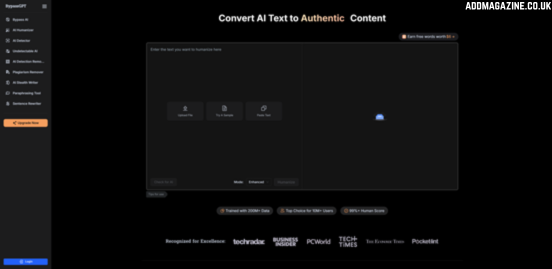
Within this evolving technology stack, specialized tools have emerged to protect editorial integrity. The concept of an AI Stealth Writer has gained traction among digital strategists—not as a means of masking authorship, but as an advanced structural layer designed to break the repetitive patterns typical of basic LLMs. These frameworks analyze sentence variance, remove robotic transitions, and restore the dynamic rhythm essential for professional communication.
In tandem, enterprise solutions like bypassgpt are increasingly utilized by international communications teams. By evaluating contextual semantics rather than relying on simple synonym substitution, such systems allow global businesses to refine automated drafts while preserving complex data and strategic messaging.
As digital compliance standards continue to tighten, taking the necessary steps to humanize ai content has evolved from an aesthetic preference into a core component of risk management. It ensures that scalable content operations remain aligned with high-level editorial standards and native audience expectations.
Maintaining the Human Advantage
As artificial intelligence continues to reshape commercial workflows, the ultimate competitive advantage will not belong to the companies that generate the most text, but to those that communicate with the greatest clarity and authenticity.
Automated systems can analyze market data and construct preliminary narratives at remarkable speeds. However, the ability to build genuine brand equity, foster customer loyalty, and convey true brand authority remains a uniquely human capability. In the digital economy, technology provides the foundation, but human curation defines the legacy.