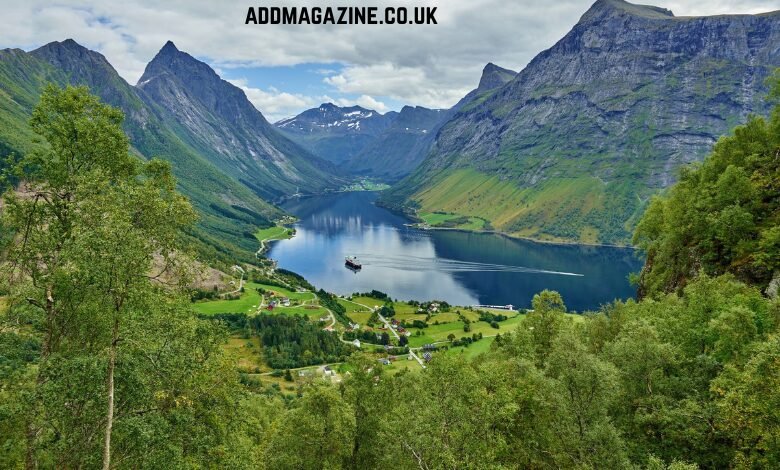
Most travel is about doing. We want to see the landmark, eat the famous food, and check the box. But Norway, specifically the coastline where the mountains basically fall into the sea, is different. It’s less about discovery and more about a shift in your internal wiring. Even a standard Norwegian Fjords cruise stops being a vacation at some point and starts being a lesson in how to actually look at the world.
The Scale of the Thing
The fjords aren’t loud landscapes. They don’t hit you over the head with drama like a neon-lit city. Instead, they’re heavy. As the ship snakes through those narrow inlets, the rock walls rise up so high they almost block out the sun. The atmosphere changes. Everything gets quieter. Your voice gets lower. You start to look outward, not because you’re supposed to, but because the scale of it all won’t let you look anywhere else.
It’s the opposite of fast travel. There’s no point in rushing when the view is a glacier-carved cliff that hasn’t changed in ten thousand years. You stop trying to see it all and just start absorbing what’s right in front of you.
A Weird Kind of Paradox
There’s a strange feeling you get in the fjords, a mix of being wide open and completely tucked away. You’re in this massive, vast space, yet you feel safe, cradled by the stone. It’s the kind of environment that forces you to think. Not the “did I answer that email?” kind of thinking, but the deeper stuff.
When you’re staring at a rock face that took millennia to form, your Tuesday morning stresses feel… pretty small. It’s a reality check. The concerns don’t go away, but they definitely lose their edge. You find a bit of space between your thoughts and your stress.
The Long Game
The fjords are a masterclass in the long game. They were carved by ice, inch by painful inch, over thousands of years. In a world where we expect everything to happen in the time it takes to refresh a feed, that’s a hard concept to wrap your head around. But it’s a necessary one. It reminds you that not every transformation has to be an explosion. Sometimes, the most meaningful changes are the ones that happen so slowly you almost don’t notice them.
Finding the Balance
There’s this beautiful tension on a ship in the North. You’re moving forward, you can feel the vibration of the engines and see the wake in the water, but the landscape feels frozen in time. It’s progress and stillness happening at the exact same moment.
It makes you wonder why we’re always in such a rush back home. Why does every bit of progress in our daily lives have to feel so frantic?
Coming Back Down to Earth
When you finally head home, the world is still going to be loud. The traffic in the UK isn’t going anywhere. But you might find you’ve kept a bit of that Northern stillness in your pocket. You’re more aware of the noise, and more importantly, you know how to tune it out.
The fjords aren’t just a destination you visit to take photos. They’re a place that reshapes your attention. They remind us that the most powerful experiences aren’t the ones that shout the loudest; they’re the ones that invite you to finally be quiet.