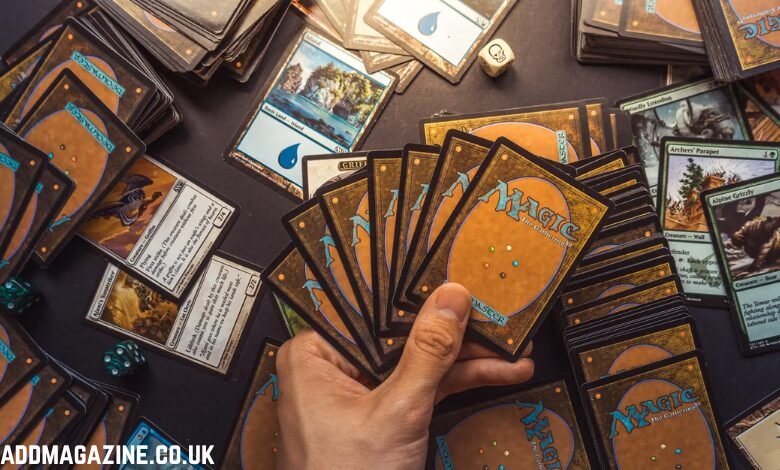
Trading cards were once the preserve of school playgrounds and Saturday morning cartoons. That perception has changed dramatically. What was once dismissed as a niche hobby is now a legitimate segment of the alternative investment market, attracting adult collectors, resellers, and financial commentators who see real potential in sealed cardboard.
The global trading card game market is currently valued at over £12 billion and is projected to nearly double by the early 2030s, growing at a compound annual rate of around 10%. Much of that growth is being driven by adults aged 25 to 45 who are returning to the hobby with disposable income and a sharper eye for value. In the UK, specialist retailers have felt that shift firsthand. Stores like The Gamers Lodge in Liverpool, which stocks magic the gathering booster boxes alongside Pokemon, Yu-Gi-Oh and other major franchises, have seen growing demand from buyers who treat sealed product as both entertainment and a store of value.
This shift did not happen overnight. It is the result of several converging trends that have reshaped how people think about collectibles, spending, and long-term returns.
Why sealed product holds its value
Within the trading card world, sealed booster boxes occupy a unique position. Once a set goes out of print, no more boxes are produced. Supply becomes fixed while demand continues to grow as new players discover the hobby and existing collectors chase older sets. It is not unusual for a box that sold for £100 at release to be worth two or three times that within a few years.
This dynamic is fuelled by generational nostalgia. The people who grew up playing Magic: The Gathering in the 1990s or collecting Pokemon in the early 2000s are now in their 30s and 40s with adult budgets. They are not impulse buyers chasing trends. They understand the secondary market, track price movements, and are willing to pay premiums for sets that hold personal or competitive significance.
A growing UK market
The UK has developed one of Europe’s strongest trading card communities. Organised play events, pre-release weekends, and weekly tournaments run through Official Tournament Stores across the country. These physical locations serve as community hubs where players buy, sell, trade, and compete, keeping engagement high between major set releases.
The resale culture has grown alongside it. Platforms like eBay and specialist TCG marketplaces have made it easier than ever for individuals to buy sealed product at retail and sell it later at a markup. Some treat it as a side hustle. Others approach it as a genuine small business, tracking price trends and timing purchases around set releases and rotation cycles.
Risks and what comes next
Of course, risks exist. Reprints can reduce scarcity, new releases can make expensive cards obsolete, and tighter household budgets can slow luxury spending. Counterfeiting is also a growing concern, particularly for high-value singles and vintage sealed product, though grading companies are investing in better authentication technology to combat the problem.
That said, the market has shown resilience through multiple economic downturns. With Pokemon celebrating its 30th anniversary in 2026 and Magic: The Gathering expanding its crossover collaborations into franchises like Marvel and Final Fantasy, demand shows no sign of slowing. For anyone watching alternative investment trends in the UK, trading cards are well worth paying attention to.