
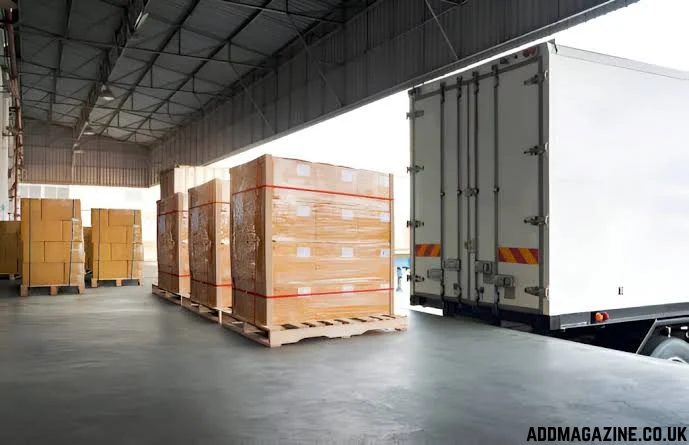
When a pallet delivery fails to arrive on time, the immediate reaction in most operations is to treat it as a one-off inconvenience. A quick call to the carrier, a rescheduled drop, and the day moves on. But for supply chain managers working across distribution centers, manufacturing plants, or retail fulfillment networks, the pattern tells a different story. Missed deliveries are rarely isolated events. These setbacks expose underlying weaknesses in the system, creating consequences that continue long after the original deadline has passed.
In an environment where production schedules, retail restocking, and warehouse throughput are tightly sequenced, the downstream impact of a single missed delivery can affect multiple departments simultaneously. Understanding what those impacts actually look like — financially, operationally, and relationally — is the first step toward building a supply chain that accounts for real-world disruption rather than assuming it won’t happen.
Why Pallet Delivery Reliability Is a Structural Issue, Not a Logistics Detail
Most supply chain managers know that pallet delivery sits at the center of physical goods movement across virtually every commercial and industrial sector. What is less often acknowledged is that the reliability of that delivery isn’t just a carrier performance metric — it’s a structural input to how operations are designed. When businesses plan their receiving schedules, labor allocations, and production lines around predictable pallet arrivals, they are embedding delivery reliability into their cost model. When that reliability breaks down, so does the model.
This distinction matters because it changes how supply chain managers should evaluate carrier relationships and delivery contracts. A service that occasionally misses its window is not simply a vendor underperforming. It is a variable that is actively working against the operational assumptions the business has already made. The cost of that mismatch shows up in ways that are often not captured on a carrier invoice.
The Difference Between Delay and Disruption
A delay is a time gap. Disruption is what happens to the systems built around an expected timeline when that timeline shifts. Supply chain managers who have worked through high-volume periods — peak retail seasons, product launches, or manufacturing ramp-ups — understand that the two are not proportionally related. A short delay during a critical window can cause a disruption that takes significantly longer to recover from than the delay itself.
When a receiving dock is staffed, equipment is staged, and downstream production is sequenced around an expected arrival, a missed delivery window doesn’t simply push those activities back by the same amount of time. Such disruptions require managers to shift employees between tasks, revise loading dock schedules, and sometimes reorganize the entire production workflow. These changes increase operating expenses and may trigger additional delays across other activities.
How Carrier Selection Reflects Operational Risk Appetite
The decision of which carriers and delivery providers to work with is not purely a procurement question. It is a risk management decision. A provider with inconsistent pickup and delivery performance introduces variability into a system that is designed around consistency. Over time, that variability requires compensating measures — buffer stock, expanded receiving windows, additional labor coverage — all of which add cost without adding value.
Supply chain managers who evaluate carriers only on base rate often find themselves absorbing these compensating costs quietly, distributed across departments in ways that are difficult to attribute directly to the carrier relationship. Making the true cost of unreliable service visible requires looking at the full operational footprint of a missed or delayed delivery, not just the rescheduling fee.
The Direct Financial Costs That Accumulate Quickly
There are costs associated with a missed pallet delivery that are relatively straightforward to quantify. Labor is the most immediate. When a receiving team is scheduled around an arrival that doesn’t happen, those hours are either wasted in place or redirected at a cost. If hourly workers are held on standby, that time is billable regardless of whether freight arrives. If salaried staff are diverted from other tasks, the opportunity cost is real even if it doesn’t appear on a line item.
Expediting fees represent another direct cost category. When a missed delivery causes a production stoppage or a retail stockout, the response is often to source the same goods or materials through a faster, more expensive channel. The premium paid for that emergency fulfillment is a direct consequence of the original delivery failure, even if it’s processed through a different purchase order and absorbed by a different budget.
Inventory Carrying Costs and Their Relationship to Delivery Failure
Some operations respond to repeated delivery unreliability by increasing safety stock levels. This is a rational short-term adjustment, but it carries its own long-term cost. Higher inventory levels require more storage space, more capital tied up in goods on hand, and more exposure to spoilage, obsolescence, or damage. The carrying cost of that additional inventory is a direct financial consequence of the decision to compensate for an unreliable delivery network rather than address it.
According to established supply chain management frameworks, as documented by organizations like the Association for Supply Chain Management, inventory carrying costs typically represent a significant percentage of the total value of the volume of inventory kept in storage continues to increase as businesses maintain larger reserve supplies to manage uncertain delivery schedules.
Customer Penalties and Contractual Exposure
For supply chain managers operating in retail, automotive, or food service supply chains, delivery commitments to downstream customers are often backed by contractual service level agreements. A missed pallet delivery that prevents on-time fulfillment to a retail distribution center or production plant can trigger penalty clauses, chargebacks, or deductions that far exceed the value of the original shipment. These costs are frequently underreported in internal analyses because they appear on the accounts receivable side of the ledger, not in logistics spend.
The operational lesson is that the cost of a missed delivery is not limited to the delivery itself. It travels down the supply chain and can surface weeks later as a deduction from a customer invoice or a compliance violation under a vendor agreement.
The Operational Costs That Are Harder to See
Beyond the financial line items, missed deliveries generate a category of costs that are organizational rather than transactional. These are the costs absorbed by the people in the operation — the supervisors who spend time rescheduling, the buyers who chase carriers for updates, the operations managers who rebuild daily production plans around unexpected gaps. These hours are real costs, but they appear as overhead rather than logistics expense.
There is also a communication cost. When a missed delivery affects a customer, a downstream partner, or an internal stakeholder, someone has to manage that conversation. In larger organizations, this becomes a recurring drain on account management and customer service resources. Over time, it affects staff morale and organizational confidence in the supply chain function’s ability to perform.
The Erosion of Planning Accuracy
Frequent delivery disruptions can gradually undermine the reliability of operational forecasts, making future scheduling and resource planning increasingly difficult. When schedulers and operations managers cannot trust their inbound delivery timeline, they begin building informal adjustments into their plans. They add time buffers that shouldn’t need to exist. They avoid commitments that depend on freight arriving as expected. These adjustments, accumulated across a team over months, quietly reduce the responsiveness and efficiency of the entire operation.
This erosion is particularly damaging in just-in-time or lean manufacturing environments, where the system is specifically designed to minimize buffer and maximize flow. A single unreliable input — such as inconsistent pallet delivery frequency or timing — can undermine the logic of the entire operational model, forcing a reversion to higher-inventory, lower-efficiency practices that the lean approach was meant to replace.
Supplier and Partner Relationship Risk
When deliveries involve several interconnected businesses, even one shipment arriving late can disrupt operations well beyond its intended destination. Companies that dispatch their products as scheduled may still face unloading delays when receiving facilities are occupied with shipments that failed to arrive on time earlier. Downstream partners who expected to receive processed or assembled goods may begin questioning the reliability of the supply chain manager’s operation, regardless of where the original failure occurred.
These relationship costs are difficult to quantify but not difficult to recognize. They show up as reduced willingness to prioritize your orders during tight supply periods, less flexibility in payment or contract terms, and a gradual shift in how partners communicate their own risks and constraints to your organization.
Building a Framework for Evaluating Delivery Risk
A practical response to the risks outlined above is to treat delivery reliability as a measurable operational variable rather than an assumed baseline. This means tracking not just whether deliveries arrive, but when they arrive relative to commitment, what operational adjustments were required when they didn’t, and what the cumulative downstream cost of those adjustments has been over a defined period.
For supply chain managers building or refining carrier evaluation criteria, the following considerations provide a more complete picture of delivery risk than rate comparisons alone:
• Commitment-to-delivery accuracy over rolling time periods, measured against actual scheduled windows rather than general service level averages
• Carrier responsiveness when delays occur, including notification lead time and the quality of alternative arrangements offered
• Consistency of performance across different demand periods, including high-volume weeks and seasonal peaks where service degradation is most common
• Documented history of same-day or urgent recovery capability when standard delivery fails, which directly determines how quickly an operation can recover from disruption
• Transparency in tracking and communication systems, which affects how quickly internal teams can begin contingency planning when a delivery is at risk
These criteria shift the evaluation from a cost-focused comparison to a risk-adjusted one, which more accurately reflects the true financial and operational value of a reliable carrier relationship.
Conclusion: The Real Price of Treating Delivery as a Commodity
Supply chain managers operate in environments where efficiency gains are hard-won and disruptions are expensive. The temptation to treat pallet delivery as a commodity input — selected on price and replaced when convenient — is understandable but costly in practice. When delivery reliability is treated as a given rather than a managed variable, the costs of its failure are absorbed silently across departments, showing up in labor budgets, penalty deductions, planning inefficiencies, and strained partner relationships rather than on a carrier invoice.
The more accurate framing is that delivery reliability is an operational input with a measurable cost of failure. When that cost is made visible — not estimated, but tracked against real disruptions over time — the decision about which carriers and delivery structures to invest in becomes significantly clearer. The price difference between a reliable provider and an inconsistent one rarely accounts for the full cost of the gap. That gap is where the true cost of a missed delivery lives, and it is almost always larger than it appears on the surface.