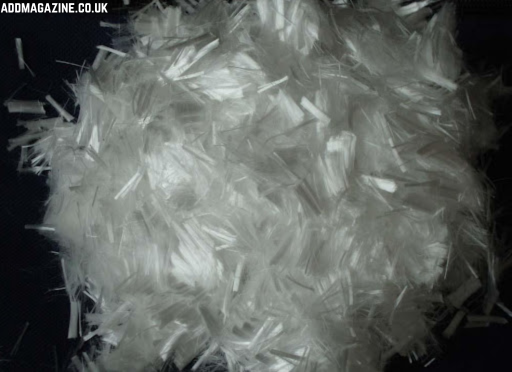
Engineers and builders are increasingly demanding not just strength from concrete, but also flexibility in its behavior — the material must withstand impacts, not tear at the first sign of cracks, and serve for a longer period. Fiber-reinforced concrete solves these problems not through magic, but through a simple idea: adding millions of thin filaments to the mixture, which are evenly distributed throughout the volume and take on the work that concrete by itself cannot perform. The result is a mixture that is less prone to brittle failure, with better resistance to deformation and aggressive environmental influences.
Understanding Fiber-Reinforced Concrete
This is not a decorative technique, but a practical method of reinforcement: discrete fibers are introduced into the concrete matrix, which distribute during mixing and create a continuous network of micro-reinforcement inside. In some cases, such fibers complement or partially replace traditional rebar, especially in elements where crack control and post-cracking behavior are critical.
The main task of fibers is to retard and limit the development of microcracks. Concrete performs excellently under compression but behaves brittlely under tension; fibers “stitch” cracks, reduce their opening, and distribute loads, increasing impact resistance and energy absorption capacity. As a result, the material becomes more ductile in its behavior: it deforms more noticeably before final failure, which increases the safety and durability of structures.
The effectiveness of fiber-reinforced concrete largely depends on the quality and proper selection of fibers. To ensure stable performance characteristics and structural longevity, it is crucial to choose reliable manufacturers and suppliers. This is why many engineers prefer a proven PP fiber supplier to guarantee that materials comply with the highest construction standards and project requirements.
A Variety of Fiber Types
The range of fibers is quite broad, and the choice depends on the project’s objectives and operating conditions. The right type determines strength, corrosion resistance, durability, and the economics of the solution.
The main types include:
- steel fibers for high strength and rigidity, especially under impact loads;
- synthetic fibers for combatting plastic shrinkage and providing corrosion resistance;
- alkali-resistant (AR) glass fibers for thin architectural elements and improved flexural strength;
- natural fibers for eco-friendly solutions and specific niche applications.
Each type provides its own combination of properties. Steel provides maximum strength and fatigue resistance, synthetics offer lightness and chemical inertness, glass provides high strength at low thickness, and natural materials offer environmental advantages. Combinations of fibers allow for even more precise tuning of the mixture’s behavior for a specific task.
Outstanding Benefits of Using Fiber-Reinforced Concrete
Fibers in a concrete mix change not just one, but several key characteristics of the material simultaneously, and the effect is noticeable both during the construction phase and throughout the entire service life of the structure.
Enhanced Crack Control and Durability
Fibers distribute tensile stresses and prevent microcracks from growing into large fissures. Fewer cracks mean fewer paths for moisture and aggressive agents, which slows down reinforcement corrosion and structural degradation. This results in a real increase in service life and reduces maintenance costs.
Increased Impact and Abrasion Resistance
Where the surface is subjected to impacts, friction, or intensive vehicle traffic, fibers dissipate energy concentration and reduce the likelihood of crumbling and potholes. This is why such mixtures are frequently chosen for industrial floors and high-load platforms.
Improved Flexural and Tensile Characteristics
Adding fibers gives concrete greater flexibility under static and cyclic bending. This allows for designing thinner elements, increasing spans, or reducing the volume of traditional reinforcement where justified.
Reduction of Plastic Shrinkage and Settlement Cracks
During the early stages of setting, fibers hold the structure together against cracking caused by water evaporation and shrinkage. The surface comes out smoother, and the finished component is less permeable and more aesthetically pleasing.
Saving Time and Resources on the Construction Site
For a number of tasks, the use of fibers reduces or eliminates the need for mesh and light reinforcement, which lowers labor costs and speeds up installation. This often results in economic benefits due to savings in labor and time.
Applications of Fiber-Reinforced Concrete
Where fibers perform best:
Key areas of application include:
- industrial and commercial floors with heavy traffic and loads;
- wear-resistant driveways, airport runways, and parking lots;
- pressed and molded products at precast concrete plants;
- tunnel linings and mining operations where rapid stabilization is important;
- foundations and structures in seismic zones.
For example, in precast element factories, fibers allow for the production of panels and products that are thinner and lighter, yet offer comparable or better strength compared to traditional solutions. One fiber manufacturer specifically adapts compositions for factory production tasks, which increases efficiency and reduces defects during transport.
Selecting the Optimal Fiber for the Project
Fiber selection is an engineering task where it is important to consider target properties, the operating environment, and the placement technology. First, priorities are formulated: control of plastic shrinkage, increased impact endurance, or improved post-cracking behavior. This determines the choice between microfibers for early-age protection and macro-fibers or metallic fibers for increasing load-bearing capacity and impact resistance.
The aggressiveness of the environment is also taken into account: in contact with chemicals or in freeze-thaw cycles, inert synthetic or AR-glass fibers are preferable. Finally, workability is important — an excessive dosage of fibers or poor geometry can impair the slump of the mix. Trial batches and consultation with the materials supplier help to determine the optimal dosage and confirm technical feasibility.
The Future of Fiber-Reinforced Concrete
The trend is clear: fibers in concrete will be used even more widely. Research is being conducted in several directions simultaneously — new composite fibers, improved production methods, and mix designs that allow for reducing structural weight and increasing durability. It is expected that even lighter and stronger elements will appear in the coming years, as well as specific solutions for complex engineering challenges. This means that the trend toward material savings and increasing the service life of structures will only intensify.
Fiber-reinforced concrete is ceasing to be an experiment and is becoming a designer’s tool: flexible, reliable, and adaptable. It is precisely these materials that form the foundation for more sustainable and durable buildings and structures.