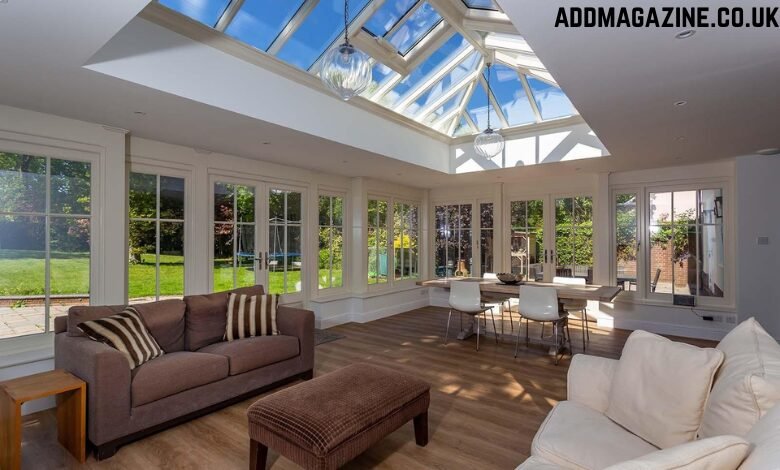
When selecting floors for conservatory rooms, be sure to pick the right type. Conservatories experience more heat, sunlight, and moisture than typical rooms in the house. Picking the right flooring can affect your comfort and lifespan, notes TPG Management company.
Best Floors for Conservatory Options
Homeowners browsing for ideal conservatory floors will likely be comparing durability, insulation, and aesthetics amongst others. Popular flooring includes luxury vinyl, laminate, engineered wood, tiles, and timber. All come with their pros when taking into consideration how often you’ll use your conservatory and your budget. Vinyl tends to be a favourite as it works with fluctuating temperatures and heat systems easily. We see many people browsing different suppliers and installation ideas.Solid wood flooring UK is also a popular search from those wanting a natural, premium look.
Conservatory Floor Construction Basics
Before any flooring can be laid on a conservatory floor, there should have been good preparation when it was built. The floor should contain insulation layers, a damp-proof membrane and a level screed topping. If it hasn’t, there’s every chance that your floor will feel cold underfoot.
Flooring for Conservatory with Underfloor Heating
When it comes to comfort, underfloor heating will revolutionise your conservatory. But you do need to choose the correct flooring first. Heat transfer and stability when exposed to continual change in temperature are key.
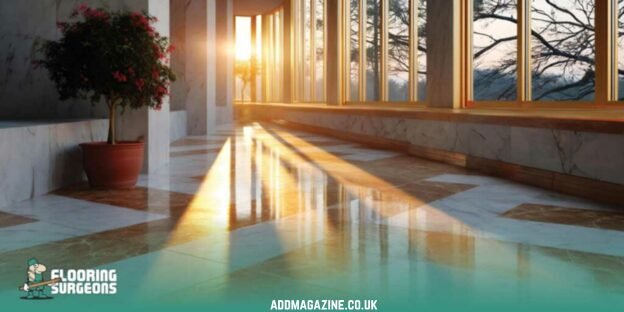
Porcelain tiles are your best bet for maximum heat transfer. They are extremely efficient at conducting heat and remain stable under continual temperature fluctuations. Ceramics heat up quickly and hold that heat for longer, making them ideal to use throughout winter.
LVT and LVP are also great options, as they not only conduct heat more quickly than most flooring materials but also feel warmer and softer underfoot. Quality vinyl floors are made to withstand continual low-level heat.
It’s worth noting that subfloor quality can also have a huge impact. Bad insulation or an uneven substrate will decrease the efficiency of your heating and cause waste.
Engineered wood is an option, but it requires more stringent temperature control to prevent expansion or movement.
In short:
- Tiles = best heat efficiency
- LVT/LVP = fastest comfort + softer feel
- Subfloor quality = critical for performance
Quick Flooring Comparison Table for Conservatory Use
| LVT / LVP | Excellent | Excellent | High | Low |
| Laminate | Moderate | Medium | Medium | Low |
| Engineered Wood | Good | Medium | High | Medium |
| Ceramic Tiles | Excellent | Excellent | Low/Cold | Very Low |
| Solid Wood | Low | Low | High | High |
What Flooring is Best in a Conservatory?
We think LVT/LVP is best for conservatories because they offer a good compromise between comfort underfoot, durability, resistance to water damage and compatibility with underfloor heating systems. Porcelain tiles are best if you want the ultimate in heat retention and hardwearing capabilities, but can feel chilly if you don’t have heating. Engineered wood is the least affected by temperature variations, but won’t feel as natural underfoot as the real thing. Here’s how we rank them:
- LVT/LVP: Best for overall use
- Tiles: Best for performance
- Engineered Wood: Best for a luxury feel
Flooring should not only look good but also perform well. With insulation, a correctly built conservatory floor, and the right flooring material, you could have a toasty, warm conservatory usable all year round.
What flooring is best for a conservatory
LVT, LVP, and porcelain tiles are the most practical due to durability, moisture resistance, and heat compatibility.
Why is my conservatory floor so cold?
Mainly due to poor insulation or no underfloor heating, causing heat loss through the floor.