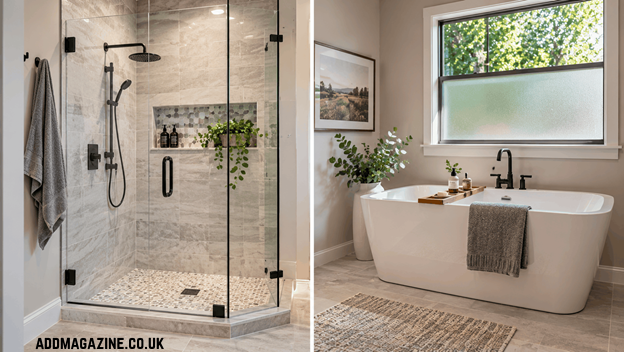
Replacing a bathtub with a walk-in shower can make a bathroom feel more open, but that visual change is only part of the decision. The right fixture needs to support the people who use the room, fit the available space, and work with the plumbing and construction beneath the finishes.
For North Texas homeowners, the useful comparison starts with daily habits rather than a trend. Consider who bathes in the room, whether another tub exists in the house, and how long you expect the current arrangement to meet the household’s needs. Those answers help determine whether a shower, tub, or combination is the better investment.
A primary bathroom used by adults may have different priorities from a hall bathroom serving children and overnight guests. Someone who rarely takes a bath may value a larger shower and easier cleaning. Another household may use the tub routinely for young children or simply prefer soaking to showering.
The Rockaway Company’s website outlines its Fort Worth remodeling services, providing a relevant place to begin a conversation about how a fixture change might fit a broader room redesign. Before requesting a proposal, write down what the current bathing area makes difficult and what you want the replacement to improve.
Avoid deciding solely on the basis of the fixture in isolation. A roomy shower may still leave an awkward route to the toilet, while a compact tub might preserve valuable storage. Evaluate the whole floor plan, including door swings, towel access, and the space needed to move comfortably.
Compare entry and everyday use
A traditional tub requires stepping over its side. A shower can offer a lower entry, but the actual threshold and approach vary by design. The phrase walk-in does not necessarily mean step-free. Ask to see the proposed entry detail and understand how it relates to the surrounding floor.
A curbless design needs careful coordination of drainage, water containment, and waterproofing. The existing floor construction may affect what can be achieved within the available budget. Treat feasibility as an early design question, particularly if the goal is to avoid any raised edge.
If accessibility is a priority, also review seating, support locations, control placement, and the approach into the enclosure. A larger shower footprint alone does not establish that the room will work for a particular person. Where needs are complex, appropriate professional input can help translate those needs into the layout.
Look beyond the visible finishes
Both tubs and showers depend on details that disappear behind the finished surfaces. Ask the contractor to explain the proposed waterproofing assembly, how it connects to the drain, and how corners and penetrations are handled. The products should form a compatible system installed according to their instructions.
Tile and grout create the visible surface, but the construction below must manage water correctly. Similarly, a tub installation needs appropriate support and properly detailed connections around the bathing area. A quote that lists only the finish material does not explain the complete scope.
EPA’s guidance on moisture control emphasizes addressing moisture and using ventilation to help prevent recurring mold problems. Include the bathroom’s ventilation performance in the remodel discussion, rather than assuming a different bathing fixture will resolve existing condensation or dampness.
Understand what changes the cost
Keeping the plumbing arrangement relatively close to its existing location may simplify the project, but a tub-to-shower conversion still involves more than removing one product and installing another. Demolition can expose damaged materials. The drain arrangement, floor preparation, waterproofing, and enclosure all affect the scope.
A new tub also varies widely in complexity. A straightforward replacement differs from a freestanding model requiring a new supply location or a heavy fixture needing a structural review. Discuss the selected product early so the design and estimate reflect its actual installation requirements.
Compare complete installed proposals, including finish repairs, ventilation changes, glass, accessories, and disposal. If one option appears much less expensive, verify whether it excludes something included in the other. A partial price is not a reliable basis for choosing the whole project.
Consider cleaning and maintenance honestly
An open shower can eliminate a curtain, but it may introduce a larger area of glass or tile. Think about the surfaces you will actually clean and whether they are easy to reach. A carefully located niche, bench, or glass panel can improve use, yet each detail also needs sensible water management.
A tub may have fewer wall surfaces within reach of regular splashing, depending on how it is used, but bending over its side can be inconvenient. Product shape and surrounding clearances matter. If practical, inspect fixtures in person and simulate the movements needed for routine cleaning.
Keep the manufacturer’s care instructions in the comparison. Different finishes and materials tolerate different cleaning products. Choosing a surface that fits your maintenance habits is more useful than assuming one category of fixture will always be easier.
Keep future buyers in perspective
A bathroom should support the current household without making unsupported promises about resale. Buyer preferences differ, and a single fixture does not determine the value of a North Texas property. If a sale is likely soon, ask a local real estate professional about comparable homes and the expectations in your particular market.
Before removing the only tub, consider the following questions:
- How often does the household use a tub today?
- Would guests or family members lose a useful bathing option?
- Does another bathroom already provide a practical tub?
- Would the conversion improve the overall layout or only change the fixture?
- How does the choice fit the likely length of your stay in the home?
These questions do not create a universal rule that every house must keep a tub. They help make the tradeoff explicit. The best answer for a long-term household may differ from the answer for an owner preparing to sell.
Choose the arrangement that solves a real problem
A shower is a strong option when it addresses an unused tub, an awkward bathing routine, or a need for a different approach. A tub remains useful when bathing is part of everyday life or when retaining that option serves the household better.
Make the decision after reviewing the layout, construction requirements, maintenance, and complete installed cost. A thoughtful bathing area earns its place through practical use, with appearance supporting a design that already works.