A plumbing problem becomes an emergency when it threatens your safety, causes active property damage, contaminates your home, or prevents you from using essential plumbing. A dripping faucet may wait for a scheduled appointment, but a burst pipe, sewer backup, or uncontrolled water leak requires immediate attention.
This guide will help Nashville homeowners decide whether to call a plumber immediately or wait until regular business hours. It also explains how to limit water damage and safely shut off your home’s water supply.
Plumbing Emergency vs. Urgent vs. Non-Urgent Problems
| Category | Common examples | Recommended response |
| Emergency | Burst pipe, uncontrolled flooding, sewage inside the home, water near electrical equipment, or no usable toilet in a one-bathroom home | Protect everyone, stop the water when safe, and call a plumber immediately |
| Urgent | Contained leak, repeatedly clogged drain, loss of hot water, or leaking water heater without active flooding | Stop using the affected fixture and arrange prompt service |
| Non-urgent | Slow faucet drip, isolated running toilet, or minor fixture problem without leakage | Schedule service and monitor the problem for changes |
A small-looking leak can become an emergency because the location of the water matters. Water above a ceiling, near an electrical panel, or behind a finished wall may cause significant damage even when the visible flow appears limited.
Is a Leaking Pipe a Plumbing Emergency?
A leaking pipe is a plumbing emergency when water is flowing continuously, spreading through walls or ceilings, reaching electrical fixtures, damaging flooring, or creating a risk of ceiling collapse.
You should also treat the leak as an emergency when you cannot isolate it or when your main water shutoff valve does not stop the flow.
A slow drip from an exposed pipe may be urgent rather than an emergency when it can be contained and the affected fixture can remain unused. However, it still needs professional attention. Even a small leak can damage cabinets, drywall, flooring, and surrounding building materials over time.
If a ceiling stain is growing, the drywall is sagging, or water is dripping through a light fixture, keep everyone away from the area. Do not touch wet switches, outlets, lights, or electrical equipment.
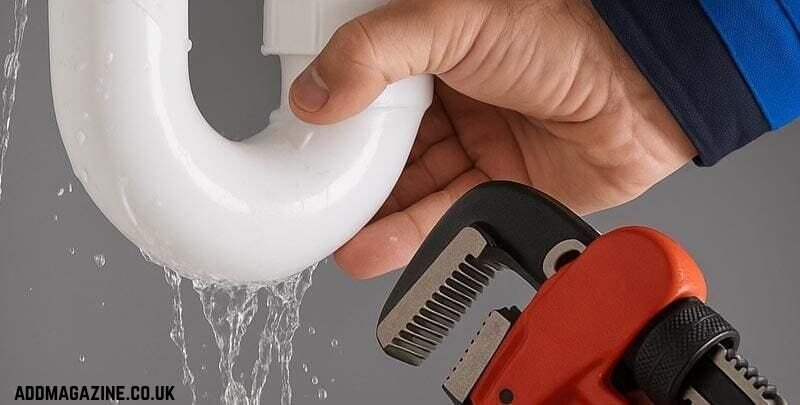
Photo suggestion: Add a side-by-side image showing water spraying from a failed supply line and a minor under-sink drip contained in a bucket.
Suggested image alt text: “Emergency burst pipe compared with a minor plumbing leak.”
The First Five Actions Homeowners Should Take
1. Protect Everyone in the Home
Keep children and pets away from standing water, sewage, sagging ceilings, and wet electrical areas.
If you smell gas, hear a carbon monoxide alarm, see smoke, or believe there is an immediate threat to someone’s health, leave the property and contact emergency services from a safe location. Nashville advises residents to call 911 when there is an immediate threat to life, health, property, or public safety. 2. Stop the Source of the Water
Use the local fixture shutoff valve when the problem involves an overflowing toilet, leaking faucet, dishwasher supply line, or washing-machine hose.
If the leak cannot be isolated at the fixture, turn off the home’s main water supply.
3. Turn Off Affected Equipment
A leaking electric water heater may need to be switched off at the breaker. Only do this when the electrical panel is dry and safely accessible.
Never enter standing water or touch wet electrical equipment. When you are uncertain about electrical safety, leave the affected area and contact a qualified professional.
4. Contain and Document the Water
Use buckets, towels, a wet vacuum, or plastic sheeting to prevent the water from spreading. Move furniture, rugs, electronics, and other valuables away from the affected area.
When it is safe, take photos and short videos before beginning cleanup. This documentation may be useful when explaining the problem to your plumber or submitting an insurance claim.
5. Call and Explain the Situation Clearly
Tell the plumbing company:
- Where the problem is located
- Whether water is still flowing
- Which valves you have turned off
- Whether sewage is involved
- Whether water is near electrical equipment
- When the problem started
A qualified plumber in Nashville can use this information to evaluate the urgency of the situation and prepare the necessary equipment for the visit.
When Should I Shut Off My Main Water Supply?
Turn off your main water supply when a pipe bursts, water is spreading rapidly, a fixture valve fails, or the source of the leak is hidden inside a wall or ceiling.
Metro Water Services advises Nashville property owners to locate and test their interior shutoff valve because closing it quickly may help prevent further damage following a burst pipe. Depending on the home, the valve may be located in a basement, utility closet, near the water heater, under the kitchen sink, or inside a crawl space. low these steps:
- Locate the main interior shutoff valve.
- Turn a round gate valve clockwise until it stops. Do not force it.
- Turn a lever-style ball valve one-quarter turn until the handle is perpendicular to the pipe.
- Open a cold-water faucet on the lowest level of the home to relieve pressure.
- Keep the water turned off until the damaged plumbing has been inspected.
Do not force a stuck or heavily corroded valve. Breaking the valve could make the problem worse.
If the broken line appears to be in the street, yard, meter box, or public water main rather than inside your home, contact Metro Water Services. Its emergency reporting service is available 24 hours a day at 615-862-4600. Can a Plumbing Problem Wait Until Morning?
A plumbing problem may be able to wait when the water is fully contained, the affected fixture can remain unused, there is no sewage exposure, and the damage is not increasing.
Do not wait until morning when:
- Water continues spreading after you close the fixture valve.
- Sewage is entering a shower, bathtub, sink, or floor drain.
- Water is near wiring, outlets, appliances, or the breaker panel.
- A ceiling is bulging, cracking, or sagging.
- A burst pipe has left your home without water.
- The only toilet in the house is unusable.
- A water heater is leaking heavily.
- You notice smoke, unusual odors, or signs of overheating.
- The problem creates an immediate health or safety risk.
When uncertain, call a plumbing professional and describe the situation. The plumber can help determine how urgently the property should be inspected.
A Documented Southern Plumbing Works Urgent-Call Example
A customer identified as Jake V. reported contacting Southern Plumbing Works about an urgent plumbing issue. According to the testimonial published on the company’s website, the team responded immediately, sent a crew on the same day, and resolved the problem.
The review does not identify the exact plumbing failure, so it would be inaccurate to describe it as a burst pipe, sewer backup, or another specific type of emergency.
This example demonstrates why homeowners should describe urgent problems clearly. Statements such as “water is still flowing,” “the main valve is turned off,” or “sewage is entering the shower” help the plumbing team understand the severity of the situation before arriving.
“Call Now or Wait?” Checklist
Call a Plumber Now When:
- The leak cannot be stopped or contained.
- Water is damaging walls, ceilings, cabinets, or floors.
- Sewage is backing up inside the home.
- Water and electricity may be in contact.
- Your home has no usable toilet or water supply.
- A water heater is leaking heavily.
- Waiting could significantly increase the damage.
- The situation presents a health or safety risk.
Schedule a Regular Appointment When:
- The leak is slow and fully contained.
- The affected fixture has been isolated.
- Another toilet, sink, or shower is available.
- There is no sewage, electrical, gas, or structural concern.
- The situation remains stable while the fixture is not being used.
Continue monitoring the area until the repair is completed. If the amount of water increases or new warning signs appear, treat the problem as an emergency.
When Should You Call a Plumber in Nashville?
Call a plumber whenever you cannot safely identify, isolate, or correct the source of a plumbing problem. Even after the visible water stops, the damaged pipe, fitting, valve, drain, or appliance should be inspected before normal use resumes.
Southern Plumbing Works handles leak repairs, pipe repairs, drain repairs, water-heater repairs, sewer repairs, kitchen plumbing problems, and other residential and commercial needs. iew the company’s plumbing repair services or call (615) 205-7656 to describe the problem and schedule service.
The safest rule is simple: when water, sewage, electricity, gas, structural damage, or the loss of an essential plumbing fixture is involved, take the situation seriously. Acting quickly can protect your home and prevent a manageable repair from becoming a much larger emergency.