There is a moment in every serious build when a mechanic steps back, looks at a tangle of wiring, redundant regulators, and sensor clusters, and asks a question that changes everything: does all this need to be here?
For those who spend their careers converting and rebuilding diesel-powered vehicles, that question is not rhetorical. It is a philosophy. The best builds are not the ones with the most components — they are the ones where every component earns its place.
The Overcomplicated Default
Modern vehicles are, by design, layered with redundancy. Manufacturers build liability, warranty coverage, and mass-market compliance. What rolls off an assembly line is engineered to satisfy the widest possible range of drivers under the widest possible range of conditions.
That logic does not always survive in contact with a serious conversion project. When someone pulls a factory charging system apart and begins adapting it to a different platform, they quickly realize how much of the original design was there not because Legacy systems carry legacy decisions.
The experienced builder starts to see the architecture differently. Unnecessary components are not just extra weight — they are extra failure points, extra diagnostic complexity, and extra hours of labor during roadside repair.
Fewer Connections, Fewer Problems
Charging systems are a useful example of this principle in practice. A traditional multi-wire alternator setup requires an external voltage regulator, dedicated sense of wiring, and additional connections between components. Each junction is a potential failure point.
Each wire run introduces the possibility of corrosion, chafe, or an intermittent fault that takes hours to trace.
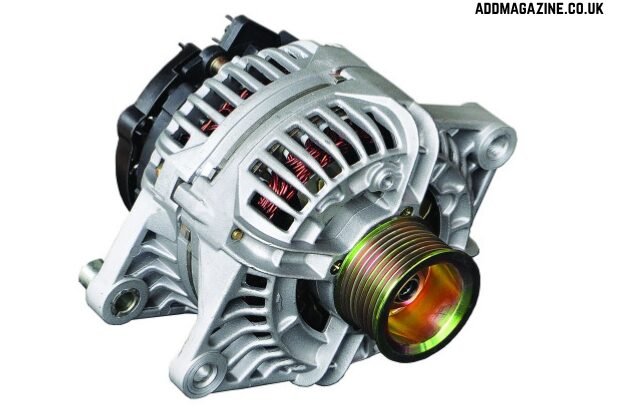
A simplified single-wire design eliminates the external regulator entirely. The regulator is built in. The charging circuit requires only one connection to a 12-volt power source. Fewer wires. Fewer connections. Fewer things go wrong.
This is where the 12-valve Cummins 1-wire alternator becomes a reference point — not just as a product, but as an illustration of how reducing complexity improves reliability without sacrificing performance.
What Experienced Builders Know
There is a skill gap in any technical discipline between people who add and people who subtract. Early in a career, the instinct is to add — more sensors, more monitoring, more backup systems. Experience teaches the opposite lesson. The goal is to achieve the required outcome with the minimum viable architecture.
This thinking shows up across disciplines. Software engineers talk about reducing dependencies. Structural engineers talk about load paths.
The cleanest builds, the ones that run for years without incident, tend to be the ones where someone made a deliberate decision to remove something rather than add it.
Diagnostics Become Faster
There is a practical payoff to simplicity that rarely gets discussed: fault-finding speed. When a system has ten wires and two regulators and three connectors, diagnosing a charging fault is a process of elimination that can consume an afternoon. When the same function is handled by a single integrated unit with one power connection, the diagnostic tree collapses.
For working vehicles — farm trucks, tow rigs, commercial conversions — downtime is a direct cost. A system that is easier to diagnose is a system that spends more time operating. This is not a small consideration. It is the core economic argument for simplified builds.
The Build as a Statement
There is also something worth acknowledging about craft. A build that achieves more with less is not just efficient — it reflects a standard. Builders who think this way tend to carry that standard across every decision in a project, from the charging system to the fuel lines to the cab controls.
Complexity often masquerades as capability. That outcome does not come from adding things. It comes from knowing precisely what to take away. Simplicity, in a diesel build, is not a shortcut. It is the destination.