The End of Predicting What Customers Will Buy
For decades, businesses have relied on forecasting to guide production decisions. Demand estimates helped manufacturers schedule output, retailers determine stock levels, and procurement teams secure materials long before products reached customers. When forecasts proved accurate, the model delivered efficiency, predictable workflows, and economies of scale.
However, business conditions have changed significantly. Markets now move faster than many traditional planning cycles can accommodate. Consumer preferences evolve rapidly, product lifecycles continue to shorten, and external events can reshape demand patterns with little warning. A production strategy built around assumptions made six or twelve months earlier may struggle to keep pace with current market realities.
Recent years have exposed those weaknesses. Supply-chain disruptions, shifting consumer behaviour, labour shortages, geopolitical uncertainty, and inflationary pressures have highlighted the risks associated with rigid operating models. Many organisations discovered that efficiency alone could not protect them when demand changed unexpectedly, or supply networks came under strain.
As a result, business leaders have started reassessing long-established production philosophies. Financial Times reporting on supply-chain resilience trends has highlighted how organisations increasingly prioritise adaptability, visibility, and resilience alongside cost efficiency. Rather than focusing solely on producing at scale, many businesses now seek greater flexibility in how they respond to changing conditions.
The shift does not mean forecasting has lost its value. Forecasts remain essential for planning investment, allocating resources, and supporting long-term decision-making. However, many organisations no longer view forecasting as a complete solution. Instead, they increasingly combine forecasting with more responsive operating models that keep production decisions closer to real customer demand.
That change reflects a broader business reality. In an environment defined by uncertainty, the ability to adapt often creates greater value than the ability to predict.
Why Forecasting Creates Hidden Business Risk
Forecasting plays an important role in business operations, but every forecast contains a degree of uncertainty. Even the most sophisticated models rely on assumptions about future market conditions, customer behaviour, competitor activity, and economic performance. When those assumptions prove inaccurate, the consequences can affect multiple areas of the business.
Excess inventory remains one of the most common outcomes of forecast error. Businesses often commit substantial resources to products they expect customers to purchase in significant volumes. When demand fails to materialise, warehouses fill with unsold stock, storage costs increase, and working capital becomes trapped inside inventory that generates little or no return.
The financial impact extends beyond warehousing expenses. Unsold inventory frequently leads to discounting, margin erosion, and write-offs. Capital that could have funded recruitment, technology investments, product development, or growth initiatives instead remains tied to products that no longer reflect current demand.
Underestimating demand creates a different set of challenges. Stock shortages can result in missed sales opportunities, dissatisfied customers, and operational disruption. Businesses may need to expedite production, pay higher procurement costs, or prioritise urgent fulfilment activities simply to recover from inaccurate forecasting assumptions.
The problem becomes even more pronounced in markets characterised by rapid change. Consumer preferences can shift within weeks rather than months. New competitors can emerge unexpectedly. Economic events can influence purchasing behaviour almost immediately. A forecast developed months earlier may no longer provide a reliable foundation for production decisions.
Many organisations now recognise that inventory exposure represents a strategic risk rather than a simple operational issue. Large inventory positions can reduce financial flexibility and limit an organisation’s ability to respond to new opportunities. Businesses that commit heavily to forecast-driven production often find themselves carrying significant risk whenever market conditions change faster than expected.
Forecasting will always remain an important business tool. However, many organisations are discovering that reducing dependence on long-range predictions can strengthen resilience, improve cash flow management, and create greater operational flexibility.
Why Flexibility Has Become a Competitive Advantage
Businesses once viewed operational flexibility as a desirable capability. Today, many consider it a competitive necessity.
The rise of e-commerce, digital marketplaces, and real-time customer feedback has accelerated the speed at which markets evolve. Customers expect businesses to respond quickly to changing preferences, emerging trends, and fluctuating demand. Organisations that cannot adjust often find themselves competing against businesses that can.
Flexible operating models allow organisations to respond more effectively without introducing unnecessary complexity. Rather than committing resources exclusively to fixed production schedules and long planning horizons, businesses can make adjustments as new information becomes available. Inventory levels, sourcing decisions, production capacity, and fulfilment priorities can all evolve in response to actual market conditions.
That responsiveness creates tangible commercial advantages. Businesses can test new products without committing significant capital upfront. They can react more quickly when demand increases unexpectedly. They can reduce exposure to obsolete inventory while improving their ability to meet customer expectations.
Flexibility also strengthens resilience. Deloitte’s research has found that supply-chain leaders increasingly view agility, resilience, and efficiency as interconnected capabilities rather than separate objectives. That shift reflects a broader move away from rigid operating models and towards systems that can adapt quickly to disruption while maintaining operational performance. Organisations that build those capabilities often place themselves in a stronger position to protect customer relationships, preserve continuity, and respond effectively during periods of uncertainty.
Importantly, flexibility does not mean abandoning efficiency. The most successful organisations balance both objectives. They continue to pursue operational discipline while building systems that allow them to respond when conditions change. Rather than choosing between efficiency and adaptability, they recognise that long-term competitiveness increasingly depends on achieving both.
The growing emphasis on flexibility reflects a broader shift in business thinking. Competitive advantage no longer comes solely from producing more, sourcing more cheaply, or forecasting more accurately. Increasingly, it comes from responding faster than competitors when market conditions evolve.
Businesses that can adapt quickly often place themselves in a stronger position to preserve working capital, reduce operational risk, and capture emerging opportunities. In uncertain markets, responsiveness has become a strategic capability rather than a purely operational concern.
The Rise of Demand-Led Production Models
As businesses seek to reduce forecasting risk without sacrificing growth, many are turning to demand-led production models.
Unlike traditional forecast-based manufacturing, demand-led approaches aim to bring production decisions closer to actual customer demand. Rather than committing significant resources to inventory months in advance, businesses retain greater flexibility and make production decisions using more current market information.
The principle is straightforward. The shorter the gap between customer demand and production activity, the lower the risk associated with inaccurate forecasting assumptions.
Demand-led models help organisations reduce inventory exposure while maintaining their ability to serve customers effectively. Businesses can launch products with lower upfront commitments, assess market response more quickly, and make adjustments based on real purchasing behaviour rather than projected demand alone.
The approach has gained traction across a wide range of industries. Retailers use smaller inventory commitments to test new product categories. Manufacturers increasingly seek production systems that can adapt to changing order volumes. E-commerce businesses use demand signals and customer data to guide fulfilment decisions in near real time.
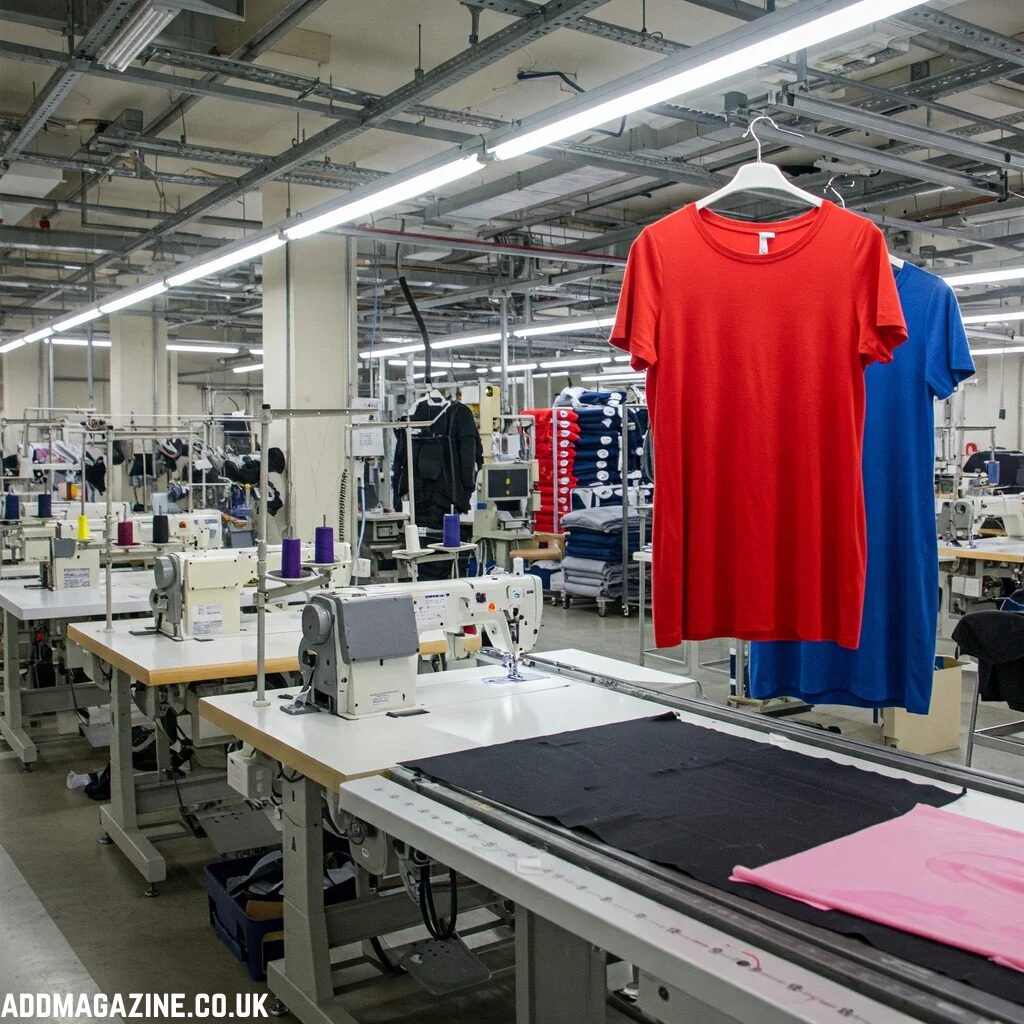
One reason demand-led models continue to gain momentum is that businesses no longer need to commit to large production runs before understanding real customer demand. Advances in fulfilment technology, automation, and modern garment production have enabled companies to respond more quickly to market signals, reducing inventory exposure while maintaining product availability. This shift allows businesses to align production more closely with actual demand rather than relying solely on long-range forecasts.
Oracle describes supply-chain agility as the ability to adjust operations, inventory management, and production processes quickly in response to changing market conditions. That capability allows organisations to react more effectively when demand fluctuates, helping them balance efficiency with responsiveness rather than treating the two objectives as competing priorities.
Importantly, demand-led production does not eliminate planning. Successful organisations still forecast future demand, monitor market trends, and allocate resources strategically. The difference is that they build operating models that adapt when forecasts inevitably differ from reality. That flexibility reduces risk while improving the organisation’s ability to capture opportunities as they emerge.
How Businesses Reduce Waste Without Sacrificing Growth
Many business leaders associate operational flexibility with increased cost or reduced efficiency. In practice, flexible production often helps organisations eliminate waste that traditional forecast-driven models struggle to avoid.
Inventory represents one of the largest sources of hidden operational waste. Excess stock consumes warehouse capacity, increases handling costs, requires additional management resources, and often results in markdowns when products fail to sell at expected volumes. Even when inventory eventually sells, businesses may experience reduced margins and weaker cash flow throughout the process.
Flexible production models address that challenge by reducing the need for large inventory commitments. Organisations can produce closer to actual demand, reducing the likelihood of accumulating significant unsold stock. As inventory exposure decreases, businesses gain greater control over working capital and improve their ability to allocate resources to higher-value activities.
The benefits extend beyond inventory management. Reduced waste improves operational efficiency across procurement, logistics, fulfilment, and warehouse operations. Teams spend less time managing excess stock and more time supporting activities that contribute directly to growth and customer satisfaction.
Working capital preservation also becomes a significant advantage. Capital that would otherwise remain tied up in inventory can support expansion projects, technology investments, product development initiatives, or recruitment plans. Greater financial flexibility often allows businesses to respond more effectively when market opportunities arise.
The most effective organisations view flexibility as a tool for improving efficiency rather than as a replacement for it. They continue to focus on cost control, process optimisation, and productivity while reducing unnecessary exposure to forecasting risk. As a result, they often achieve leaner operations without limiting their ability to scale.
Growth and efficiency are not mutually exclusive objectives. Flexible production models increasingly demonstrate that businesses can pursue both simultaneously by aligning operational decisions more closely with real-world demand.
Technology Is Making Flexible Production More Accessible
Technology has played a critical role in accelerating the shift towards more flexible operating models.
Historically, many organisations lacked the visibility required to make responsive production decisions. Information moved slowly between departments, forecasting updates took time to implement, and operational changes often required significant manual intervention. Those limitations encouraged businesses to rely heavily on long-term planning because reacting quickly was often impractical.
Modern technology has changed that equation.
Digital platforms now provide real-time visibility across inventory, procurement, production, and fulfilment activities. Automation reduces administrative delays and helps organisations process information more quickly. Integrated systems allow decision-makers to identify changing demand patterns earlier and adjust operations before small issues become larger problems.
Improved visibility creates a significant competitive advantage. Businesses can respond more quickly to customer behaviour, identify emerging trends sooner, and make better-informed operational decisions. Faster access to accurate information supports both efficiency and adaptability, allowing organisations to balance short-term responsiveness with long-term planning objectives.
Research into supply-chain hyperagility highlights the growing importance of systems that enable rapid adaptation during periods of disruption. Organisations increasingly recognise that resilience depends not only on preparation but also on the ability to respond quickly when circumstances change. Technology supports that capability by improving visibility, accelerating communication, and reducing the friction associated with operational adjustments.
The barriers to flexible production continue to fall as digital tools become more accessible. Capabilities that were once available primarily to large enterprises now support businesses across a much wider range of industries and sizes. As adoption increases, flexibility is becoming a practical option rather than a specialist operational strategy.
Building Businesses That Can Adapt Faster
Forecasting will remain an essential component of business planning. Organisations still need to anticipate future demand, allocate resources, and make strategic investment decisions. Forecasts provide direction, support budgeting processes, and help businesses prepare for future growth.
However, forecasting alone no longer provides sufficient protection against uncertainty.
Market conditions change too quickly, customer expectations evolve too rapidly, and external disruptions occur too frequently for many organisations to rely exclusively on long-range assumptions. Businesses increasingly recognise that resilience depends not only on predicting future outcomes but also on responding effectively when reality differs from expectations.
Flexible production offers a practical response to that challenge. By reducing inventory exposure, improving responsiveness, and aligning operations more closely with actual demand, organisations can build stronger foundations for sustainable growth.
The businesses that thrive in the years ahead may not be those that forecast most accurately. They may be the organisations that adapt most effectively when conditions change.
In a business environment defined by uncertainty, flexibility is no longer simply an operational advantage. It is becoming a core strategic capability.