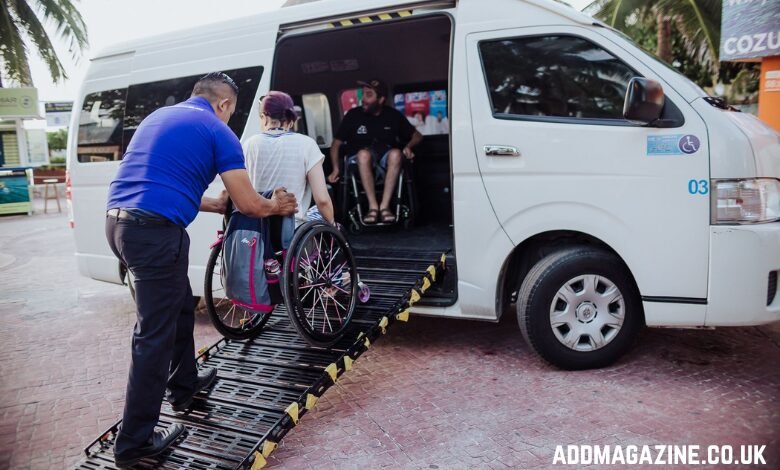
Getting around town should not be a lottery. Yet for many wheelchair users across England, finding a taxi that can actually accommodate them remains a daily challenge. While London’s black cabs are widely recognised for accessibility, the situation outside the capital is far less consistent.
The gap is not only inconvenient. It affects independence and everyday mobility. Disabled adults often make fewer journeys than non-disabled people, and difficulty securing reliable accessible transport contributes to this difference. Coverage of wheelchair accessible taxis varies widely across England, leaving passengers uncertain whether they will be able to book suitable transport when they need it.
Change is beginning to take shape. The government has signalled plans for national minimum standards in taxi licensing, with stronger expectations around disability training and monitoring of service refusals. Local authorities are also starting to set clearer targets for accessible vehicles within licensed fleets.
National Standards for Wheelchair Accessible Taxis
England’s taxi licensing system has long operated through local authorities, each setting its own requirements. As a result, accessibility standards differ significantly from one district to another. The government has indicated that national minimum standards for taxis and private hire vehicles may gradually bring more consistency.
Driver training plays a key role in accessibility. Proper disability awareness training helps drivers assist wheelchair users safely and respectfully. It also ensures compliance with legal responsibilities under the Equality Act, covering areas such as safe boarding assistance, wheelchair restraint procedures and respectful communication with passengers.
Monitoring service refusals is another priority. Licensing authorities are increasingly tracking incidents where wheelchair users are declined a journey without lawful reason. Training requirements and clearer reporting procedures are expected to support better accountability across taxi fleets.
Under the Equality Act 2010, drivers of designated wheelchair accessible vehicles must carry passengers travelling in wheelchairs without additional charges. The national framework currently under discussion is expected to develop gradually over several years as licensing authorities align their local policies with national standards.
Regional Disparities in WAV Coverage Across England
The national average for wheelchair accessible taxis outside London is around 37.5%, but this figure masks significant regional differences. Some West Midlands authorities report accessible vehicle levels above 30%, while several rural or smaller urban areas remain below 5%.
These differences influence how easily wheelchair users can secure transport. In areas with smaller fleets, passengers may struggle to find an available accessible vehicle during peak periods. Fleet operators planning accessible vehicle purchases often review available wheelchair accessible taxis from Cab Direct when assessing models designed to meet UK taxi licensing and wheelchair access requirements.
Private hire vehicles show an even wider gap. Nationally, only a small proportion of PHVs meet full wheelchair accessibility standards. Urban areas generally support higher levels of accessible vehicles because larger fleets make investment more viable.
Rural areas often face greater challenges. Smaller fleets and tighter operating margins make the upfront cost of accessible vehicles more difficult to manage. Some councils therefore offer grant schemes or incentives to encourage operators to introduce wheelchair accessible taxis into their fleets.
Passenger Rights and Practical Booking Workflows
Wheelchair users booking a taxi in England are protected by the Equality Act 2010. The legislation provides specific rights designed to ensure equal access to transport services.
Drivers of designated wheelchair accessible vehicles must accept passengers travelling in wheelchairs, assist with boarding and exiting the vehicle, help secure the wheelchair safely, and provide reasonable assistance throughout the journey.
Passengers cannot be charged extra for this support. Local authorities publish designated vehicle lists that identify which licensed vehicles meet accessibility requirements. These lists help passengers confirm whether operators in their area provide compliant services.
Booking an accessible vehicle can still present challenges. In some areas, information about which companies operate accessible taxis is incomplete or difficult to verify. Miscommunication during phone or online bookings may also result in a standard vehicle being dispatched instead of an accessible one.
If a driver refuses a journey without lawful justification, passengers can report the incident to the relevant licensing authority. Complaint procedures allow authorities to review cases and take appropriate action when drivers fail to meet their obligations. These protections reflect the duty to make reasonable adjustments for disabled people under UK equality law.
Procurement Strategies and Total Cost of Ownership Considerations
Expanding an accessible taxi fleet involves careful planning. Fleet operators must decide between purpose-built wheelchair accessible taxis and converted vehicles. Each option has different implications for maintenance, operational downtime and licensing compatibility.
Converted vans may offer lower initial purchase costs, but they can introduce additional servicing requirements or affect long-term resale value. Factory-built accessible taxis often require higher upfront investment, yet they typically provide more predictable servicing support and manufacturer warranties.
Electric vehicle adoption is also influencing procurement decisions. Although the purchase price of electric accessible taxis is higher, lower fuel costs and longer service intervals may offset these expenses over time.
Local funding programmes can also affect purchasing decisions. Some councils periodically introduce grants or incentive schemes designed to increase the number of wheelchair accessible taxis in licensed fleets. National schemes such as the plug-in wheelchair accessible vehicle grant support operators who invest in electric accessible vehicles. Because these policies change regularly, operators must monitor council announcements and review current GOV.UK guidance when planning fleet investments.
Improving access to wheelchair accessible taxis depends on more than individual operators. Licensing standards, fleet investment and driver training all influence how reliably passengers can travel. As national rules develop and local fleets expand, more consistent access to wheelchair accessible taxis can support greater independence for disabled passengers across England.