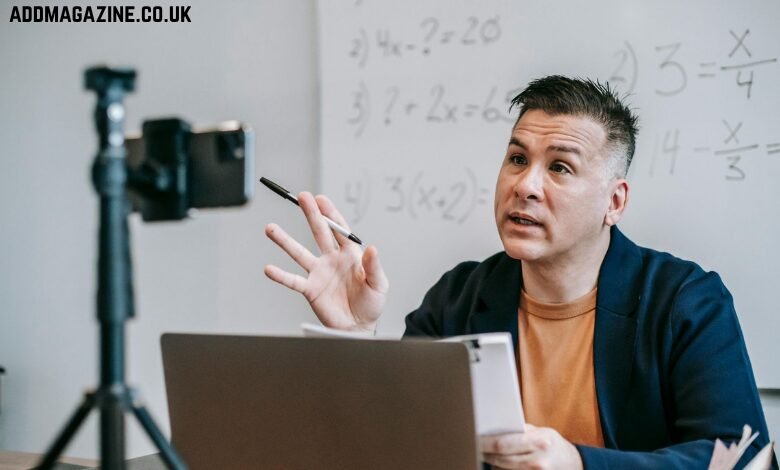
A Level Maths is hard. There is no getting around it. A lot of students who did really well in GCSE suddenly feel lost when they start A Level. The topics get harder, the pace gets faster, and there is less time in class to ask questions.
If your child is going through this right now, you are not alone. Thousands of families across the UK look for an A Level Maths tutor every year and the ones who find the right support see a real difference in their child’s grades and confidence.
In this blog, we will keep things simple and honest. We will tell you what to look for in a tutor, why one-to-one lessons work so well, and how a platform like IBDemystified can give your child exactly the support they need.
Why A Level Maths Feels So Hard
The jump from GCSE to A Level is bigger than most students expect. At GCSE, a lot of things are still quite straightforward. At A Level, topics like calculus, mechanics, and statistics start to layer on top of each other, and if one part is weak, the whole thing starts to fall apart.
Here are some of the most common problems students face:
• They miss one or two lessons and then feel completely behind
• They understand what the teacher says in class but cannot do it on their own at home
• They feel too embarrassed to ask for help in front of their class
• They revise for hours but still do not feel ready for exams
Sound familiar? This is exactly why so many students benefit from working with a tutor who can focus just on them, go at their pace, and fill in the gaps properly.
What Good Maths Tutors Actually Do
A lot of people think tutors just go over the same things the teacher already taught. But good Maths Tutors do much more than that.
They figure out exactly where a student is struggling not just what topic, but why they are struggling with it. Is it because they do not understand the concept? Or because they understand it but freeze under exam pressure? Or because their foundations from GCSE are a bit shaky?
Once they know the real problem, they work on it in a way that makes sense to that specific student. Some students learn better with diagrams. Others need to see lots of worked examples. Some just need someone to slow down and explain things without rushing.
A great tutor adjusts to the student not the other way around.
The Services That Can Help Your Child Most
When looking for tutoring support, it helps to know what is available. At IBDemystified, you will find a full range of tutoring options designed to support students at every level:
• Our Tutors — Experienced subject specialists who genuinely care about helping students improve
• 1:1 Tutoring Packages — One-to-one sessions built entirely around your child’s needs
• A Level Tutoring — Focused support for students studying A Level subjects including Maths
• AP Tutoring — Help for students following the Advanced Placement programme
• IGCSE Tutoring — Support for students taking IGCSE exams, wherever they are in the world
• GCSE Tutoring — Solid preparation for GCSE exams across all subjects
• IB Retakes — Dedicated help for students who need to resit IB exams
• IB Tutoring — In-depth support for all IB subjects including Maths Analysis and Maths Applications
• MYP Tutoring — Guidance for students in the IB Middle Years Programme
• IB Primary Years Programme — Gentle, age-appropriate support for younger students in the IB PYP
Whatever stage your child is at, there is a tutoring option that fits. Visit IBDemystified to find the right one for your family.
Why One-to-One Tutoring Works So Well
Think about a regular school lesson. There might be 25 or 30 students in the room. The teacher has to move at a pace that works for most of them — which means some students are bored and some are confused, and very few are getting exactly what they need.
In a one-to-one lesson, it is completely different. The tutor is there only for your child. They can:
• Spend more time on tricky topics without rushing
• Skip things your child already knows well
• Answer every single question without anyone else waiting
• Check understanding properly before moving on
• Make the lessons interesting and relevant to what is coming up in school
This is why students who have regular one-to-one sessions tend to improve faster than those who just do extra reading or group revision. The tutor knows exactly where the gaps are, and every minute of the lesson is spent filling them.
Starting from GCSE: Why It Pays to Get Help Early
If your child is still doing their GCSEs and thinking about taking Maths at A Level, now is a great time to get some extra support. Working with GCSE Tutors before A Level starts gives students a real head start.
A Level Maths builds directly on what is taught at GCSE. Topics like algebra, surds, trigonometry, and functions all come back at A Level but at a much harder level. If your child has a solid understanding of these at GCSE, the transition to A Level becomes so much easier.
Many students who work with a GCSE tutor in Year 10 or 11 end up doing much better at A Level because they are not trying to plug GCSE gaps while also keeping up with new A Level content. They start A Level already confident and already ahead.
Online Tutoring Easy, Flexible, and It Really Works
A few years ago, a lot of parents were unsure about online tutoring. Now it is completely normal — and for many students, it actually works better than in-person lessons.
Here is why online tutoring is so popular:
• No travel time — lessons happen at home, which saves a lot of hassle
• Flexible timing — you can book sessions around school, clubs, and family life
• Access to better tutors — you are not limited to whoever lives nearby
• Students often feel more relaxed learning at home without anyone watching
• Digital tools tutors can share screens, use virtual whiteboards, and send notes after the lesson
Platforms like IBDemystified are built for online learning. The whole experience is smooth, the tutors are used to teaching online, and students can access their materials and notes easily between sessions.
How to Know If Your Child Needs a Tutor Right Now
Sometimes it is obvious your child is failing tests or coming home stressed every day. But sometimes the signs are a bit more subtle. Here are some things to watch out for:
• They spend a long time on homework but still get things wrong
• They say Maths is boring or that they hate it often this is actually frustration in disguise
• Their grades have dropped compared to the last school year
• They are putting Maths revision off until the last minute
• They feel nervous or anxious before Maths tests
If any of these sound familiar, it is worth booking even just a trial session with a tutor. Often just a few lessons are enough to turn things around.
The first session with a new tutor is usually about getting to know each other and finding out where your child is. A good tutor will not just launch straight into teaching they will ask questions, look at recent work, and get a feel for how your child thinks and learns.
After that, the sessions will start to have a clear focus. The tutor might work through specific topics, go over past paper questions, or practise exam technique. As the weeks go on, you will start to notice your child:
• Talking more positively about Maths
• Finding homework easier to do
• Feeling more prepared before tests
• Getting better scores on class assessments
How Frequently Should Your Child Attend Tutoring Sessions for Maximum Benefit?
For most students, once a week is the sweet spot. It gives enough time to practise between sessions without losing momentum. Here is a simple guide:
• Once a week: Works well for most students throughout the school year
• Twice a week: Good during busy revision periods or when exams are coming up soon
• Intensive sessions: Very useful in the final few weeks before exams focused past paper practice
The most important thing is to keep the sessions regular. Even one hour a week, every week, adds up to a huge amount of focused learning over a term or a school year.
Frequently Asked Questions
Q: How do I know if the tutor is right for my child?
Book a trial session first. Most good tutors offer this. After one or two sessions, your child should feel comfortable with the tutor and start to feel a bit more confident. If they dread the sessions or nothing seems to be clicking, try someone else it is totally fine to find the right fit.
Q: What if my child is studying the IB rather than A Levels?
No problem at all. IBDemystified specialises in IB tutoring including IB Maths, which covers both Analysis & Approaches and Applications & Interpretation. They also support students in the MYP and Primary Years Programme, so there is help available at every stage of the IB.
Q: My child is doing IGCSE is there support for that too?
Yes. IGCSE Tutoring is one of the core services available at IBDemystified. Whether your child is taking Cambridge IGCSE or another board, the tutors know the syllabus well and can help with exam preparation and topic revision.
Q: How much does tutoring cost?
Prices vary depending on the subject and type of support. One-to-one sessions are generally priced per hour, and many tutoring platforms offer packages which can work out better value for families booking regular sessions. Check the IBDemystified website directly for up-to-date pricing.
Q: Can tutoring help with IB retakes?
Yes, and this is actually one area where good tutoring makes a massive difference. IB Retakes require students to revisit and truly understand material they may have struggled with the first time. Having a dedicated tutor to guide that revision rather than trying to do it all alone can be the thing that turns a retake into a pass.
Q: Is online tutoring suitable for younger students too?
Absolutely. Even students in the IB Primary Years Programme can benefit from online support. Sessions for younger students are kept shorter and more interactive to hold attention. Good tutors who work with younger children know how to keep things fun and engaging.