Hip pain can slowly change everyday life. Some people feel discomfort while walking, while others notice stiffness when standing up, climbing stairs, or sitting for long periods. In many cases, the pain does not come from only one small area. The hips work closely with the spine, pelvis, knees, and posture, which means even a small alignment issue can create pressure across the lower body. That is why proper medical imaging is important when hip pain keeps returning or becomes difficult to manage.
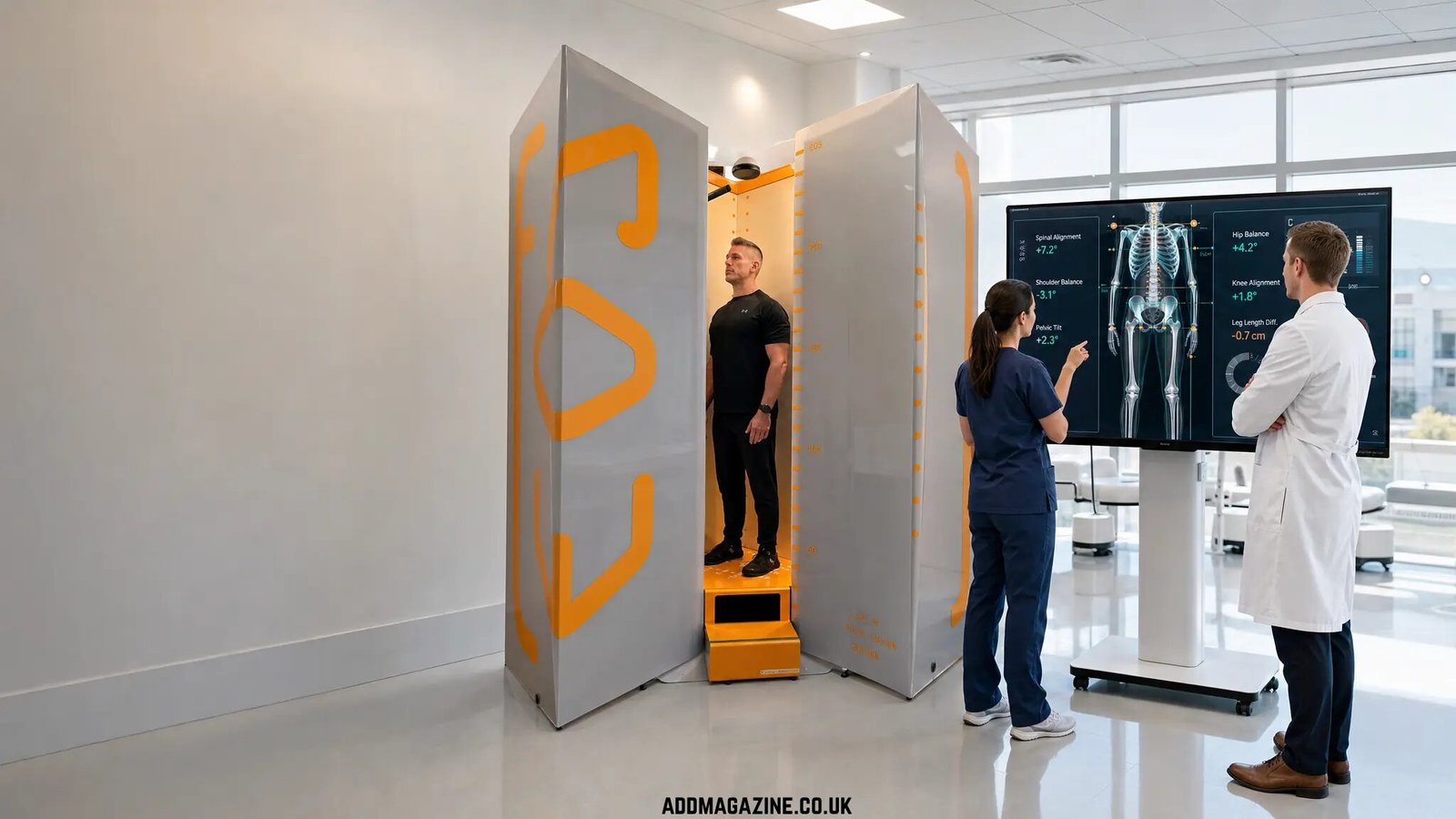
Traditional scans can sometimes miss how the body behaves under normal pressure because many images are taken while lying down. A standing EOS scan gives doctors a more natural view of the body in motion and under weight-bearing conditions. Clinics like ScanAlign use advanced 3d scan technology to help patients understand alignment problems more clearly. This type of medical scanning can reveal issues linked to posture, joint balance, leg length difference, and hip positioning that may not appear on standard imaging.
What Is a 3D Scan in Medical Imaging?
A 3d scan in healthcare creates a detailed image of bones and body alignment from multiple angles. Instead of showing only a flat picture, it helps doctors see how different body parts connect and work together.
Modern medical imaging is now used for much more than broken bones. Doctors also use it to study:
- Joint alignment
- Posture problems
- Hip movement
- Spine balance
- Knee positioning
- Leg length difference
A medical scanner 3d system gives a clearer understanding of how pressure moves through the body while standing or walking.
Why Hip Pain Is Sometimes Hard to Diagnose
Hip pain does not always start inside the hip joint itself. In some cases, the real problem begins in the lower back, pelvis, knees, or even foot alignment.
Common reasons hip pain becomes difficult to diagnose include:
- Pain moving between different body areas
- Posture changes over time
- Uneven weight distribution
- Muscle compensation
- Small alignment issues becoming worse slowly
This is where advanced diagnostic imaging becomes useful because it looks at the whole body alignment instead of focusing on only one spot.
Important Note: Some hip alignment problems only appear while standing. A lying-down scan may not always show the same pressure or imbalance.
How an EOS Scan Works
An EOS scan is a modern imaging system that captures the body while standing naturally. The scan is fast, comfortable, and uses lower radiation than many traditional imaging methods.
During the scan:
- The patient stands in a natural position
- Front and side images are captured together
- The system creates detailed body alignment images
- Doctors study posture, hips, spine, knees, and lower limbs
Unlike many traditional scans, EOS imaging shows how the body handles normal weight and balance during everyday movement.
You can learn more about EOS scans and how they are used for posture and joint analysis.
What an EOS Scan Can Reveal About Hip Pain
An EOS scan can provide useful details that may help doctors understand the real cause of ongoing discomfort.
1- Hip Joint Alignment
The scan shows whether the hips sit evenly or if one side carries more pressure than the other.
2- Pelvic Position
Pelvic tilt or rotation can affect the hips and lower back together.
3- Leg Length Difference
Even a small difference in leg length may create stress on the hips over time.
4- Posture Imbalance
Poor posture can change body movement and place extra pressure on hip joints.
5- Knee and Spine Connection
Hip pain is sometimes connected to knee alignment or spinal imbalance rather than the hip itself. Depending on your condition, treatments such as spinal decompression can help relieve pressure on spinal discs and support long-term recovery.
EOS Scan vs Traditional Medical Imaging
| Body Area | What Can Happen | Body Area |
| Spine | You start slouching or your back aches | Spine |
| Pelvis | One side feels higher than the other | Pelvis |
| Hips | Your walk changes without you noticing | Hips |
| Knees | Extra pressure builds up over time | Knees |
| Legs | Your muscles work unevenly | Legs |
This comparison helps explain why some doctors prefer EOS imaging for posture and alignment-related pain.
Conditions Where EOS Medical Scanning Helps
EOS imaging is commonly used for several musculoskeletal conditions connected to posture and alignment.
Common Conditions Include:
- Hip pain
- Scoliosis
- Back pain
- Knee alignment issues
- Pelvic imbalance
- Leg length difference
- Walking difficulties
- Sports-related posture problems
Many patients visiting ScanAlign are looking for answers after months of ongoing discomfort.
Benefits of Advanced Diagnostic Imaging
Modern medical imaging offers more than just clearer pictures. It also helps doctors make better treatment decisions.
Key Benefits
- Better understanding of body alignment
- Faster diagnosis support
- Improved treatment planning
- Lower radiation exposure
- More accurate posture analysis
- Easier monitoring over time
Patients often feel more confident when they can clearly understand what is happening inside their body.
Important Note: A scan alone does not replace medical advice. Imaging works best when combined with professional assessment and symptom history.
Why Standing Scans Matter for Hip Pain
The body behaves differently while standing compared to lying flat on a table. Gravity changes posture, balance, and pressure across the joints.
For example:
- The pelvis may tilt differently
- One hip may carry more weight
- Knees may shift inward or outward
- The spine may compensate for imbalance
Standing diagnostic imaging helps doctors see these changes more naturally.
This is one reason why medical scanning technology using EOS imaging has become increasingly valuable for posture-related conditions.
When Someone Should Consider an EOS Scan
People usually consider advanced imaging when pain continues without clear answers.
An EOS scan may help if someone experiences:
- Long-term hip pain
- Uneven walking patterns
- Posture imbalance
- Pain while standing for long periods
- Hip pain connected to back pain
- Joint discomfort after injury
- Preparation for surgery or treatment planning
The goal is not only to find pain but also to understand why the body is under pressure.
Conclusion
Hip pain can come from many different causes, and sometimes the problem is linked to overall body alignment rather than the hip alone. Modern medical imaging now allows doctors to study posture, balance, and joint positioning in much greater detail. A standing EOS scan helps reveal how the body works under natural pressure, making it easier to identify issues connected to posture, pelvis alignment, knees, spine, and leg length differences. For many patients, clearer imaging becomes the first step toward understanding long-term discomfort and planning better treatment decisions.
Get Clearer Answers for Hip Pain
Looking for a better understanding of posture, hip alignment, or joint imbalance? Book an advanced EOS scan with ScanAlign for detailed standing 3D medical imaging.
Book your free video consultation
FAQs
What is an EOS scan?
An EOS scan is a low-radiation imaging system that captures detailed standing images of the body to study posture, alignment, and joint balance.
Can an EOS scan help with hip pain?
Yes, EOS imaging can help doctors examine hip alignment, pelvic position, posture, and weight distribution linked to hip pain.
Is EOS imaging different from a normal X-ray?
Yes. EOS scans capture standing weight-bearing images and can provide more detailed alignment analysis than standard X-rays.
How long does an EOS scan take?
Most EOS scans are completed within a few minutes, making the process quick and comfortable for patients.
Does medical scanning for hip pain use high radiation?
EOS imaging uses lower radiation compared to many traditional imaging systems.
Who should consider advanced diagnostic imaging?
People with ongoing hip pain, posture imbalance, scoliosis, joint discomfort, or walking problems may benefit from advanced medical imaging.