Contemporary interiors are no longer built around fixed room definitions. The living room may also be a media room, informal workspace, reading corner, family gathering zone, and quiet retreat, notes UTZ Property Management professionals. As the way people use their homes becomes more fluid, furniture has had to become more adaptable.
This is one reason modular seating has become so important in modern interior design. It can define zones, guide movement, support different activities, and give open-plan spaces a stronger sense of structure.
In older interiors, the sofa often sat against a wall, facing a television or fireplace. Today, seating tends to play a more active role. It may separate the living area from the dining zone, create a conversation island, or allow the room to change as the household changes.
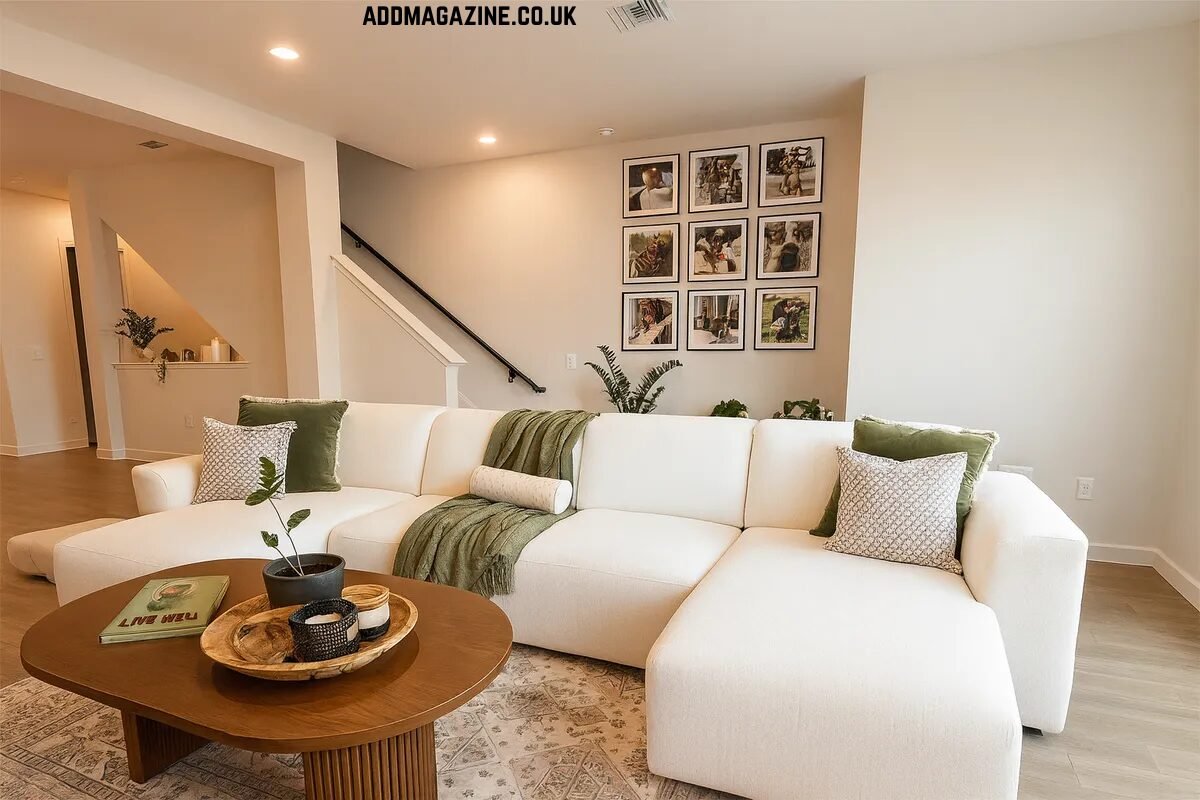
For homeowners designing flexible interiors, a modern sectional couch can become the anchor piece that gives a room both comfort and architectural clarity. When chosen carefully, it shapes how people move, gather, relax, and experience the space.
Seating as Spatial Architecture
In contemporary interiors, furniture often performs architectural work. A sectional can create a boundary without building a wall. It can define where the living area begins, how people enter the room, and where attention naturally settles.
This is especially useful in open-plan homes. When the kitchen, dining, and living areas share one continuous space, the room can easily feel undefined. A modular seating arrangement helps create order without closing the space off.
A sectional might frame a conversation zone. A chaise might extend toward a window and create a reading area. A corner unit might soften an awkward room shape. A low-profile sofa might preserve sightlines while still grounding the room.
This kind of spatial control is subtle, but it changes how a home feels. The seating is not just filling space. It is shaping space.
Why Modularity Fits Modern Living
Modern homes are expected to change. A living room may support quiet evenings during the week and larger gatherings on weekends. A couple may later become a family. A renter may move from one apartment to another. A homeowner may reconfigure the room after adding a work corner, media wall, or larger dining area.
Fixed furniture can make those changes difficult. Modular seating gives a room more room to adapt.
The appeal is not only that modules can be moved. It is that they allow a room to respond to life without losing its design identity. A sectional can be arranged for conversation, stretched for lounging, or adjusted to suit a different floor plan.
This flexibility works in both compact apartments and larger homes. In a small space, it can make every seat count. In a larger room, it can prevent the seating area from feeling scattered.
How a Sectional Changes the Room
A modular sofa affects more than comfort. It changes the way a room behaves.
| Design Need | How Modular Seating Helps |
| Open-plan zoning | Defines the living area without adding walls |
| Conversation | Turns seating inward to support face-to-face interaction |
| Lounging | Adds depth, chaise sections, or extended seating |
| Visual balance | Grounds large rooms and gives compact spaces structure |
| Flexibility | Allows the layout to adapt as household needs change |
This is why modular seating should be selected as part of the overall spatial plan, not as an isolated furniture purchase. Its size, shape, orientation, and material all influence the room around it.
The Social Shape of a Room
Seating determines how people relate to one another in a space. A straight sofa facing a screen creates one kind of experience. A sectional that turns inward creates another. Chairs placed around a central table invite conversation. A chaise facing a window invites retreat.
This is why modular seating should be chosen based on behavior, not only appearance.
If the room is mainly for family movie nights, a deeper sectional with generous seating may make sense. If the room is used for entertaining, a layout that encourages face-to-face conversation may work better. If the home needs a balance of social and private moments, a sectional with a chaise or open end can provide both.
The best interiors are not only visually balanced. They support the way people actually live together.
A modular sofa can also make a room feel more democratic. Instead of one “best” seat and several secondary ones, it can create a shared zone where everyone has a comfortable place to settle.
Proportion Matters More Than Size
A common mistake is assuming that a larger sofa automatically creates a more comfortable room. In reality, proportion matters more than size.
A sectional that is too large can dominate the room, block circulation, or make the rest of the furniture feel incidental. A piece that is too small can leave the space feeling unfinished. The goal is to choose seating that feels generous but still allows the room to breathe.
Before selecting a sectional, consider:
- the walking paths around the sofa;
- the distance between the seating and coffee table;
- the relationship between the sofa and windows, doors, fireplaces, or built-ins;
- whether the room needs an open end, corner shape, or chaise;
- how the sofa will look from adjoining spaces.
A contemporary room should feel composed, not crowded.
Low-profile sofas can be especially effective because they provide comfort without overwhelming the room visually. Raised legs, soft edges, and restrained silhouettes can help a sectional feel lighter even when it offers plenty of seating.
Material Choices Influence the Mood
The shape of modular seating affects the room’s structure, but material affects the atmosphere.
Leather can feel more tailored and architectural. The right choice depends on the room’s purpose and the lifestyle of the people using it.
Color also matters. Deeper tones can make a large room feel more grounded. Lighter upholstery can help a compact room feel open, though it may require more practical maintenance planning.
For contemporary interiors, texture often matters as much as color. A simple silhouette becomes more interesting when the fabric has depth. A large sectional feels less heavy when paired with natural materials such as wood, stone, wool, or ceramic.
The strongest rooms rarely rely on one material language. They create contrast without conflict.
Modular Seating and Open-Plan Living
Open-plan living has many advantages: more light, better visual connection, and a stronger sense of spaciousness.
Modular seating helps solve this by giving the room an internal structure. A sectional can define the living zone while leaving the kitchen and dining areas visually connected.
In larger open rooms, modular seating can prevent furniture from feeling like separate islands. In smaller open spaces, it can reduce the need for multiple chairs, making the layout cleaner.
The key is orientation. A sectional facing inward can create intimacy. A sectional facing outward can connect the living area to a view, fireplace, or media wall. A chaise can extend the seating zone without closing off movement.
Good open-plan design is not about leaving everything open. It is about creating zones that feel connected but distinct.
Fully Assembled Furniture and Design Continuity
Large seating pieces can be visually central, but they can also become difficult to manage if they arrive in too many parts or require complicated assembly.
For homeowners who want a finished space without a prolonged setup process, fully assembled furniture can support design continuity. A piece that arrives ready to use helps the room come together more quickly and reduces the disruption that often comes with furnishing a home.
This is where Povison’s approach fits contemporary living. Its focus on ready-to-use furniture supports buyers who want modern pieces that feel considered from the start, rather than furniture that becomes a project before it becomes part of the room.
For modular seating in particular, ease of setup matters because the piece often defines the entire space. When the central seating is resolved, the rest of the room becomes easier to compose.
Designing Around the Sectional
A modular sofa should not be selected in isolation. It works best when the surrounding elements respond to it. Side tables should serve the places people naturally sit. Rugs should be large enough to connect the seating area rather than float beneath only one part of it. Lighting should support both social use and quiet moments.
The sectional can also guide art placement. A long wall behind the sofa may need a large artwork or a balanced gallery arrangement. A low-profile sectional may allow for stronger wall decor, while a taller back may call for simpler styling.
Without them, a sectional may feel too dominant. With them, it becomes part of a larger composition. The goal is not to decorate around a sofa as an object. The goal is to build a room around the way the seating organizes life.
A More Flexible Future for Interiors
Modular seating has become popular because it answers a real design need. Contemporary homes are fluid. Rooms change function. Families grow. People entertain differently. Work and rest often happen in the same space.
A well-chosen sectional can help a home meet those changes with less friction. This is why modular seating should not be seen as a passing trend.
The contemporary living room is not simply a place to arrange furniture. It is a space that must hold multiple rhythms. Modular seating gives that space a clear centre while allowing it to evolve.