There is a particular kind of dread that hits an e-commerce customer when they lift a delivered package and hear something shift inside. That sound, that quiet, irreversible rattle means something went wrong between the warehouse and the front door. It’s a disappointment for the customer. To the store, it’s a refund, replacement, lost review, and lost relationship. Once it’s fixed, customers will remember.
You ignore it, and they leave silently forever and are not always forthcoming with the reasoning.
How Product Damage Affects Your Bottom Line
Many online retailers don’t realize the true cost of shipping damages until they crunch the numbers. Some of the costs will be refunds and replacements. And these are just the first few of the many things you’ll see.
There have been numerous studies across e-commerce that show that if a customer receives a defective order, they are far less likely to reorder, even with a 100% refund. A refund is only the remedy for the financial transaction.
Once you start comparing the numbers at the individual level, they’re truly frightening. A small amount of damage per month can gradually add up for an e-commerce business with hundreds of orders. How? You are taking the hit on the bottom line with the refunds, replacements, customer support time, and damage to your brand.
The 6 Most Common Causes of Shipping Damage in E-commerce
The first step towards damage prevention is knowledge of the causes of damage. Most e-commerce businesses might not expect the causes to be so predictable.
Insufficient Cushioning
Product damage is primarily due to inadequate cushioning. Your products in boxes without sufficient protection will move from one point to another and hit the box walls many times during the journey. All of which can involve dozens of handling operations.
Oversized Packaging
If there’s too much space in the box, your product will inevitably move during transport.
Poor Box Quality
There’s a silent killer in the form of poor boxes! Although it was structurally stable when packed, a box may become unstable when compressed by stacking in a delivery vehicle or warehouse.
Stacking Pressure
When carriers sort and load the vehicle, they feel the pressure from heavier packages, whereas your customers definitely feel it when receiving them.
Moisture Exposure
Moisture exposure is one of the most underestimated common causes. During the long delivery phase, the cardboard box can become so fragile that it is easily damaged by humidity or rain.
Improper Sealing
Without proper sealing, your boxes may partially open in transit, compromising the structure and potentially damaging your products or exposing them to the environment.
Four Packing Tips To Improve Protection
When you’re aware of the causes, solutions are easy. The four practices below can easily resolve issues with e-commerce product damage.
Match Box Size To Product Size
The internal dimensions of your packaging should provide sufficient protection, leaving no unoccupied space for the product to move around.
Use The Right Fill Material For Your Product
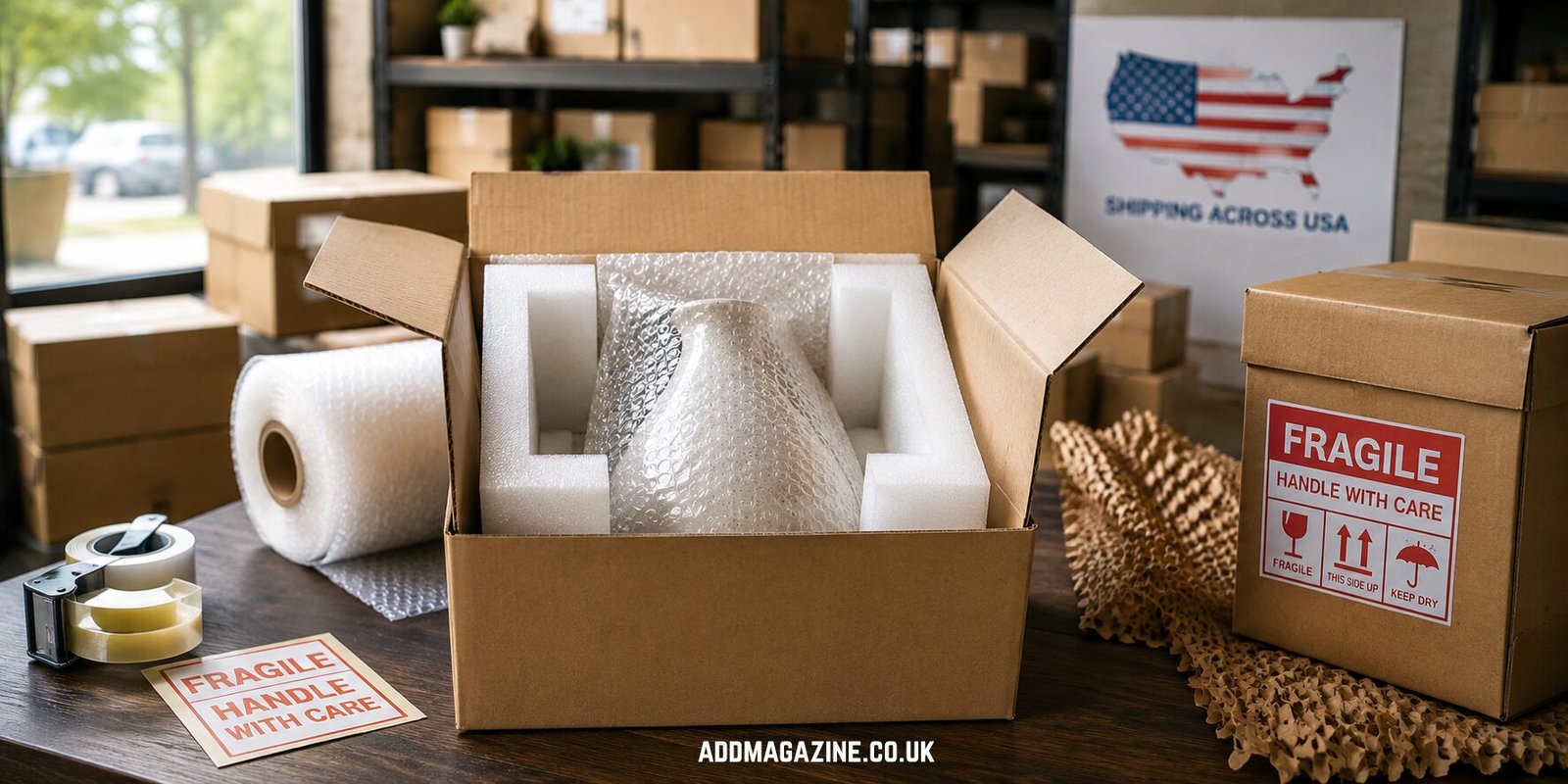
Ensure the correct filling material is used, depending on your product needs. For example, bubble wraps for lighter products or foam inserts for fragile goods.
Do The Double-Boxing Method For High-Value Or Fragile Items
Double-boxing high-value and/or fragile items. Fit your product into an inner box that is just tight enough, and then fit that box into an outer box with padding inside.
Seal Completely And Strongly
All seams of a shipping box should be sealed with tape—the side seams and corners, as well as the whole perimeter of each flap.
Extra Tips To Prevent Damage In Transit
In addition to the packing tips above, some extra practices set the best shippers apart from those who have frequent damage complaints.
Weight Distribution
Weight distribution is more important than what most sellers believe it is. Place lighter products on top and heavier ones at the bottom. This maintains the center of gravity and prevents your package from being handled improperly.
Label Fragile Items
Make sure to label fragile items, but don’t depend on the label. In some facilities, fragile markings make it easier to handle, but in any case, your packaging should still be strong enough to withstand rough handling.
Take The Climate & Season Into Account
Certain packaging materials and adhesives are influenced by the summer heat. And speaking of corrugated cardboard, it is vulnerable to moisture in winter. So, make sure you get your e-commerce packaging boxes from a reliable supplier that considers environmental stress in their material specifications.
Steps To Prevent Shipping Damages
It is important to have a system in place instead of making spot decisions.
Here are the steps you should try to prevent shipping damage.
Choose The Right Packaging Material
Regularly Audit Your Product’s Damage Rate
Regularly audit your damage rate and track complaints by product, packaging, or shipping route.
Develop Partnerships With A Reliable Packaging Supplier
Develop partnerships with a reliable packaging supplier that has e-commerce expertise.
Cost Consideration
Don’t sacrifice your product for a slight “lower” price. Good-quality packaging is non-negotiable when it comes to e-commerce shipments.
In Summary
Among all variables in online retail, the one most directly manageable is the risk of damage during shipment. Yet, it is one of the most underestimated. Each cracked product, collapsed box, and let-down customer is an opportunity missed, a chance that better packaging decisions could have averted.
To reduce product damage, make sure you choose appropriate packaging boxes, pack items precisely, seal them completely, and review each outbound shipment.