Atlanta has been one of the fastest growing metro areas in the country for years now, and that growth shows up most clearly on the road. More people moving into the region means more cars, more congestion, and longer commutes for people who already spend a good chunk of their day driving.
As the region adds residents, it also changes how people think about getting around, what their daily drive costs them in time and stress, and even how they think about Georgia car insurance options as more drivers share the same roads.
Here’s a closer look at how Atlanta’s growth is reshaping the daily commute, and what that means for the people behind the wheel.
A Region Adding Tens of Thousands of People a Year
Metro Atlanta added roughly 62,000 residents between mid-2024 and mid-2025, making it one of the fastest growing large metro areas in the country, behind only Houston and Dallas in raw numbers. That kind of growth doesn’t happen quietly. New housing developments, more workplaces, and more daily trips all follow.
Much of this growth is happening in the outer suburbs, places like Forsyth, Cherokee, and Henry counties, where commuters often face long drives into the city core for work. As more people settle further from job centers, the average distance and time spent commuting tends to climb.
Commute Times Are Already Among the Longest in the Country
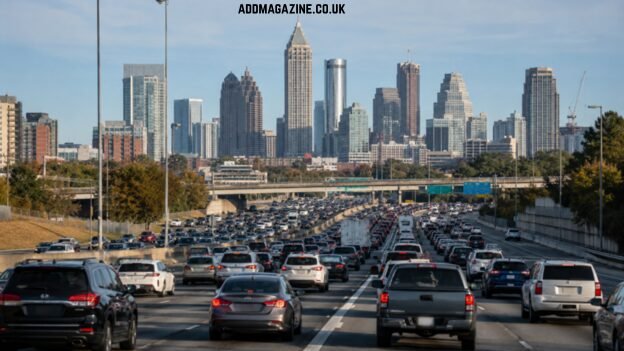
Atlanta regularly ranks among the most congested metro areas in the United States. Recent national traffic studies place metro Atlanta among the ten worst cities for traffic, with an average one way commute of around 31 minutes and almost five hours a week spent sitting in congestion.
That’s more time stuck in traffic than the national average, and it adds up fast over a year. For many commuters, this means leaving earlier, planning around peak hours, or simply accepting that a 20 minute drive across town might take twice as long during rush hour.
Growing Traffic Volumes Increase the Chances of Minor Collisions
When traffic volume increases faster than road capacity, the result is usually more stop and go driving. This kind of driving, full of sudden braking and close following distances, is a common setup for minor collisions and rear end accidents.
It’s not just frustrating. It also means more claims get filed, which insurers factor into pricing across the region over time. Drivers navigating Atlanta’s traffic daily are statistically more exposed to these small but costly incidents than someone commuting in a less congested area.
Longer Drives Add Wear and Tear to Vehicles
Spending more time on the road isn’t just a time cost. It’s a mechanical one too. Longer commutes mean more mileage, more brake wear from stop and go traffic, and a higher chance of a breakdown or mechanical issue showing up sooner than expected.
This is worth keeping in mind when budgeting for vehicle upkeep, since cars used for long daily commutes generally need more frequent maintenance than those driven occasionally.
Growth Is Also Changing the Cost of Living
Atlanta’s continued expansion can also influence everyday expenses, from home prices and transportation costs to insurance rates. Many motorists may need to rethink their spending and find savings while still keeping essential insurance protection.
Credit history is one factor that plays into this. Drivers with lower credit scores often face higher quotes, regardless of how clean their driving record is. If this applies to you, it can help to understand how to find cheap car insurance for bad credit, since knowing your options can make a real difference when comparing policies in a growing, increasingly expensive market.
New Arrivals and the Need for Flexible Coverage
A growing metro area also means a steady stream of new residents, people relocating for work, students arriving for school, and others moving in temporarily before deciding whether to stay long term. Not all of them need a full annual policy right away. For these situations, it helps to know that short term car insurance exists for exactly this kind of transition.
Are There Ways to Ease the Commute Itself
Population growth isn’t slowing down, but commuters do have some tools to work with. Remote and hybrid work schedules have shifted commuting patterns for a meaningful share of the workforce, spreading out rush hour rather than concentrating it into the same two windows every day.
Public transit expansion, carpooling, and staggered work hours are also part of the conversation in a region working to keep pace with its own growth. None of these fully solve the congestion problem, but together they can ease some of the daily pressure on drivers.
Frequently Asked Questions
Why is Atlanta traffic getting worse? Atlanta’s population has grown steadily for years, adding tens of thousands of residents annually. Since much of this growth happens in outer suburbs, more commuters are traveling longer distances into the city core, which adds pressure to roads that weren’t built for this volume.
Does commute length affect car insurance rates? Yes, in part. Insurers often consider how much a vehicle is driven and the level of congestion in a given area, since more time on the road and more stop and go traffic generally mean a higher chance of an accident or claim.