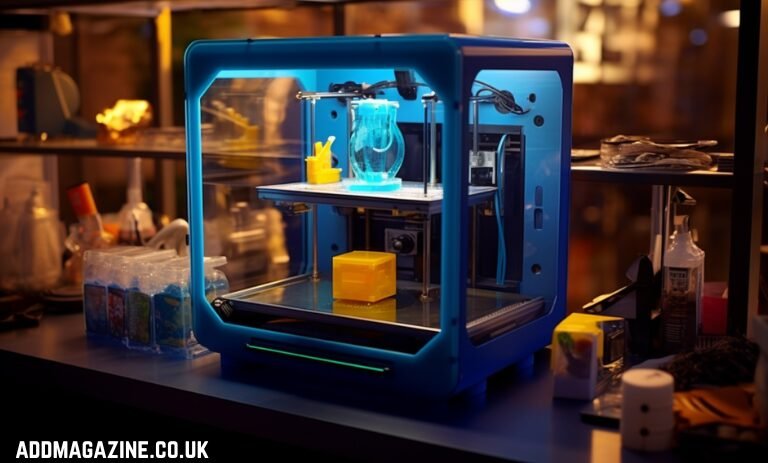
Every physical product begins as an idea.
It might start as a sketch on paper, a rough model created in design software, or a conversation about solving an everyday problem. From there, the concept gradually gains dimensions, features, materials, and a clearer purpose.
Yet there is an important gap between seeing a design on a screen and understanding how it will work in the real world.
A computer-generated model can look polished while hiding practical issues. A button may be too small to press comfortably. A casing may be difficult to assemble. A curved surface may appear elegant digitally but feel awkward when held. Even a seemingly minor detail can affect whether a finished product feels intuitive, durable, and professionally designed.
This is why prototyping matters.
By creating a physical version before committing to full production, designers can examine an idea from every angle, place it in a user’s hands, identify weaknesses, and make informed improvements. Resin 3D printing, particularly stereolithography, or SLA, has made this stage faster and more accessible for businesses, engineers, inventors, and creative professionals.
Why a Digital Design Is Only the Beginning
Modern design software allows people to create highly detailed three-dimensional models. Designers can adjust dimensions, change colours, simulate movement, and produce images that make an unfinished concept appear ready for the market.
These tools are valuable, but they cannot replicate every aspect of physical experience.
Products exist in a world of hands, pockets, tables, tools, packaging, gravity, light, and repeated use. A digital model does not automatically reveal whether an object is comfortable to hold or whether two components can be assembled easily. It may not show how reflections affect a surface or whether a small decorative detail remains visible at its true size.
A physical prototype introduces reality into the development process.
Once the design can be touched and tested, vague opinions become more specific. Instead of saying that a product “doesn’t feel quite right”, a team can identify that the grip needs to be wider, the edge should be softer, or the display needs to sit at a different angle.
These discoveries are much easier to address before manufacturing equipment, moulds, packaging, and marketing materials have been finalised.
What Is SLA 3D Printing?
SLA is a form of additive manufacturing that creates objects from liquid photopolymer resin.
Rather than depositing melted plastic through a nozzle, as happens with common filament printers, an SLA machine uses controlled light to cure liquid resin into solid layers. Each layer contributes to the final three-dimensional form until the complete part has been produced.
After printing, the component normally needs to be cleaned, cured, and separated from temporary support structures. Depending on its purpose, it may then be sanded, polished, painted, coated, or assembled with other parts.
One of the main attractions of SLA is the level of visual detail it can achieve. It can produce fine features, smooth surfaces, and complex shapes that would be difficult to represent clearly with rougher prototyping methods.
This makes it particularly useful when appearance and precision are central to the design review.
Turning Abstract Ideas Into Testable Objects
A prototype changes the way a team discusses a product.
When everyone is looking at a screen, different people may interpret the same model in different ways. An engineer may focus on dimensions, a marketer may imagine the final appearance, and a potential user may struggle to understand the scale.
A physical object gives everyone a shared reference.
Team members can pass it around, compare it with competing products, place it inside packaging, or test how it interacts with other components.
This does not mean the prototype must perform every function of the final product. Different prototypes can answer different questions.
A later version might test assembly, movement, or compatibility with electronic components. Another could be finished and painted for marketing photography or a presentation.
By separating these objectives, businesses can avoid trying to create one expensive prototype that does everything.
Where Smooth Surfaces Make a Difference
Not every prototype needs a refined appearance. A rough model may be perfectly suitable for checking overall dimensions or demonstrating a basic mechanism.
However, there are situations in which surface quality strongly influences the value of the prototype.
Consider a company developing a new cosmetic container. The proportions of the bottle, the curvature of the cap, and the quality of the visible surfaces all contribute to how premium the product feels. A heavily textured prototype could make it difficult to judge whether the design achieves the intended effect.
The same applies to consumer electronics, wearable devices, controls, lighting products, medical housings, jewellery concepts, and display models. Fine details and smooth transitions may be central to the identity of the product.
SLA helps designers evaluate these qualities before investing in production methods intended for much larger quantities.
The prototype can also be painted or finished to resemble the intended product more closely. This allows decision-makers to compare colour options, surface treatments, branding positions, and visual details using something tangible rather than relying entirely on rendered images.
Improving Products Through Iteration
The greatest value of rapid prototyping does not come from producing one model. It comes from making several versions and learning from each of them.
Imagine a team developing a handheld electronic device.
The first prototype may reveal that the body is too wide. The designers narrow it and produce a second version. During user testing, they discover that the new shape is comfortable, but the main control is difficult to reach.
None of these changes is dramatic on its own, but together they can transform the user experience.
Without prototypes, the team might debate these decisions using drawings and personal opinions. Physical testing replaces assumptions with evidence.
An SLA printing service can also allow teams to order detailed parts from their digital files without purchasing, operating, and maintaining specialist resin-printing equipment themselves.
This can be useful for start-ups, independent designers, research teams, and established companies that need prototypes occasionally or require capabilities beyond those available internally.
Applications Beyond Consumer Products
Resin 3D printing is often associated with product design, but its usefulness extends into many industries and creative disciplines.
Architecture and Interior Design
Architects can use detailed resin prints to represent façades, staircases, furniture, structural connections, and decorative features.
Medical and Healthcare Products
Developers can create accurate models of device housings, handles, interfaces, and specialised equipment. These prototypes can support ergonomic reviews and help teams communicate concepts to clinicians and other stakeholders.
Film, Theatre, and Model-Making
SLA can produce detailed miniatures, props, character elements, jewellery-like details, and masters for mould-making. Its ability to reproduce intricate geometry can reduce the amount of manual sculpting required.
Engineering
Engineers can use resin prototypes to check the shape, alignment, and assembly of smaller components. Specialist materials may also support certain functional tests, although the selected resin must match the mechanical and environmental demands of the application.
Choosing the Right Prototype Material
Different formulations may prioritise appearance, stiffness, toughness, transparency, flexibility, temperature resistance, or other characteristics. A material suited to a polished display model may not be appropriate for a component that must bend repeatedly or withstand significant impact.
The prototype’s purpose should therefore guide material selection.
For a purely visual model, smoothness and colour may be the main priorities. For an enclosure, the team may need enough strength to insert fasteners and test assembly.
Designers should also remember that prototype materials do not always behave exactly like the plastics intended for mass production. A successful test in printed resin does not automatically guarantee identical performance from an injection-moulded component.
Designing With the Printing Process in Mind
Thin walls can be fragile. Large flat areas may distort. Enclosed spaces can trap uncured resin.
Orientation also matters. The direction in which a part is printed can affect support placement, surface appearance, production time, and material use.
This does not restrict creativity. In many cases, understanding the process leads to cleaner and more intentional designs.
A component may be divided into several parts to simplify printing and finishing. A hollow model may include drainage openings in carefully concealed locations.
Recognising the Limitations
No manufacturing process is ideal for every project.
Standard SLA materials can be more brittle than some other printed plastics, making them less appropriate for components exposed to heavy impacts or repeated stress.
Support removal and post-processing add further steps after printing.
Size can also be a consideration. Large products may need to be printed as separate sections and assembled afterwards.
For these reasons, businesses should select a prototyping method according to the questions they need to answer. SLS or MJF may be preferable for certain functional plastic components, while CNC machining may be more appropriate when the prototype must closely reflect the behaviour of a production-grade material.
SLA is most effective when its particular strengths-detail, accuracy, surface quality, and access to specialist resins-align with the purpose of the part.
Avoiding Expensive Mistakes
Product-development costs rise as a project moves closer to production.
Changing a digital model may require only a few hours of design work. Changing a prototype takes more effort, but it is still relatively manageable. Changing production tooling, packaging, instructions, and finished inventory can be far more expensive.
Prototyping moves important discoveries into an earlier and less costly stage.
A physical model may reveal that a lid is difficult to remove, that an assembly contains unnecessary parts, or that a product occupies too much space in its packaging. Correcting these issues can reduce manufacturing complexity and improve the final customer experience.
A prototype can also prevent teams from becoming overly committed to an idea simply because it looks impressive in a presentation. Once the object exists physically, its strengths and weaknesses are harder to ignore.
Making Innovation More Accessible
Advanced prototyping was once associated mainly with large organisations that had specialist workshops, equipment, and technical teams.
Digital manufacturing platforms have changed this relationship. A small company can create a three-dimensional design, upload the file, select a process and material, and order one or several physical parts.
This access does not remove the need for engineering knowledge or thoughtful design. It does, however, reduce some of the barriers between an idea and its first realistic test.
Independent creators can demonstrate concepts without building a factory. Start-ups can present tangible products to investors. Established companies can explore experimental ideas without interrupting their main production operations.
The result is a development process in which more ideas can be tested before large amounts of money and material are committed.
The Real Purpose of a Prototype
A prototype is sometimes treated as an early version of a finished product. A more useful definition is that it is a tool for learning.
Its purpose is to expose uncertainty.
Does the product fit the user? Can the components be assembled? Does the surface communicate the intended quality? Will a customer understand how to operate it? Does the design still make sense when removed from the screen?
SLA gives designers a powerful way to explore these questions, especially when fine detail and visual finish matter.
The technology itself does not guarantee a successful product. A beautifully printed model can still represent a weak idea. What matters is how the prototype is used: whether the team tests it honestly, invites useful feedback, documents problems, and remains willing to revise the design.
The journey from screen to shelf is rarely a straight line. It is a cycle of making, observing, learning, and improving.
The more clearly a prototype supports that cycle, the more likely the final product is to feel considered when it eventually reaches the user’s hands.