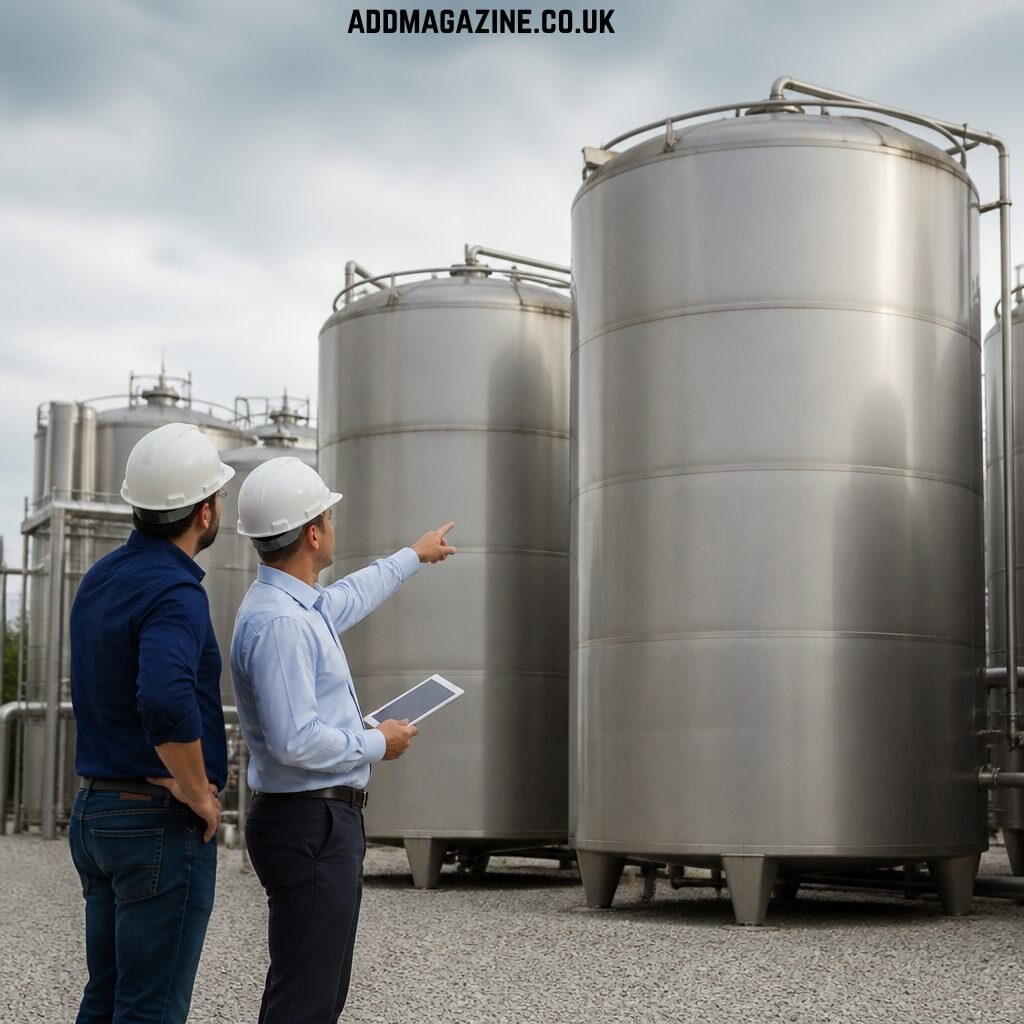
In the world of industrial process equipment, capital expenditure decisions can define the financial health of an operation for years to come. Whether you are managing a chemical processing facility, a food and beverage plant, or a water treatment operation, the cost of new equipment can be staggering. Savvy plant managers and procurement specialists have long understood that sourcing quality pre-owned process equipment — particularly storage and process tanks — offers a compelling alternative that balances cost efficiency with operational reliability. The market for used industrial tanks has matured considerably, and today buyers have access to a wide range of rigorously inspected vessels that meet demanding industry standards.
The Real Cost Advantage of Pre-Owned Process Tanks
New stainless steel or carbon steel tanks can carry price tags that stretch well into six figures, particularly for large-capacity vessels with specialized linings, agitation systems, or pressure ratings. When a facility is scaling up, replacing aging infrastructure, or launching a new production line on a constrained budget, the economics of purchasing used equipment become immediately attractive. Pre-owned tanks typically sell at a fraction of their original cost, yet when properly inspected and refurbished, they can deliver equivalent performance over many additional years of service life.
Beyond the upfront savings, lead times are another critical factor. Manufacturing a custom tank from scratch can take months, creating costly delays in production timelines. Used tanks, by contrast, are available for immediate inspection and rapid delivery. For operations that need to respond quickly to market demand or replace failed equipment without extended downtime, this speed advantage is often just as valuable as the price difference.
What to Look for When Evaluating Used Tanks
Not all used tanks are created equal, and due diligence is essential before committing to a purchase. The evaluation process should begin with a thorough review of the vessel’s material of construction. Stainless steel tanks — particularly those fabricated from 304 or 316 grade alloys — are prized for their corrosion resistance and longevity, making them suitable for a broad range of chemical, pharmaceutical, and food-grade applications. Carbon steel tanks, while more economical, require careful inspection for internal corrosion, pitting, or compromised coatings.
Structural Integrity and Pressure Ratings
Any used tank intended for pressure service must be accompanied by documentation confirming its original ASME or equivalent certification, along with records of any subsequent inspections or repairs. Weld integrity, nozzle condition, and the state of any associated fittings, valves, or manways should all be assessed by a qualified inspector. Tanks that have been used to store aggressive chemicals may show internal degradation that is not immediately visible from the outside, making internal borescope inspection or hydrostatic testing a worthwhile investment before finalizing a purchase.
Agitation, Heating, and Jacketing Systems
Many process tanks come equipped with ancillary systems such as agitators, heating or cooling jackets, insulation cladding, and level instrumentation. When evaluating a used tank with these features, each subsystem must be assessed independently. A tank in excellent structural condition may still require significant investment to refurbish a worn agitator drive or repair a leaking jacket. Understanding the full scope of any required remediation work is essential to accurately calculating the true cost of acquisition.
Maintenance Discipline: The Hidden Factor in Tank Longevity
Whether a tank is newly purchased or sourced from the secondary market, its long-term performance depends heavily on the quality of ongoing maintenance. This principle extends beyond tanks to all pressure-containing and heat-transfer equipment in a facility. Neglecting routine inspections on boilers, heat exchangers, and associated process equipment can create cascading failures that are far more expensive to address than the cost of preventive care. Industry experts consistently emphasize that ignoring scheduled equipment checkups can lead to costly repairs and unplanned shutdowns that dwarf the investment required for regular servicing. The same philosophy applies directly to used tanks: a disciplined inspection and maintenance schedule is what separates a smart acquisition from a costly liability.
Industry Standards and Bulk Handling Considerations
For facilities involved in bulk material handling or storage, the selection of appropriate tank configurations becomes even more nuanced. Tanks used in bulk powder, granule, or slurry applications must be designed to prevent bridging, segregation, and contamination, while also facilitating efficient discharge. Understanding the flow characteristics of the materials being stored is fundamental to selecting the right vessel geometry and internal surface finish. For those seeking deeper technical guidance on bulk storage system design and material handling best practices, this detailed resource on bulk handling equipment specifications provides valuable engineering context that can inform purchasing decisions.
International Process Plants: A Trusted Source for Used Process Equipment
When it comes to sourcing reliable pre-owned process vessels, the reputation and expertise of the supplier matter enormously. International Process Plants has established itself as a leading resource for industrial buyers seeking quality used process equipment across a wide range of industries and applications. With an extensive inventory of inspected and documented vessels, the company provides buyers with the transparency and technical detail needed to make confident purchasing decisions.
The team at International Process Plants brings decades of combined experience in evaluating, refurbishing, and remarketing process equipment from decommissioned plants worldwide. Their rigorous approach to equipment assessment means that buyers can access detailed condition reports, material certifications, and dimensional data before committing to a purchase. This level of documentation is particularly important for regulated industries such as pharmaceuticals, food processing, and specialty chemicals, where traceability and compliance are non-negotiable requirements.
Integrating Used Tanks into New or Existing Facilities
One of the practical challenges of incorporating used tanks into a facility is ensuring compatibility with existing piping, support structures, and process control systems. Dimensional verification is a critical early step — confirming that nozzle orientations, overall height, and footprint align with the available installation space. In many cases, minor modifications such as nozzle additions, support leg adjustments, or surface refinishing can be completed by the supplier prior to shipment, streamlining the installation process considerably.
Engineering teams should also consider the implications of repurposing a tank that was previously used for a different product or chemical. Thorough cleaning, passivation of stainless steel surfaces, and validation of internal cleanliness are all steps that may be required before a vessel can be placed into service in a new application. Working with a knowledgeable supplier who understands these requirements can significantly reduce the time and cost associated with commissioning.
Why the Secondary Equipment Market Matters
The secondary market for industrial process equipment has evolved from a niche procurement channel into a mainstream strategy embraced by some of the world’s most sophisticated manufacturing operations. Environmental sustainability considerations have added further momentum to this trend, as reusing existing equipment reduces the energy and raw material consumption associated with new fabrication. For plant managers under pressure to reduce capital expenditure while maintaining operational excellence, the case for sourcing used tanks for sale from a reputable supplier has never been stronger.
Conclusion
Purchasing used process tanks is not simply a cost-cutting measure — it is a strategic decision that, when executed with proper due diligence, delivers genuine value across multiple dimensions: financial, operational, and environmental. By partnering with experienced suppliers, conducting thorough pre-purchase inspections, and committing to disciplined maintenance practices, industrial buyers can unlock the full potential of the secondary equipment market and position their operations for long-term success.