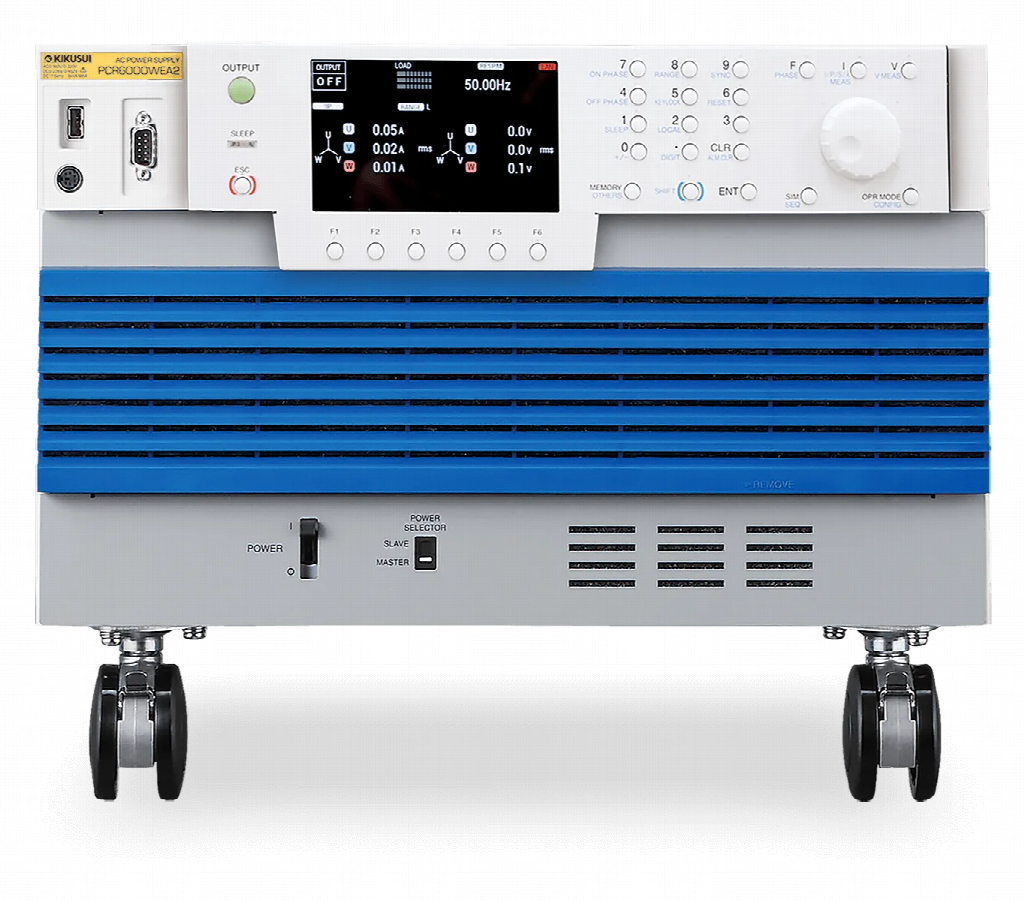
The Bench Power Supply is No Longer Just a Voltage Source
In an electronics lab, few instruments look more ordinary than the power supply. It sits on a bench or in a rack, delivers a set voltage and current, and is often treated as supporting equipment rather than part of the measurement strategy. That view is becoming outdated. As products become more power-dense, software-defined, and sensitive to supply conditions, the source feeding a device under test can directly affect the quality of the test itself.
A modern programmable DC power supply can do much more than provide steady power. Depending on the model and test setup, engineers may use it to reproduce voltage ramps, brownouts, current limits, startup conditions, and repeatable operating sequences. In automated environments, the supply may also become part of a larger test system controlled over LAN, USB, or other interfaces. The result is a shift from simply “powering the product” to deliberately creating electrical conditions that reveal how the product behaves.
Why Power Quality Matters During Development
Many electronic products are designed around assumptions about their input power. A control board may expect a tightly regulated DC bus. A motor controller may have undervoltage protection. A communications device may need to remain stable while its load changes quickly. If engineers test only at a single nominal voltage, they can miss problems that appear near the edge of the operating range.
That is why development teams often test at minimum, nominal, and maximum input levels rather than at one convenient setting. They may also examine startup behaviour, inrush current, current-limit response and recovery after a temporary voltage drop. These scenarios help answer practical questions: Does the device boot reliably? Does it reset too early? Does a protection circuit behave predictably? Does a firmware update change how the product responds when the input supply is marginal?
The value of a programmable source is repeatability. Manually turning a knob can be useful for exploratory work, but it is difficult to reproduce exactly across multiple samples, engineers, or test locations. A programmed sequence can apply the same conditions every time, making comparison easier and reducing ambiguity when a fault is being investigated.
From Simple Bench Testing to Automated Validation
Automation is another reason the role of DC supplies is expanding. Modern products may require hundreds or thousands of test cycles before release. Repeating those cycles manually is slow and introduces variation. When a supply can be controlled by software, voltage and current settings can be coordinated with oscilloscopes, electronic loads, data acquisition equipment, and the device under test.
Consider a battery-powered embedded product. A validation routine might start at a fully charged battery-equivalent voltage, step downward through several operating points, pause at each point while measurements are taken, and then apply an undervoltage condition to confirm that the system shuts down safely. The same routine can be repeated after a hardware revision or firmware change. Engineers gain a cleaner before-and-after comparison because the electrical stimulus is controlled rather than improvised.
The principle applies beyond small electronics. Automotive components, industrial controllers, telecommunications equipment, power-conversion hardware, and energy systems all depend on controlled DC conditions during development. What differs is the required voltage, current, power, response characteristics, and level of automation.
Wide-range Output Can Reduce the Number of Instruments Needed
One practical challenge in a shared laboratory is instrument coverage. A low-voltage, high-current test and a higher-voltage, lower-current test may traditionally require separate supplies even when the maximum power is similar. Wide-range power supplies address this by allowing multiple voltage-and-current combinations within a defined power envelope.
This flexibility can be useful in engineering teams that test several product families or frequently reconfigure benches. Instead of dedicating one instrument to a narrow task, the same supply may cover a broader set of operating points. It can also simplify rack design when test systems need to support more than one device variant.
The important point is not that one architecture is always better. Linear supplies remain attractive in applications where low noise is especially important, while switching supplies can provide high efficiency and strong power density. Bidirectional supplies add another capability by sourcing and absorbing power, which can be valuable in battery, motor, inverter, and energy-system testing. The right choice depends on what the device under test actually needs.
Protection Functions are Part of the Test Plan
A power supply used for development must protect both the instrument and the device under test. Overvoltage protection, overcurrent protection, and related limit functions are therefore more than convenience features. They are part of risk control on the bench.
Engineers should think carefully about where those limits are set. A current limit that is too high may fail to protect a prototype during a fault. A limit that is too low may create false failures by preventing normal startup current. Similarly, remote sensing can improve voltage accuracy at the load by compensating for cable losses, but poor wiring or an incorrect sense connection can create confusing behaviour. Good test practice depends on understanding the complete electrical path rather than focusing only on the number shown on the front panel.
Key Points to Consider Before Choosing a Supplier
Choosing a supply starts with the required voltage and current range, but those two numbers are only the beginning. Engineers should consider how much power is needed continuously, whether the load has a large startup surge, whether low ripple and noise are important, how quickly the output must respond to programmed changes, and whether the test will be manual or automated.
Physical integration matters as well. Rack height, cooling direction, input power requirements, communication interfaces, and the ability to operate multiple units together can determine whether an instrument fits smoothly into a test environment. For teams building automated systems, the software and command interface can be just as important as the front-panel controls.
Kikusui Europe’s overview of programmable and wide-range DC power supply options illustrates the range of architectures now available, from compact switching supplies to high-power and bidirectional systems. The breadth of that category is a useful reminder that “DC supply” describes a function, not a single type of instrument.
Better Power Control Produces Better Questions
The biggest advantage of a capable source is not simply more watts or more features. It comes from knowing which technical questions can uncover the most useful answers. What happens if the input voltage rises slowly instead of instantly? How does the product behave at the lower edge of its specified range? Can a protection circuit recover without a manual reset? Does the same unit behave differently at cold start than after it has warmed up? Can a production test reproduce the conditions that exposed a failure in the lab?
These questions matter because real products rarely operate under perfectly static conditions. Cables introduce loss, batteries discharge, upstream converters respond to load changes, and users connect equipment in ways that designers did not anticipate. A programmable supply gives engineers a controlled way to reproduce some of that variability before customers encounter it.
For modern electronics teams, then, the power supply is becoming part of the experiment rather than background infrastructure. The more precisely engineers can control the electrical environment around a device, the more confidently they can distinguish a genuine design weakness from a test setup problem. That makes the humble power supply one of the quiet enablers of faster debugging, stronger validation, and more reliable products.