Pricing for cosmetic injectable treatments has become increasingly difficult to evaluate from the outside. Marketing pages list ranges, clinics advertise promotional rates, and comparison shopping often produces more confusion than clarity. For anyone seriously considering a lip filler procedure in Houston, the challenge is not finding a provider — it is understanding what the price actually reflects, and whether the differences between one quote and another are meaningful.
This breakdown is intended to give prospective patients a grounded understanding of how lip filler pricing is structured in Houston, what drives variation between clinics, and what factors most reliably predict a quality outcome. The goal is not to recommend a specific price point, but to explain the logic behind the numbers so that decisions are made on substance rather than assumption.
What Lip Filler Costs in Houston and Why the Range Is Wide
The cost of lip filler in houston typically falls somewhere between $400 and $900 per syringe, though outliers exist on both ends of that spectrum. This range exists not because providers are pricing arbitrarily, but because several underlying cost variables genuinely differ from one practice to another. Understanding those variables is the first step toward reading any quoted price accurately.
For anyone beginning their research, reviewing what a structured cosmetic practice offers — including how procedures are described and what the treatment process looks like — can help calibrate expectations. A provider that offers lip filler in houston with a clearly defined consultation process and transparent product disclosure is generally a more reliable starting point than one that leads with a low price and minimal detail.
The Role of Filler Brand and Product Selection
Not all hyaluronic acid fillers are formulated the same way. Products within the same category — such as those approved by the FDA for use in lip augmentation — differ in their cross-linking density, longevity, and the kind of results they produce. Some are designed for subtle volume, others for definition, and others for structural support around the lip border.
Providers who use well-established, FDA-approved filler products from recognized manufacturers carry higher product costs, and those costs are reflected in the service price. When a quote appears significantly below the typical market range, it is worth asking directly which product is being used and whether it is approved for lip use specifically. This is not a minor distinction — using an off-label or less-established product to reduce cost is a decision that carries real implications for result quality and patient safety.
Practitioner Qualifications and Their Effect on Pricing
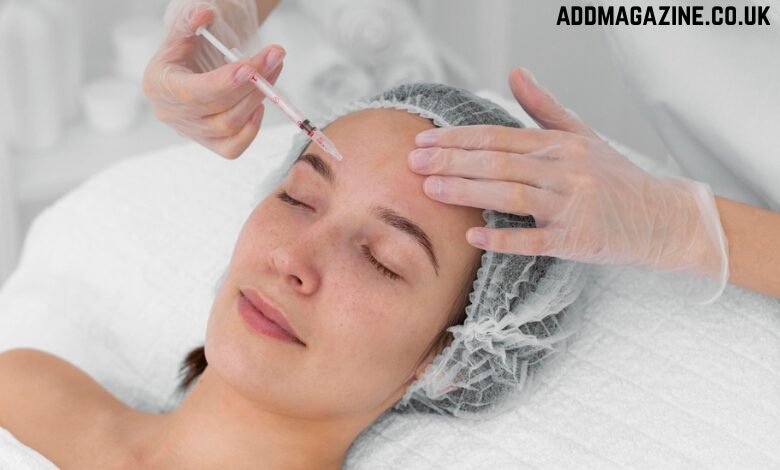
The person performing the injection is among the most significant pricing variables in cosmetic medicine. Lip filler is not a passive procedure — it requires an understanding of facial anatomy, an ability to recognize vascular structures, and the technical skill to distribute product precisely within tissue that varies from patient to patient.
Practitioners who hold medical degrees, have completed advanced training in injectables, and carry certifications in aesthetic medicine charge accordingly. Mid-level providers with supervised clinical experience may offer more moderate pricing, while providers with minimal training or aesthetic credentials tend to occupy the lower end of the price range. The relationship between practitioner qualification and outcome risk is well-documented across the medical aesthetics field, and it is a factor that cost-focused comparisons tend to underweight.
What Is Typically Included in the Quoted Price
A quoted price for lip filler is not always a complete picture of what a patient will pay or receive. Some practices bundle the cost of a consultation, a follow-up appointment, and any touch-up volume within the stated fee. Others quote the product cost only, with consultation fees, numbing agents, and aftercare items billed separately.
Before committing to a procedure, it is reasonable to ask the provider to itemize what the quoted price includes. This is not an unusual request, and any established practice should be able to answer it directly. The areas worth clarifying are:
• Whether a pre-treatment consultation is included or billed as a separate appointment fee
• Whether topical numbing cream or local anesthetic is factored into the service price or added at checkout
• Whether a two-week follow-up assessment is included, and whether any minor corrections at that visit carry an additional charge
• Whether the quoted price reflects one full syringe or a partial unit, which matters when treatment goals are more modest
Single Syringe vs. Staged Treatment Plans
One syringe is not always the appropriate amount for every patient, and this affects how total cost should be evaluated. Patients with naturally thinner lips or those new to filler may achieve their desired outcome within a single syringe. Others may require a staged approach, beginning conservatively and building volume over two or more sessions spaced several weeks apart.
Staged treatment tends to produce more natural-looking results because it allows the filler to integrate with the tissue before additional product is introduced. However, it also means the initial lower cost is not the total cost. A practitioner who recommends a staged plan and explains why is generally demonstrating clinical judgment, not upselling. Understanding this dynamic helps patients budget realistically rather than being surprised by a recommendation for a second session.
How Houston’s Market Affects Pricing Compared to Other Cities
Houston is one of the larger metropolitan markets for cosmetic procedures in the United States, and that scale affects pricing in both directions. On one hand, a high volume of providers creates competitive pressure that keeps prices more accessible than in smaller markets or cities with higher operating costs. On the other hand, the density of providers also means that quality varies considerably, and lower prices do not always indicate a competitive deal — they may indicate a less experienced provider or a lower-grade product.
The American Society of Plastic Surgeons notes that geographic location, provider credentials, and procedure complexity are among the consistent factors influencing cosmetic treatment costs nationwide, and Houston follows that pattern closely. Patients in Houston benefit from having options across a genuine range of price points, but they also carry the responsibility of evaluating those options carefully rather than defaulting to the lowest available quote.
Why Promotional Pricing Warrants Closer Attention
Promotional lip filler pricing — whether offered as a seasonal discount, a new-client special, or a package deal — is common in Houston’s aesthetics market. These offers are not inherently problematic, but they do require the same evaluative process as any other quote. A promotion from a well-credentialed provider using established products is a legitimate opportunity. A promotion designed to drive volume through a provider with limited qualifications is a different situation entirely.
When evaluating a promotional price, the relevant questions remain the same: what product is being used, who is performing the procedure, what is included in the price, and what is the protocol if something needs to be corrected. A provider who cannot or will not answer those questions clearly is signaling something worth taking seriously before proceeding.
Longevity and Cost Efficiency Over Time
Lip filler is not a permanent treatment. Hyaluronic acid fillers are gradually metabolized by the body, and most patients find that results in the lips — which are highly mobile — begin to soften between six and twelve months after treatment, sometimes sooner depending on individual metabolism and the specific product used.
When evaluating the cost of lip filler in houston, it is worth thinking in terms of annual cost rather than per-session cost. A provider charging a higher fee for a product that consistently lasts closer to twelve months may represent better value than a lower-priced option that requires retreatment at six months. This calculation is not always straightforward because longevity depends on individual factors that cannot always be predicted in advance, but it is a framing that helps avoid underestimating the total investment involved in maintaining results over time.
Dissolving Filler and the Cost of Correction
Hyaluronic acid fillers carry the advantage of being dissolvable with an enzyme called hyaluronidase. This means that results are not permanent, and outcomes that miss the mark can be corrected. However, that correction is not always free. Dissolving a previous filler result, whether from the same provider or a prior one, is typically a billable service, and the cost varies based on how much product needs to be addressed and how many sessions the process requires.
Patients who seek correction after a poorly executed procedure from a low-cost provider often find that the total cost of the experience — original treatment, plus correction, plus retreatment — substantially exceeds what they would have paid at a more qualified provider from the start. This is not a hypothetical pattern; it is a routine occurrence in the aesthetics field and one that patients rarely anticipate when making the original decision based on price alone.
Closing Thoughts on Evaluating Lip Filler Pricing in Houston
Pricing transparency in cosmetic procedures is improving, but it remains imperfect. The information patients need to make informed decisions is not always presented proactively, and the cosmetic market’s reliance on promotional language can make straightforward evaluation more difficult than it should be.
A grounded approach to evaluating the cost of lip filler in houston starts with understanding what the price actually accounts for: the product used, the practitioner’s qualifications, what is bundled into the service, and how the provider handles outcomes that require follow-up. Those factors matter more than the headline number, and they are accessible to any patient willing to ask directly before committing.
The goal of any lip filler procedure is a result that looks natural, holds well over time, and was delivered safely by someone with the clinical knowledge to manage the process from consultation through follow-up. That outcome is achievable at various price points in Houston — but it requires evaluation that goes deeper than comparing quoted figures. The providers who welcome those questions are generally the ones worth trusting with the answer.