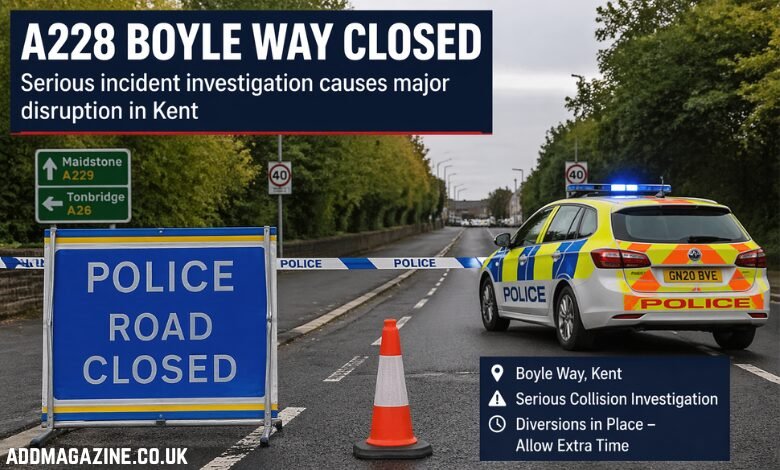
The A228 Boyle Way, a crucial transport route in Kent, England, is currently closed due to a serious traffic incident. The closure has been in place for a while, significantly impacting local traffic and causing a ripple effect on nearby routes. In this article, we’ll provide a detailed breakdown of the situation, offering essential information on the causes, consequences, and how traffic is being managed during this disruption.
The Importance of A228 Boyle Way
A228 Boyle Way is an essential road for both local commuters and freight transport. It connects various towns in Kent, facilitating the movement of people and goods through a region that sees moderate to heavy traffic on a regular basis. The road serves as a key link between residential zones, business areas, and the surrounding bypass routes.
During peak hours, Boyle Way typically experiences a lot of congestion due to its importance as a commuter route. Even short-term closures or delays can lead to significant traffic build-up on surrounding roads. When a major incident occurs on this road, the impacts can be widespread, affecting both local traffic and transit times for those travelling further afield.
The Incident and Its Aftermath
The closure of A228 Boyle Way stems from a tragic road traffic collision involving a pedestrian and a van. Regrettably, the incident led to a loss of life. As a result, authorities took immediate action to secure the area and allow emergency services to attend to the scene. Police, investigators, and other emergency personnel were deployed to ensure that the investigation could proceed without disruption.
In any situation involving a fatal accident, it’s standard practice for authorities to close off the road to preserve the integrity of the investigation. The closure is intended to ensure public safety and allow for the examination of the scene. Investigators need time to collect evidence, review the circumstances surrounding the incident, and recover any vehicles involved.
Traffic Disruptions and Diversions
The full closure of Boyle Way has caused significant disruption to the local road network. Alternative routes have been put in place to redirect traffic, but these diversions are not without their own challenges. Drivers are advised to follow official diversion signs rather than relying on navigation apps, as the routes may change based on ongoing conditions at the scene.
Some key points regarding the diversions and their impact:
- Local road detours: Traffic has been rerouted around the closed section of Boyle Way. These alternative routes are being used to prevent congestion at the incident site. However, they often lead to slower traffic on side roads that are not as equipped to handle the volume of vehicles.
- A-roads for through traffic: Drivers who typically use Boyle Way to travel between towns or bypass the area are being diverted to nearby A-roads. These roads are also feeling the pressure, leading to an increase in congestion.
- Temporary traffic management: Traffic marshals and police are present in the area during peak periods to help manage the flow of traffic and keep things moving as smoothly as possible. However, delays are inevitable.
- Increased congestion: Nearby junctions and local roads are experiencing higher-than-usual traffic volumes as vehicles are redirected to detour routes. This has particularly been felt during morning and evening rush hours when commuting traffic is at its peak.
Duration of the Closure
At this stage, the exact duration of the A228 Boyle Way closure is uncertain. The ongoing police investigation into the fatal incident will determine how long the road remains closed. Authorities are expected to provide regular updates as the situation progresses.
The typical stages involved in reopening a closed road after a serious incident include:
- Completion of the police investigation: This includes gathering evidence, interviewing witnesses, and assessing the cause of the incident.
- Road surface checks: Once the investigation is complete, the road will be examined for any damage or debris that needs to be cleared.
- Vehicle recovery: Any vehicles involved in the incident will be removed from the site, which could take some time depending on the severity of the crash.
- Final inspection and clearance: Authorities will carry out a final inspection of the road before giving the green light for reopening.
Until all these steps are completed, it’s difficult to predict when the road will reopen. However, authorities are working diligently to clear the area as quickly and safely as possible.
Impact on Local Roads
The closure of A228 Boyle Way has caused significant traffic disruptions in the surrounding area. Local roads are seeing higher traffic volumes, and the impact of the closure is felt most acutely during peak hours. Drivers should be prepared for longer travel times and plan their journeys accordingly.
The following areas have been affected:
- A228 Boyle Way (closed section): Completely blocked, no through traffic allowed.
- Nearby junctions: Traffic is moving slowly due to diverted vehicles.
- Alternative routes: These roads are more congested than usual due to the increased traffic volume.
- Local side roads: Higher than usual traffic volume is resulting in delays.
During peak times, these disruptions can cause long delays, which can be frustrating for commuters. As Boyle Way is a vital road for local traffic, the effects of this closure are being felt across the region.
Safety Measures and Traffic Control
To ensure the safety of both the public and those working at the scene, strict safety measures have been implemented around the affected area. These include:
- Full road barriers: Barriers have been placed to prevent access to the closed section of the road.
- Police presence: Officers are controlling access points to ensure only authorized vehicles can enter the restricted area.
- Restricted access for non-essential vehicles: Only emergency services, investigators, and other essential personnel are allowed access to the closed area.
- Coordination with emergency services: The local authorities have been working closely with emergency services to ensure that traffic management does not hinder their operations.
These safety measures are designed to facilitate the investigation while ensuring that both the public and personnel working on the scene are safe from potential hazards.
Recommendations for Drivers
If you are planning to travel in the affected area, here are some essential tips to help minimize the impact of the road closure:
- Use alternative routes: Plan your journey using the diversion signs and follow the recommended routes. Avoid attempting to drive through the restricted zone.
- Allow extra travel time: Given the increased congestion and traffic disruptions, it’s a good idea to leave earlier than usual to avoid being late.
- Follow official diversion signs: Road conditions can change quickly, and official signage will provide the most up-to-date information on how to navigate around the closure.
- Stay updated through local traffic reports: Keep an eye on local traffic news for any updates on when the road will reopen or if there are further changes to the diversion routes.
Impact on Local Businesses and Commuters
In addition to the disruptions to traffic flow, the closure of A228 Boyle Way has had a considerable impact on local businesses, particularly those that rely on the road for deliveries or customer traffic. Businesses near the closure are facing challenges due to slower customer access, while local delivery trucks and freight vehicles are being rerouted, often adding delays to their schedules.
Small businesses situated on side roads or near alternative routes have seen an uptick in traffic, but this has not necessarily translated to more customers. The congestion on local roads means that people are less likely to visit areas with heavy traffic, leading to decreased foot traffic for businesses that would typically benefit from the flow of vehicles.
In the longer term, if the road closure extends over multiple days or weeks, the overall impact could be even more significant for local businesses. The disruption could lead to reduced operating hours or difficulty in stocking goods, which may affect both revenue and customer satisfaction.
Environmental Impact and Safety Concerns
As road closures cause traffic to divert through local streets, environmental concerns often arise. The increased traffic on previously quieter routes leads to higher emissions from vehicles idling in traffic. This could lead to elevated levels of air pollution in areas not equipped to handle such volumes of traffic.
Additionally, the increased traffic can also affect the surrounding infrastructure, with roads that are not designed for heavy loads suffering wear and tear. This can lead to a vicious cycle where maintenance issues become more pronounced due to increased traffic volume, further affecting the flow of traffic even after the original issue is resolved.
For residents living near detoured routes, the noise from increased traffic and the impact on the local environment can be frustrating. Authorities are working to balance the needs of the investigation with the safety of the public, but it’s important to consider the broader consequences of the traffic surge.
Public Response and Community Efforts
The public reaction to the road closure has been varied. While some drivers understand the necessity of road closures following a serious incident, others have expressed frustration due to the extended delays and detours. Social media platforms and local community forums have been active with residents sharing updates and discussing their experiences with the diversions.
Local authorities and emergency services have also made efforts to keep the public informed throughout the process. Regular updates via traffic reports, social media posts, and local news outlets have kept commuters in the loop about expected delays and the status of the investigation.
Community efforts are also underway to support those impacted by the closure. Local groups have provided advice on how best to avoid congestion and have offered suggestions for using less busy routes. Additionally, businesses in the area are communicating directly with their customers to inform them of expected delays, often offering alternative ways to engage, such as online orders or delivery services.
Lessons from Similar Incidents
While the closure of A228 Boyle Way is certainly a significant event, it is not the first time a key road has been impacted by a serious incident. Over the years, other closures caused by accidents or infrastructure issues have highlighted the need for better traffic management systems and improved public communication.
One key lesson from previous incidents is the importance of preparing for road closures before they happen. Authorities have increasingly adopted proactive measures, such as notifying the public about upcoming closures well in advance, improving signage, and offering more comprehensive diversion routes. These measures help to reduce confusion and frustration, making it easier for drivers to adjust to the changes in the road network.
Another lesson is the importance of quickly clearing incidents and reopening roads. The longer a key route remains closed, the greater the impact on local traffic and businesses. Efficient recovery and investigation processes are essential to minimizing the disruption caused by such closures. In this case, once the investigation is complete, swift action will be necessary to reopen Boyle Way to alleviate the ongoing traffic congestion.
The Role of Technology in Managing Traffic During Closures
Technology plays a critical role in managing road closures and diversions, especially in the age of smart cities and connected infrastructure. Navigation apps, such as Google Maps and Waze, are integral in providing real-time updates on traffic conditions, and they allow drivers to adjust their routes dynamically based on current road conditions.
However, as noted earlier, drivers should be cautious when relying solely on these apps during incidents like the Boyle Way closure. Official diversion signs and local authorities are often better equipped to provide accurate guidance on detour routes, as they can adjust plans in real-time based on the evolving situation. This collaboration between technology and local traffic management ensures a smoother experience for drivers.
In the future, with the expansion of smart infrastructure, the use of sensors and automated traffic systems will likely minimize manual detours. These systems will allow authorities to reroute traffic in real-time, and predictive analytics could help avoid bottlenecks before they even form.
Conclusion
The closure of A228 Boyle Way is a significant disruption to local traffic, caused by a tragic incident. While authorities are working hard to manage the situation and investigate the cause of the accident, the effects of this closure are being felt across the surrounding road network. Drivers are advised to plan ahead, use alternative routes, and stay informed on the status of the closure. Although the exact reopening time remains uncertain, the goal is to ensure safety and allow the necessary investigation to be completed thoroughly.