Visiting a car dealership can be an exciting experience, but for individuals with hearing impairments, it can also be frustrating and challenging. With the bustling atmosphere, loud background noises, and the need to understand complex finance agreements and vehicle specifications, individuals with hearing loss often face significant barriers. However, a car dealership equipped with a hearing loop can make a world of difference by improving accessibility and communication for these customers.
In this article, we explore what a car dealership with a hearing loop is, the benefits it offers to individuals with hearing loss, and how to find one near you. Additionally, we’ll discuss the legal requirements for dealerships to provide these systems and how they help create a more inclusive and accessible environment.
What Is a Hearing Loop?
A hearing loop, also known as an induction loop, is a sound system designed to help people with hearing aids or cochlear implants better hear conversations in noisy environments. It works by transmitting sound directly into the hearing device when set to the correct position, known as the T-coil or telecoil setting.
In a car dealership, this system is particularly beneficial during important conversations, such as those with sales staff about car specifications, finance deals, warranty options, and service agreements. These are crucial discussions where clarity is essential, and a hearing loop ensures that customers with hearing loss can follow along without the interference of background noise, which is especially prevalent in large showrooms.
How Does a Hearing Loop Work in a Car Dealership?
A typical car dealership can be a noisy environment, with the sounds of car engines, phone calls, customers chatting, and staff talking. These sounds can be overwhelming for those with hearing aids, especially in open-plan showrooms that often have hard floors and glass walls that amplify noise.
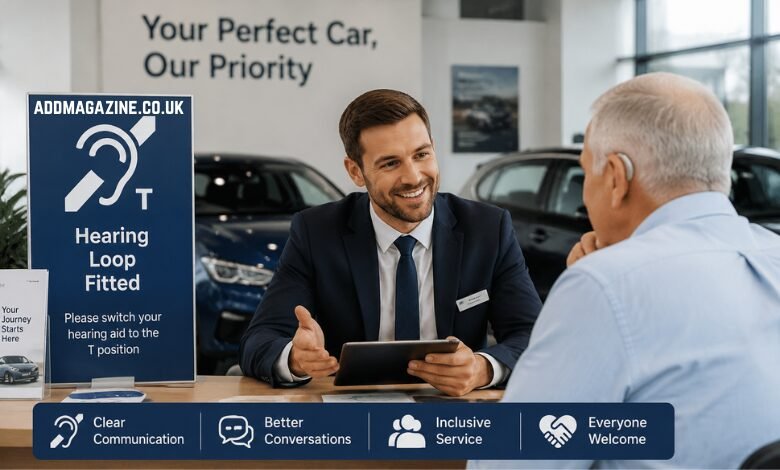
When a dealership is equipped with a hearing loop, it transmits speech directly to the hearing aid of a customer. Hearing aids with a T-coil setting can pick up the magnetic signal from the loop and convert it into clear audio, filtering out ambient noise. As a result, customers with hearing loss can hear the salesperson’s voice directly, making it easier to understand complex details like finance terms, special offers, or vehicle features.
Why Are Hearing Loops Important for Car Dealerships?
Around 18 million people in the UK have some degree of hearing loss, and a significant portion of them are in the market for a new vehicle. This statistic highlights the importance of ensuring that car dealerships are accessible to people with hearing impairments. Without assistive systems like hearing loops, these customers may miss out on important information, potentially leading to misunderstandings or missed opportunities.
Additionally, for older adults, who are more likely to experience hearing loss, the presence of hearing loops in car dealerships becomes even more crucial. According to the RNID, over 50% of people aged 50 and older suffer from hearing loss, and the number increases as people age. Therefore, dealerships that make an effort to implement hearing loops show they are committed to providing an inclusive environment for all customers.
The Legal Requirement for Hearing Loops in Car Dealerships
In the UK, the Equality Act 2010 mandates that businesses provide “auxiliary aids and services” for disabled customers, which includes individuals with hearing loss. Specifically, the Act requires service providers to install an induction loop for customers using hearing aids, ensuring they can access the same level of service as other customers.
The building regulations in the UK also emphasize the importance of hearing loops. BS 8300, updated in 2018, provides guidance for businesses to ensure their premises are accessible. This includes the installation of hearing loops at reception desks, sales counters, and service points where one-on-one communication takes place. Therefore, if a dealership has a reception desk or sales counter, they are legally required to provide a hearing loop.
However, it is important to note that not all dealerships comply with these regulations. Some smaller, independent dealerships may not have installed a hearing loop, or the system may not be functioning properly. For this reason, it’s recommended to check ahead of time and ask whether the dealership has a working hearing loop.
How to Locate Car Dealerships Equipped with Hearing Loops for Better Accessibility
Finding a car dealership with a hearing loop isn’t always straightforward, as there is no centralized directory listing all accessible locations. However, several resources can help guide you:
- Motability Scheme: If you are receiving the Motability Allowance, the Motability Scheme’s dealer search tool allows you to filter results by specific accessibility features, including hearing loops.
- Manufacturer Websites: Many car manufacturers, such as Ford, Volkswagen, and MG, have dealer locator tools on their websites. These tools often include a filter for accessibility features, including hearing loops.
- Call Ahead: If you are unsure whether a dealership has a hearing loop, it’s always a good idea to call ahead and ask specific questions:
- Do you have an induction loop at your sales desk and service counter?
- Is your hearing loop currently tested and working?
- Are your team members equipped to support customers who rely on hearing aids?
It’s essential to ensure that the dealership not only has a hearing loop but that it is in good working condition. A system that exists but isn’t maintained or operated properly won’t be of much use to customers.
What to Look for in a Car Dealership with a Hearing Loop
When visiting a car dealership, there are several key factors to consider beyond just the presence of a hearing loop:
- Signage: Look for the standard symbol of a hearing loop, which is an outline of an ear with the letter “T” next to it. This should be displayed clearly at any counter where the loop is in operation.
- Staff Training: It’s important that dealership staff are trained to use the hearing loop effectively. They should be able to switch the loop on, check that it’s working, and guide you on how to use the T-setting without any discomfort or awkwardness.
- Quiet Room: Some dealerships offer quieter, private rooms where customers can discuss finance terms and sign paperwork without the noise of the showroom. If this is available, it’s a great option for people with hearing loss.
- Written Documentation: Good dealerships provide all information in writing, including price breakdowns, finance terms, and optional extras. This helps ensure that you have a clear record of what was discussed, reducing the chances of missing important details.
- Accessible Parking: Look for clearly marked accessible parking spaces near the entrance. This enhances the comfort and convenience of your visit.
- Customer Service: Staff should speak clearly, face you directly, and not rush through important information. This is not only helpful for those with hearing loss but also improves the experience for all customers.
Benefits of Hearing Loops for Dealerships
Providing hearing loops in car dealerships doesn’t only benefit customers; it also has advantages for the business:
- Customer Retention: By making the dealership more accessible, it opens doors to a larger customer base, including people with hearing impairments. This can enhance customer experience and foster long-term loyalty.
- Legal Compliance: Meeting the legal requirements of the Equality Act 2010 protects the dealership from potential legal challenges and helps avoid negative publicity.
- Increased Revenue: People with hearing loss make up a significant portion of the population and represent a substantial market opportunity. By catering to their needs, dealerships can tap into an underserved demographic, potentially increasing sales.
- Positive Reputation: Dealerships that invest in accessibility measures, including hearing loops, are seen as more inclusive and socially responsible, which can enhance their reputation within the community.
Additional Features That Enhance Accessibility in Car Dealerships
While hearing loops are essential for customers with hearing loss, they are just one piece of the accessibility puzzle. A truly inclusive car dealership will implement a range of features that improve the overall experience for customers with various disabilities. Let’s dive deeper into some of these features and explore them in greater detail.
1. Visual and Signage Aids
In addition to hearing loops, dealerships should also consider providing visual aids, such as clear signage and written instructions. Visual support is particularly useful for individuals with both hearing and vision impairments. For instance, clear signs indicating the presence of hearing loops, accessible parking, or quiet rooms can help guide customers to the appropriate areas.
Moreover, using large, easy-to-read fonts for any written documents, price tags, and promotional materials makes it easier for customers with vision impairments to navigate the dealership.
2. Customer Assistance and Service
An important feature of accessible car dealerships is having staff members trained to assist customers with disabilities. This includes not only being knowledgeable about how to operate hearing loops but also offering assistance in navigating the dealership. For example, staff members can help guide individuals to accessible areas or explain key features of vehicles using alternative formats, such as written instructions or a more detailed oral explanation.
Staff should also be aware of the importance of being patient and flexible with customers who may require additional time to make decisions. Whether a customer needs extra time with a finance document or simply needs a quieter space to make a phone call, a good dealership will accommodate these needs.
3. Online Accessibility Features
In the modern world, many customers begin their car-buying process online, so it’s crucial for dealerships to ensure that their websites are accessible. For individuals with hearing loss, this may mean offering captioned videos or providing clear, easy-to-read text for all website content. Accessible websites ensure that customers can browse vehicles, schedule test drives, or inquire about finance options without any barriers.
For customers with visual impairments, dealerships can make use of screen-reader-friendly formats. Furthermore, integrating virtual consultations or video chats with captions allows individuals with hearing impairments to engage directly with sales staff from the comfort of their own home.
4. Accessibility for Test Drives
When it comes to test driving a car, accessibility is key. For customers with mobility challenges, dealerships should ensure that the vehicles are easy to access and that the test-driving route is accommodating. Some dealerships may offer test drives with modifications, such as vehicles that have wheelchair ramps or other accessibility features.
Customers who are visually impaired may require assistance while driving the car, so it’s essential for the dealership to provide guidance and support, ensuring that the experience is as safe and enjoyable as possible.
The Importance of Clear Communication in Car Dealerships
Clear communication is a fundamental part of any transaction, but it becomes even more critical in the context of purchasing a car. For customers with hearing impairments, clear communication means understanding every detail about the car’s features, financing options, warranties, and after-sales service.
A hearing loop, when installed and functioning correctly, facilitates this by cutting out background noise and delivering a clear audio feed directly to the user’s hearing aid. However, dealerships should also ensure that their staff are well-trained in communication strategies for people with hearing loss. This includes speaking clearly, facing the customer directly, and repeating important points when necessary.
Additionally, providing written documentation, such as printed quotes and contracts, can help customers follow along with conversations and make informed decisions. This ensures that customers with hearing loss are never left out of important discussions or forced to guess the details of their purchase.
Addressing Challenges in Smaller Dealerships
While large franchise dealerships are more likely to have accessible features, smaller independent dealerships may not have the same resources or commitment to accessibility. However, many independent dealers are making strides to improve the experience for customers with hearing loss. Smaller dealerships can benefit from relatively low-cost solutions, such as installing a hearing loop system at their reception or sales desk.
For dealerships that are unable to install a full hearing loop, offering alternatives like written communication or providing assistance in a quieter area can help bridge the accessibility gap. It’s essential for customers with hearing impairments to advocate for their needs, ensuring that dealerships understand the importance of accessible services.
Financial and Legal Benefits for Dealerships
For car dealerships, the benefits of installing a hearing loop go beyond customer satisfaction. There are also financial and legal reasons to invest in these systems. From a financial perspective, customers with hearing loss represent a significant market opportunity. It is estimated that people with hearing loss contribute billions of pounds annually to the UK economy, making them a valuable customer group for businesses that make themselves accessible.
On the legal side, failing to provide adequate accessibility can result in costly legal challenges. Under the Equality Act 2010, businesses are required to provide reasonable adjustments for customers with disabilities, including hearing loss. Failure to meet these legal obligations can lead to reputational damage, as well as potential claims for discrimination.
By investing in accessibility features like hearing loops, dealerships can demonstrate their commitment to equality, comply with legal standards, and ensure that they are not alienating any potential customers.
The Role of Technology in Enhancing Accessibility
Technology continues to play an increasingly important role in making car dealerships more accessible for people with hearing impairments. In addition to hearing loops, advancements in communication technologies are helping create more inclusive environments. For example, speech-to-text technology can be used to provide real-time captions during important conversations, allowing customers with hearing loss to follow along even if a hearing loop is unavailable.
Moreover, mobile apps and websites that integrate accessibility features, such as voice recognition and easy navigation, make it easier for customers to explore their options from the comfort of their own homes.
The potential for technology to enhance the accessibility of car dealerships is immense, and we can expect to see more dealerships embracing these innovations in the future.
Conclusion
A car dealership with a hearing loop provides a crucial service to individuals with hearing loss, ensuring they can access clear, accurate information when purchasing a vehicle. Whether you’re buying a new car, negotiating finance terms, or discussing warranty options, having a hearing loop in place can make all the difference.
Under the Equality Act 2010, car dealerships are legally required to provide hearing loops, and customers should not hesitate to ask about these systems before visiting. By choosing a dealership that prioritizes accessibility, customers with hearing impairments can have a more comfortable, inclusive, and stress-free experience.
If you’re looking for a car dealership with a hearing loop, remember to check resources like the Motability Scheme, manufacturer websites, and don’t hesitate to call ahead and ask specific questions. With the right preparations, finding a dealership that meets your accessibility needs is simple — ensuring that your car-buying experience is as smooth and enjoyable as possible.