Buying your first home is exciting, but it also comes with a new kind of responsibility. Once the keys are yours, you are not only decorating rooms or choosing furniture. You are also taking care of the yard, driveway, patio, garage, siding, and all the outdoor spaces that affect your home’s value and daily comfort.
For first-time homeowners, outdoor maintenance can feel overwhelming. There are hundreds of tools available, but you do not need to buy everything at once. The smarter approach is to build a practical equipment setup around the tasks you will actually do. As your needs grow, professional property maintenance services help manage larger or more specialized outdoor projects that require additional expertise and equipment.
Here are the essential outdoor maintenance tools every new homeowner should understand.
1. A Reliable Garden Hose or Hose Reel
A good garden hose is one of the first outdoor tools you will use. It helps with watering plants, rinsing patio furniture, washing outdoor bins, cleaning light dirt from walkways, and supporting other cleaning jobs.
When choosing one, think about:
- Length: Can it reach your garden, driveway, patio, and outdoor faucets?
- Diameter: Wider hoses provide stronger water flow, while smaller hoses are easier to handle.
- Storage: A hose left on the ground can kink, tangle, and create a tripping hazard.
For new homeowners, a retractable hose reel is often worth considering because it keeps the hose organized and easier to put away after each use.
2. Basic Lawn Care Tools
If your home has a yard, start with the basics before buying specialized equipment.
Useful lawn care tools include:
- Lawn mower
- String trimmer
- Rake
- Leaf blower or outdoor broom
- Pruning shears
- Yard waste bags or bin
For smaller yards, battery-powered tools are often enough. They are quieter, easier to start, and simpler to store than gas-powered options. For larger properties, you may need stronger equipment, but most first-time homeowners can start with a simple electric or battery-powered setup.
The goal is not to create a perfect lawn immediately. It is to keep the yard under control and prevent small maintenance issues from becoming bigger problems.
3. Outdoor Brushes and Brooms
Before investing in larger equipment, make sure you have basic manual cleaning tools.
A stiff outdoor broom, scrub brush, bucket, and microfiber cloths can handle many quick jobs, such as:
- Sweeping patios and decks
- Scrubbing small stains
- Cleaning steps
- Removing cobwebs
- Brushing dirt off outdoor furniture
- Cleaning garden tools
Even if you later buy a pressure washer, these tools will still be useful for light cleaning and touch-ups.
4. Choosing a Pressure Washer
It can remove dirt, mud, algae, pollen, tire marks, and outdoor buildup much faster than manual scrubbing. For first-time homeowners, the key is choosing a model built for residential use instead of simply buying the most powerful machine available.
When comparing pressure washers, pay attention to:
- PSI: Measures cleaning pressure. Higher PSI means stronger cleaning force.
- GPM: Measures water flow.
- Power type: Electric models are usually quieter and easier to maintain; gas models are better for very large or heavy-duty jobs.
- Hose length: A longer hose helps you clean driveways, cars, patios, and exterior walls without constantly moving the machine.
- Nozzle options: Different spray tips are designed for different surfaces.
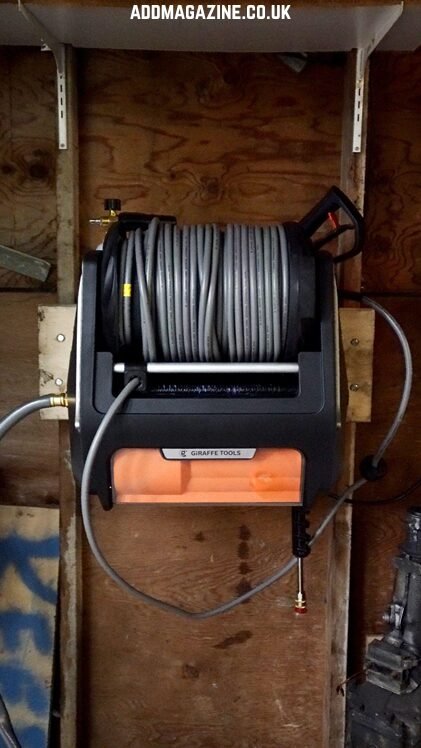
For first-time homeowners who want a cleaner and more organized setup, Giraffe Tools is worth considering. Its electric pressure washers are designed for common residential jobs like washing cars, cleaning driveways, rinsing patios, refreshing siding, and maintaining garage floors. The retractable wall-mounted design is especially helpful if you want to save garage space and avoid tangled hoses after every wash.
Nozzle choice is also important for beginners. A narrow spray tip can clean aggressively, but it can also damage wood, paint, siding, or car finishes if used incorrectly. Wider spray tips are safer for delicate surfaces, while stronger tips are better for concrete and heavy buildup.
Before using a pressure washer for the first time, it is worth learning which nozzle and PSI range to use for each task. This pressure washer nozzle chart and PSI guide is a helpful deeper resource for understanding which tip works best for cars, driveways, decks, siding, fences, and more.
As a rule, start with a wider nozzle, test a small area first, and increase pressure only when needed.
5. Extension Cords and Outdoor Power Safety
Many outdoor tools need power, so the right extension cord matters.
Always use outdoor-rated cords for outdoor work. Indoor cords are not designed for moisture, rough surfaces, or heavier tool loads.
Basic safety rules:
- Keep connections off wet ground
- Do not overload outlets
- Avoid damaged cords
- Use GFCI-protected outlets outdoors
- Store cords neatly after use
A retractable extension cord reel can also help reduce tangles and keep the garage floor safer.
6. Wet/Dry Vacuum
A wet/dry vacuum is useful for garages, cars, basements, workshops, and DIY projects.
It can clean:
- Sawdust
- Dirt and debris
- Car interiors
- Garage floors
- Small spills
- Workshop dust
If garage space is limited, look for a compact or wall-mounted option. A regular indoor vacuum is not designed for many of these messes, so a wet/dry vacuum can quickly become one of the most practical tools in your home.
7. Ladder and Gutter Tools
Most homeowners eventually need a ladder for basic outdoor maintenance.
Common uses include:
- Cleaning gutters
- Reaching exterior lights
- Washing windows
- Trimming low branches
- Checking roof edges
Choose a ladder that is tall enough for your home but still manageable to store. Always place it on stable ground and avoid using it in windy or wet conditions.
For gutter maintenance, add gloves, a gutter scoop, and a hose attachment to your kit.
8. Outdoor Storage and Organization
Outdoor equipment is only helpful if you can find it when you need it.
A simple garage or shed organization system may include:
- Wall hooks for hoses, cords, and tools
- Shelving for cleaning products
- Clear bins for accessories
- Pegboards for hand tools
- A dedicated cleaning area near the garage door
First-time homeowners often underestimate storage. Without a system, tools end up on the floor, hoses get tangled, and maintenance tasks feel harder to start.
Vertical storage is especially useful for small garages. Wall-mounted tools, retractable reels, and compact storage systems help save floor space and make regular maintenance easier.
9. Protective Gear
Outdoor maintenance can involve dust, debris, loud tools, chemicals, and sharp edges. A basic safety kit should include:
- Work gloves
- Safety glasses
- Hearing protection
- Dust mask
- Knee pads
- Closed-toe shoes
You do not need professional-grade gear for every task, but you should protect yourself when mowing, trimming, pressure washing, cleaning gutters, or working with chemicals.
What to Buy First
If you are starting from zero, focus on versatile tools first:
- Garden hose or hose reel
- Outdoor broom and scrub brush
- Lawn mower or trimmer
- Pressure washer
- Wet/dry vacuum
- Outdoor extension cord
- Ladder
- Gloves and eye protection
- Storage hooks or shelves
You can add more specialized tools later as you learn what your home actually needs.
Final Thoughts
Outdoor maintenance does not need to be complicated. The best equipment for first-time homeowners is practical, easy to store, and useful across multiple tasks.
Start with the basics: water access, lawn care, outdoor cleaning, safe power, and organized storage. Then add tools like a pressure washer or wet/dry vacuum as your cleaning needs become clearer.
The goal is not to own every tool. It is to build a simple system that helps you protect your home, keep outdoor spaces clean, and make maintenance easier to manage.