Open any contemporary design journal or scroll through the digital pages of leading creative platforms today, and you will immediately notice a fascinating shift. The rigid boundaries that once separated fine art, interior design, and architecture have completely dissolved. Instead, they are transforming entire spaces into immersive, living installations that challenge our perception of light, shadow, and physical form.
In an increasingly digital world, we crave tactile experiences that ground us. We want to touch honest surfaces, admire clever craftsmanship, and live in spaces that tell a compelling visual story. Achieving this requires a fearless approach to choosing materials that can effortlessly carry both artistic weight and structural responsibility.
The evolution of experiential spaces and the hunger for authenticity
Step into a newly designed gallery, a luxury boutique, or a meticulously planned modern home, and the atmosphere feels instantly different. The focus has decisively moved away from heavy, over-decorated environments toward a clean, minimalist philosophy. However, true minimalism is incredibly difficult to pull off successfully because every single element is left completely exposed to the eye. There is absolutely nowhere to hide a flawed finish or a sloppy joint.
It is easy to create a stunning visual piece that falls apart after a few months, just as it is easy to build something indestructible that looks incredibly boring. The modern creative community is actively rejecting these compromises, looking instead for structural mediums that offer endless aesthetic malleability without sacrificing long-term durability.
We are also seeing a massive resurgence in bespoke, locally fabricated design elements. People are simply tired of mass-produced items that make every interior look like a generic carbon copy. They want custom-built shelving units that frame architectural features, unique light fixtures that double as ceiling sculptures, and statement pieces that turn heads. This hunger for originality puts a huge premium on the quality of raw materials sourced at the very beginning of a project.
Why stainless steel bridges the gap between raw function and high art
When you examine the materials that successfully anchor these high-concept spaces, one specific alloy consistently stands out from the rest. High-grade Stainless steel has completely shaken off its old reputation as a cold, strictly industrial material. It has gracefully entered the world of premium design, becoming a favorite medium for architects, sculptors, and interior visionaries alike.
What makes this metal so deeply fascinating to creators is its incredible relationship with ambient light. Depending on how the surface is treated – whether it is brushed to a soft, matte satin or polished to a brilliant, mirror-like reflection – it interacts with its surroundings in entirely unexpected ways. It can easily bounce colorful gallery lighting around a room or subtly mimic the changing natural hues of an outdoor courtyard from dawn until dusk.
It completely ignores moisture, resists accidental scratches, and refuses to degrade over time. This makes it an absolute lifesaver for complex installations in high-traffic public zones or exposed outdoor sculpture parks, where lesser metals would quickly succumb to the elements and require constant, costly restoration work.
Round bars as the ultimate geometric canvas for creators
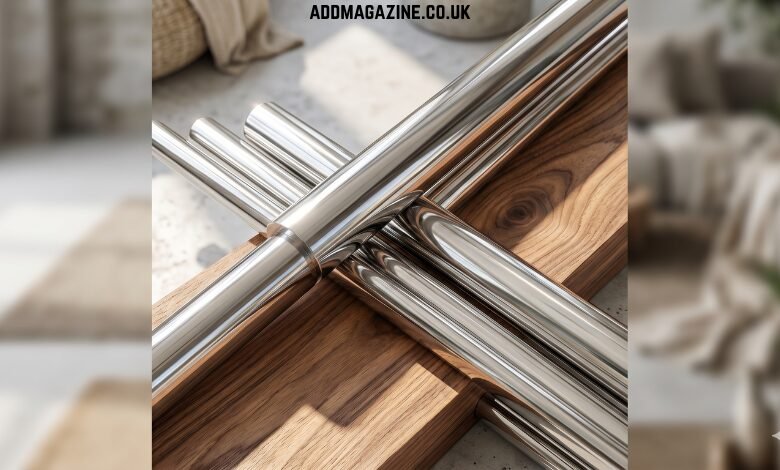
If you take a moment to look past the grand scale of modern installations and examine their structural skeletons, you will often find simple geometric profiles performing incredible visual magic. Solid Round bars have become a total secret weapon for contemporary furniture designers and architectural fabricators. Their perfectly symmetrical, circular cross-section brings a sense of clean harmony and weightless elegance to any custom framework.
The creative flexibility these components offer is genuinely staggering. A talented metalworker can transform them into minimalist clothing rails that seem to float in mid-air, intricate geometric partitions that divide a loft without blocking natural light, or structural components for custom spiral staircases. They can be bent, welded, and configured into complex three-dimensional lattices that look like delicate line drawings brought to life in physical space.
In the past, accessing these premium engineering-grade materials was a massive headache for independent artists and boutique design studios. Traditional metal yards were rarely set up to handle custom, low-volume orders efficiently, often forcing creators to jump through endless logistical hoops. Thankfully, the digitization of material procurement has completely leveled the playing field. Today, designers can easily order exact metallic profiles online, letting them focus their energy entirely on the creative process rather than supply chain headaches.
Investing in a legacy of timeless aesthetics over fleeting trends
Trends come and go with dizzying speed, but true structural quality never goes out of fashion. When you choose to build with materials that are fundamentally designed to last for generations, you are making a conscious decision to step off the fast-fashion treadmill. It is a smarter, far more sustainable philosophy that respects both the environment and the long-term financial value of an architectural asset.
Ultimately, the spaces we build are a direct reflection of our cultural values and our vision for the future. By combining bold, imaginative design with world-class materials, we create environments that inspire, comfort, and endure. There is immense joy in knowing that a beautifully crafted installation will look just as pristine, elegant, and relevant thirty years from now as it does the very day it was installed.