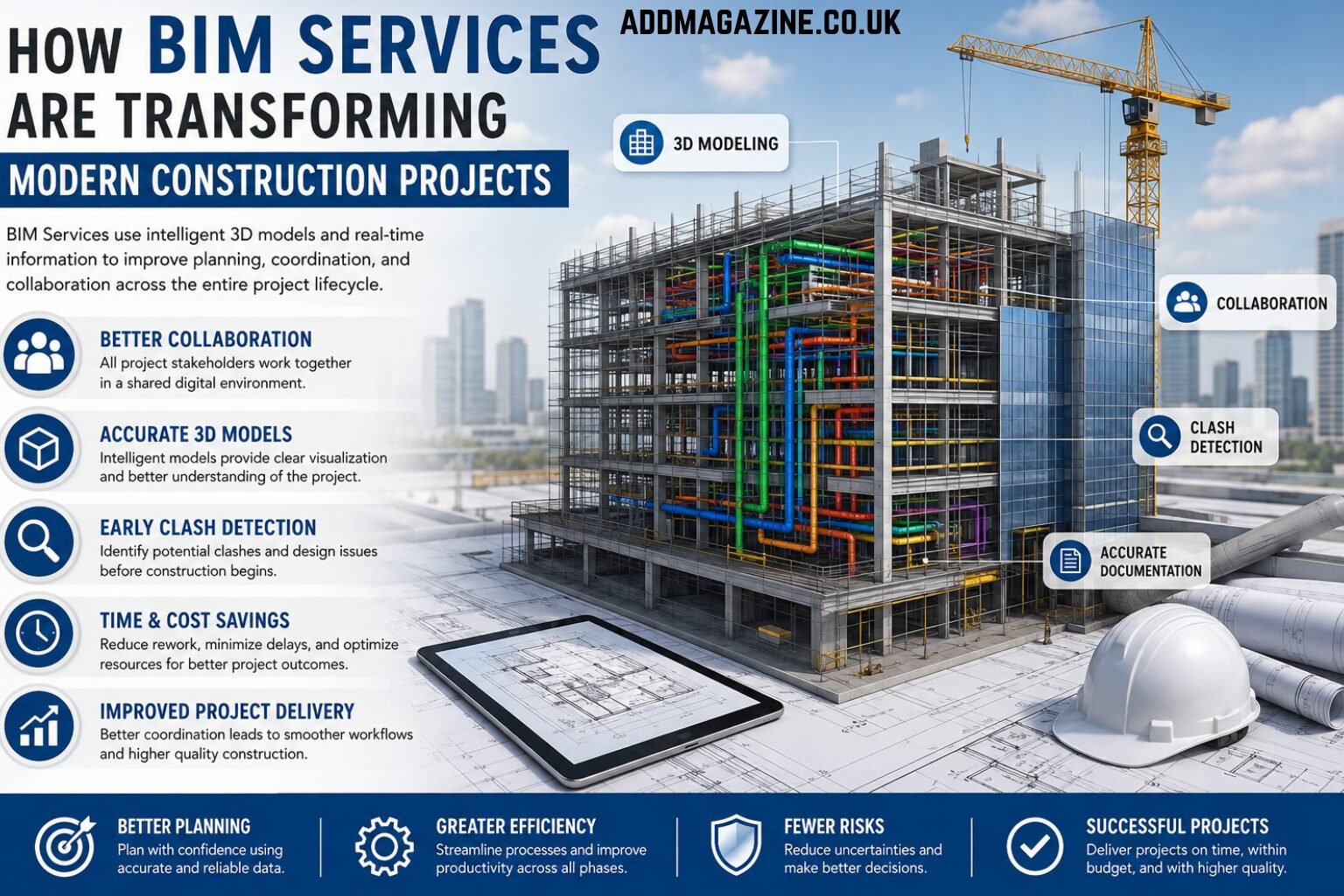
The construction industry is changing quickly as companies look for better ways to plan, design, and deliver complex projects. Traditional drawings and disconnected workflows can make it difficult for architects, engineers, contractors, and owners to stay on the same page. Even a small design mistake can create delays, additional costs, or expensive rework once construction begins.
Building Information Modeling, commonly known as BIM, offers a more connected way to manage these challenges. Instead of depending only on traditional drawings, BIM creates intelligent digital models that contain important information about a building and its components. This allows project teams to understand a project in greater detail before physical construction starts.
What Makes BIM Different From Traditional Design?
Traditional construction processes often depend on separate drawings and documents. Different teams may work on different parts of a project, which can make coordination difficult. When information changes, there is also a risk that one team may continue working with an older version.
Creating a Connected Digital Environment
BIM brings important project information into a coordinated digital environment. A 3D model can represent building elements while also containing information related to dimensions, materials, systems, and other project requirements.
This approach gives teams a clearer view of the entire project. Instead of looking at individual drawings separately, stakeholders can understand how different elements work together.
How BIM Supports Better Planning
Good construction begins with good planning. Before work starts on-site, project teams need to understand the design, materials, building systems, space requirements, and potential challenges.
Improving Project Understanding
Professional BIM Services can help teams create detailed digital models that make planning easier. Designers can review the project visually, while engineers and contractors can examine important technical details.
Where BIM Creates the Most Value
BIM is not limited to creating 3D images. Its real value comes from the information and coordination that the model provides throughout a project.
Key Advantages of BIM
Some of the most important advantages include:
- Clearer Project Visualization: A 3D model gives stakeholders a better understanding of the proposed building before construction begins.
- Improved Design Coordination: Different disciplines can review their work within a shared digital environment.
- Earlier Problem Identification: Potential conflicts and design issues can be discovered before they reach the construction site.
- Less Rework: Fixing a problem during design is generally easier than correcting it after installation.
- Better Communication: A shared model provides a common reference for architects, engineers, contractors, and owners.
- More Efficient Construction: Better planning can reduce interruptions and unnecessary changes during the building process.
- Better Cost Control: Fewer errors and changes can help prevent avoidable construction expenses.
- Useful Project Records: BIM information can remain valuable after construction for operations and maintenance.
BIM Helps Teams Detect Problems Earlier
One of the strongest reasons companies use BIM is its ability to support early problem detection. A building contains many connected components, and they must all fit within the available space.
Finding Potential Conflicts
For example, structural elements, architectural features, mechanical equipment, electrical components, and plumbing systems may need to share the same areas. If these elements are designed without proper coordination, conflicts can appear during construction.
BIM allows teams to review these components together. A potential conflict can be noticed digitally and corrected before workers begin installation.
This can reduce site disruptions and help keep the project moving according to plan.
Better Collaboration Between Project Stakeholders
Construction projects involve many people with different responsibilities. Architects focus on design, engineers handle technical systems, contractors manage construction, and owners focus on project goals and budgets.
Creating Better Communication
Without a reliable way to share information, communication gaps can develop.
BIM provides a common digital reference that can help different teams understand the same project. When everyone has better access to coordinated information, discussions become more productive and decisions can be made with greater confidence.
This collaborative approach is especially valuable on large and complicated projects where many disciplines must work together.
Reducing Rework and Unnecessary Costs
Construction delays and added costs often begin with avoidable repeat work. When a mistake is discovered after materials have been installed, fixing it can require additional labor, materials, and time.
Solving Problems Before Construction
BIM helps move problem-solving earlier in the project lifecycle. Teams can review the digital model and make adjustments before construction reaches the affected area.
This does not mean every construction problem disappears, but it can significantly improve preparation and reduce avoidable errors.
Better coordination can also help companies make more informed decisions about resources and project requirements.
BIM Can Improve Construction Scheduling
Keeping construction projects on schedule is essential for meeting deadlines and controlling overall progress. Project setbacks can disrupt workforce scheduling, material availability, contractor coordination, financial planning, and completion timelines.
Supporting Efficient Workflows
BIM can support better scheduling by giving project teams a clearer understanding of the work that needs to be completed. When design information is more coordinated, teams can plan construction activities with fewer unexpected changes.
The result can be a smoother workflow in which different teams understand what needs to happen and when it needs to happen.
BIM Beyond the Construction Stage
The value of BIM does not necessarily end when a building is completed. The digital information created during design and construction can also support facility management.
Supporting Future Building Management
Building owners and facility teams may need information about equipment, systems, components, and building spaces long after construction is finished.
A well-developed BIM model can provide useful information for maintenance planning, repairs, upgrades, and future building management.
This makes BIM a long-term information resource rather than simply a design tool.
Why BIM Is Becoming Essential
As buildings become more complex, construction companies need better ways to manage information. Projects now involve advanced systems, tighter schedules, higher expectations, and more coordination between different disciplines.
Preparing for Modern Construction
BIM addresses these needs by connecting design information with collaboration and planning.
It can help companies improve accuracy, reduce unnecessary work, communicate more clearly, and make better decisions throughout the project lifecycle.
Conclusion
BIM Services are helping modern construction teams move from disconnected workflows toward a more coordinated digital process. By using intelligent 3D models and organized project information, teams can improve planning, detect problems earlier, reduce rework, and communicate more effectively.
From the first design concept to construction and long-term facility management, Scan to BIM Services can provide useful information at every stage. As the construction industry continues to embrace digital technology, BIM will remain an important part of delivering accurate, efficient, and well-coordinated projects.