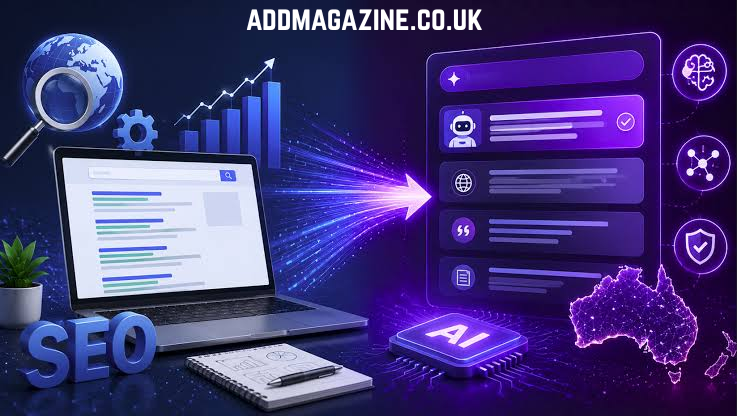
Search is changing. People are no longer relying only on short Google queries and a list of links; they are also using AI-generated search experiences to ask questions, compare options and research businesses. For companies, this makes AI search optimisation increasingly important for online visibility.
AI-driven search is changing how people find information, so companies should refine their websites accordingly without discarding established SEO methods or redesigning their entire strategy around AI. Good AI search SEO combines strong search foundations with Generative Engine Optimisation (GEO), making website information easier for generative search systems to retrieve, understand and use while still helping customers make informed decisions.
What Does an AI-Ready Website Actually Need?
An AI-ready website needs many of the same foundations as a well-optimised website: accessible pages, a logical structure and clear information.
Make sure important pages can be crawled and indexed, navigation is straightforward and related content is connected through useful internal links. Key information should also appear in readable page content rather than being buried in images, brochures or vague marketing copy.
It should be easy to establish what your business does, who you work with, where you operate and which services you provide.Use consistent names for services, locations and areas of expertise across key pages.
Are You Optimising for Keywords or Customer Decisions?
Keywords are still useful for understanding what people search for, but a keyword rarely represents the whole decision someone is trying to make.
A potential customer might begin by asking what a service is, before wanting to know how much it costs, whether it is suitable for them, how long it takes or how it compares with another option. AI search makes it easier to include several of these questions within the same research journey.
Content does not need to be arranged as a series of questions and answers on every page. It means answering the questions that naturally sit around the service or product being discussed.
What Information Is Missing From Your Website?
Before publishing more content, check what is already missing. Can a potential customer quickly work out who a service is for, what is included, where it is available and what affects the price or timescale? Can they understand the difference between two options or what happens after they make an enquiry?
Specific, meaningful information often gives readers greater value than repeating a general topic that countless other websites have already discussed.
Can Your Claims Be Verified?
Terms such as ‘experienced’, ‘trusted’ and ‘high-quality’ are common on business websites, but they do not say much on their own. Where possible, support important claims with something concrete like case studies, named specialists, accreditations or verified results.
First-hand knowledge also adds value. Explaining how your team approaches a particular problem, what you commonly see in practice or when a service may not be the right option gives readers something more useful than generic promotional copy.
Does AI Search Require a Different Content Strategy or Structured Data?
No. There is no single content format or piece of schema that guarantees visibility in AI-generated search results.
That does not mean businesses should ignore AI-specific optimisation. GEO is about improving how clearly and usefully a brand, service or piece of expertise can be understood within generative search experiences. Clear page layouts, meaningful section titles, and properly implemented structured data can improve content clarity, but their value depends on the information being reliable and genuinely helpful.
Answer Engine Optimisation (AEO) can also help businesses consider how clearly their content addresses direct questions, particularly where users expect a concise answer before exploring a subject in more detail.
How Should Businesses Measure AI Search Visibility?
Look at whether the right products, services and expertise are appearing for commercially relevant searches, whether your business is being represented accurately and which pages are being surfaced.
AI visibility should then be measured alongside organic traffic, qualified enquiries and conversions rather than in isolation.
Preparing for AI Search Means Adapting, Not Starting Again
Preparing for AI search does require businesses to adapt. The priority, however, is not to optimise for AI at the expense of the people using the website.
Strong AI search starts with a website that clearly explains what the business does, answers the questions customers genuinely need resolved and supports important claims with credible information. From there, businesses can make that information easier for generative search systems to retrieve, interpret and use while continuing to strengthen the SEO foundations that support visibility across search.