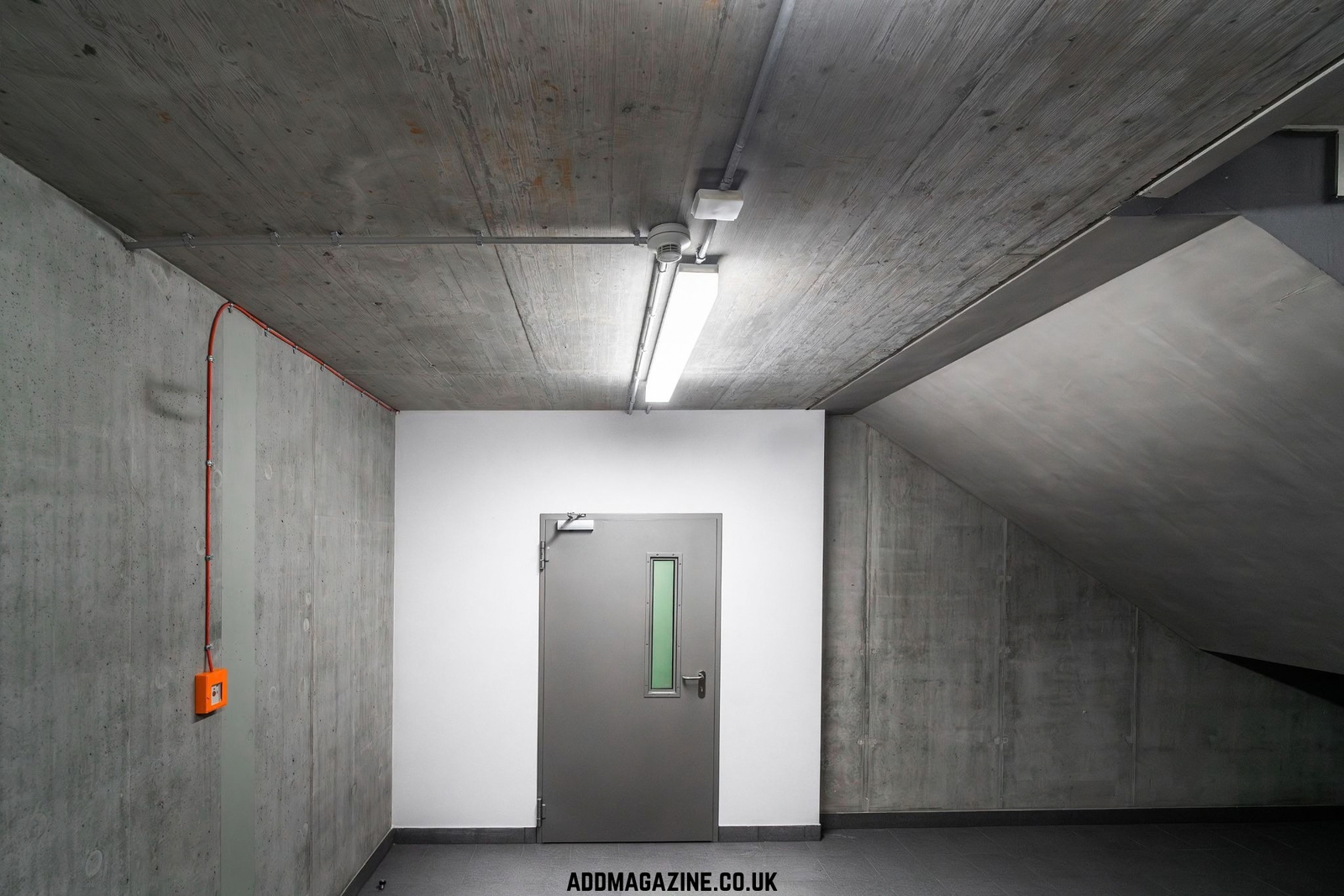
Fire safety in a commercial building depends on a genuinely coordinated set of measures, not any single feature working alone, and steel doors often play an important structural role in this wider strategy. Understanding where steel doors fit into fire safety planning helps building owners and specifiers make better-informed decisions from the start of a project. Companies such as Dasco Entrance Technology work with commercial clients to specify steel door systems that support building-wide fire safety objectives.
Why Fire Safety Strategy Starts With the Building Envelope
Before considering detection systems or evacuation procedures, fire safety strategy begins with how a building is physically divided and protected, since containing a fire within a limited area for as long as possible buys crucial extra time for occupants to evacuate safely. Steel doors are a key part of this physical protection, providing structural resistance that many other door materials cannot match. Building this protection in from the earliest design stages is considerably more effective than trying to add it retroactively once a building is already in use.
How Steel Doors Contribute to Compartmentation
Compartmentation, the practice of dividing a building into fire-resistant sections, relies heavily on doors that can genuinely hold a fire back for a specified period rather than failing early and allowing flames or smoke to spread unchecked. Steel doors, properly installed and consistently maintained, provide this resistance reliably, making them a preferred choice in stairwells, plant rooms and other areas where compartmentation is genuinely critical to overall building safety and occupant wellbeing. Specifiers who understand this role tend to prioritise steel doors in exactly the locations where they matter most, rather than treating every door in a building identically.
Fire Rating Standards Relevant to Commercial Steel Doors
Commercial steel doors used for fire safety must meet recognised fire rating standards, which specify how long a door must resist fire under standardised test conditions before failing. Specifiers need to match the correct fire rating to each location within a building, since requirements can vary considerably depending on a space’s function and its position relative to escape routes. Getting this match wrong can leave a building technically fitted with fire doors that do not actually meet what the location genuinely requires.
Positioning Steel Doors Within an Evacuation Plan
A building’s evacuation plan depends on fire doors, including steel doors, remaining reliably closed or self-closing during an emergency, since a door propped open defeats its purpose, no matter how well it was originally specified. Positioning steel doors correctly along designated escape routes and ensuring self-closing mechanisms are properly maintained is just as important as the door specification itself. A door held open with a wedge for daily convenience can quietly undo months of careful fire safety planning in a single unguarded moment.
Maintenance Requirements to Preserve Fire Performance
A steel door provides its rated fire performance only if it is properly maintained, including intact seals, correctly functioning self-closing devices, and door leaves that have not been damaged or modified in ways that compromise their tested performance. Regular inspection is a genuine requirement, not an optional extra, since a fire door that looks fine on the surface can still have quietly lost its protective performance underneath. Scheduling these checks on a regular calendar, rather than relying on someone to remember, helps ensure they genuinely happen.
Coordinating Steel Doors With Wider Fire Safety Systems
Steel doors work best as part of a coordinated fire safety system that includes detection, alarms, and clear signage, rather than as an isolated feature. Specifiers who consider steel doors alongside these other systems from the earliest planning stages tend to achieve a genuinely more coherent and effective overall fire safety strategy for the building. This joined-up approach is generally far more effective than specifying each safety element separately and hoping they happen to work well together once the building is finished.
Steel Doors as Part of a Layered Strategy
Commercial steel doors provide a genuinely important layer of protection within a wider fire safety strategy. They deliver the strongest results when their selection, installation, and ongoing maintenance are guided by the building’s wider requirements. Specialised companies help commercial clients specify steel door systems that meet the correct fire rating for each location and integrate properly with the building’s overall fire safety plan.