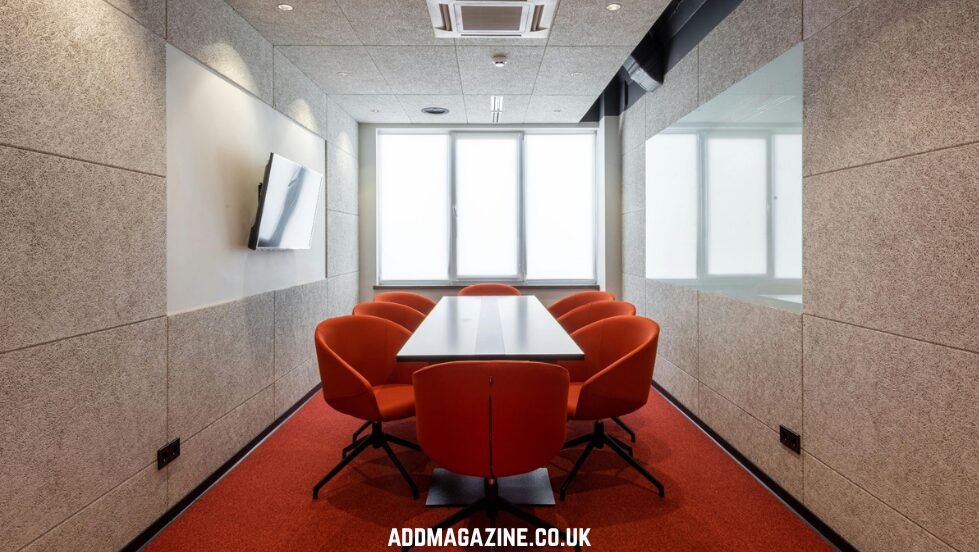
In the fast-paced business hubs of the UK, from the sleek skyscrapers of London’s Square Mile to the creative warehouses of Manchester, the “open-plan” revolution has brought a hidden challenge: acoustic fatigue. While collaboration is higher than ever, so is the ambient noise that disrupts deep work and confidential conversations.
Modern architecture favors hard surfaces—glass, concrete, and polished wood. These materials look stunning but act as acoustic mirrors, reflecting sound waves and creating a chaotic environment. To combat this, UK businesses are turning to sophisticated sound management that blends seamlessly into high-end interior design.
Transforming the Fifth Wall: Acoustic Ceiling Systems
The ceiling is often the most overlooked surface in office design, yet it offers the largest area for sound absorption. Without proper treatment, noise from keyboards, phone calls, and footsteps travels upward and bounces back, creating a persistent “hum” that increases stress levels.
Integrating acoustic ceiling panels for office noise reduction is the most effective way to intercept sound before it migrates across a large floor plate. These systems don’t just dampen noise; they improve speech intelligibility, making it easier for employees to communicate without raising their voices.
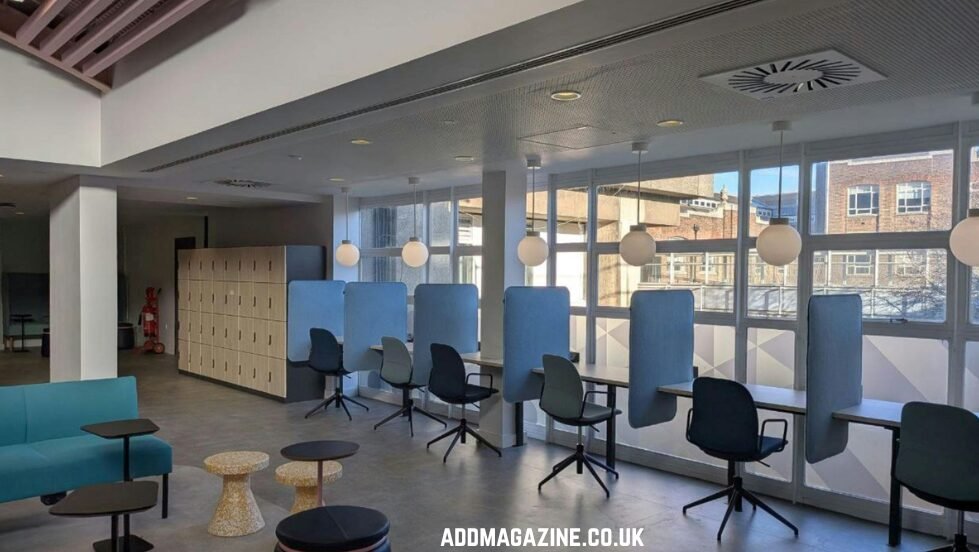
Benefits of Ceiling Treatments:
- Uniform Absorption: Provides consistent sound dampening across the entire office.
- Discreet Integration: Can be designed to blend with existing lighting and HVAC systems.
- Vertical Space Saving: Clears up wall space for branding or windows while managing echoes.
Beyond Function: The Rise of Aesthetic Wall Treatments
Gone are the days when soundproofing meant ugly grey foam tucked away in a corner. Today, acoustic treatment is a central element of interior branding. Companies now use wall treatments to inject color, texture, and personality into their workspaces.
For those looking to combine safety with aesthetics, fire rated acoustic wall tiles for commercial buildings provide peace of mind while dramatically lowering reverberation times. These tiles allow designers to create geometric patterns or “feature walls” that serve a dual purpose: looking great and sounding better.
The Dual-Purpose Revolution: Acoustic Lighting
One of the most innovative trends in UK office design is the marriage of illumination and sound absorption. In collaborative zones and break-out areas, space is at a premium. Why install a light fixture and an acoustic panel separately when you can combine them?
Sound absorbing pendant lights for meeting rooms have become a staple for interior designers. These fixtures capture sound at the source—directly above the boardroom table—preventing voice “leakage” and ensuring that video conference participants hear crystal-clear audio without the hollow “echo” typical of glass-walled meeting rooms.

Why Choose Integrated Acoustic Lighting?
- Multi-functional: Solves both lighting and acoustic requirements in one installation.
- Focus Zones: Creates “acoustic umbrellas” over specific desks or collaborative hubs.
- Modern Aesthetic: Offers a high-end, contemporary look that traditional panels cannot match.
Acoustic Solutions for Specialized Environments
While offices are a primary focus, other UK sectors are seeing the benefits of tailored acoustic design.
- Education: In classrooms, ceiling panels for echo control in classrooms are vital for student focus and teacher vocal health.
- Hospitality: Restaurants and cafés use wall tiles to ensure guests can hold conversations without shouting over the kitchen noise.
- Creative Studios: High-density acoustic foam tiles for recording studios remain the go-to for podcasters and musicians looking for a professional “dry” sound.
Human-Centric Design and Employee Wellbeing
The shift toward hybrid work has changed what employees expect from the physical office. When staff commute into the city, they expect an environment that facilitates the focus they can’t get at home.
Implementing office acoustic solutions for open plan spaces is a direct investment in HR compliance and mental health. A quieter office reduces cognitive load, meaning employees leave work feeling less exhausted and more satisfied with their performance.
Choosing a Full-Service Partner in the UK
Navigating the world of decibel levels and NRC ratings can be daunting. It isn’t just about buying panels; it’s about strategic placement and material selection. For UK businesses, working with a professional office acoustics installation services provider ensures that the solution is tailored to the specific dimensions and challenges of the building.
From the initial sound testing to the final installation of bespoke fabrics, a turnkey approach ensures that the “ROI of Quiet” is realized immediately upon completion.
Conclusion
In an era of distractions, silence is a luxury. By investing in high-quality acoustic treatments, UK businesses are not just “fixing a noise problem”—they are creating a competitive advantage.
Better acoustics lead to better meetings, higher focus, and a more professional brand image. Whether through hidden ceiling systems or statement-making acoustic lights, the sound of your space says everything about your brand.
Frequently Asked Questions (FAQ)
1. What is the difference between soundproofing and sound absorption?
Soundproofing is about stopping sound from traveling from one room to another (blocking). Sound absorption is about improving sound quality in a room by reducing echoes and reverberation (dampening).
2. Do acoustic panels require a lot of maintenance?
Most modern panels are remarkably low-maintenance. Fabric-wrapped panels can be vacuumed, and many foam or modular tiles are designed to be dust-resistant and durable for high-traffic commercial use.
3. How do I know which product is right for my office?
It depends on your goal. If you have high ceilings and a large open area, suspended ceiling panels are best. If you have privacy concerns in small rooms, wall-mounted tiles or acoustic lighting are often the most effective.
4. Are these products compliant with UK building regulations?
Yes. For commercial and public buildings, it is essential to use products with the correct fire ratings. Always look for “Fire Rated” or “Class 0/1” certifications when purchasing for an office or school environment.
5. Can I install these panels myself?
Many wall tiles and foam panels are designed for DIY installation with specialized adhesives. However, for large-scale ceiling systems or integrated lighting, we recommend professional installation to ensure safety and optimal acoustic performance.