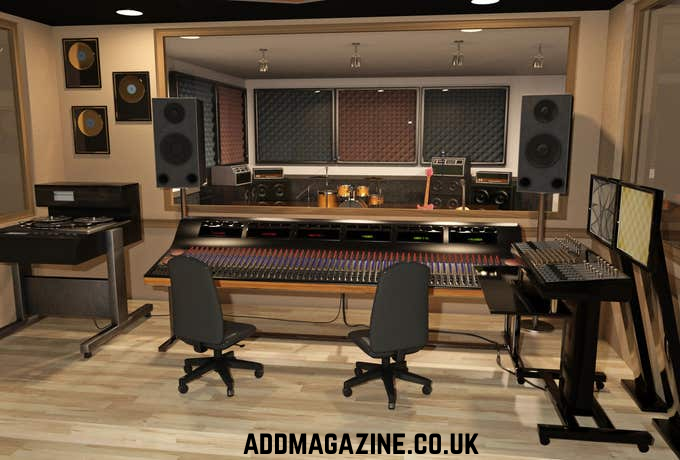
Long Beach has quietly developed into one of Southern California’s more serious recording markets. It sits close enough to Los Angeles to benefit from the region’s deep pool of engineers, producers, and session musicians, yet it operates with a pace and cost structure that many working artists find more sustainable. For musicians, podcasters, voice-over professionals, and independent labels making real decisions about where to record, the options in Long Beach have grown considerably over the past several years — and so has the variation in quality, specialization, and practical fit.
Choosing a studio is not a simple matter of finding the closest room with an available booking calendar. The wrong environment — poor acoustics, unreliable equipment, or an engineer whose background doesn’t match your production goals — can cost more than the session rate. This article looks at seven studios that working artists have returned to, not once, but repeatedly, because the fundamentals are consistently in place.
What Makes a Recording Studio Worth Returning To in Long Beach
Before reviewing individual studios, it’s worth understanding what separates a studio that attracts serious repeat clients from one that fills its calendar with one-off bookings. The difference usually comes down to three things: the quality of the monitoring environment, the experience of the in-house staff, and the reliability of the signal chain from input to output. A studio can have impressive gear on paper and still produce sessions that require significant remediation in post-production. When an artist or producer is evaluating a recording studio long beach ca option, A stronger decision should be based on these three considerations rather than focusing mainly on cost or basic amenities.
The studios listed below have been identified based on reputation within professional circles, the consistency of their output across different genres, and the practical infrastructure that supports complex or extended sessions. This is not a ranking by amenities or price tier. It reflects where working professionals in the region have directed serious projects.
Why Room Acoustics Matter More Than Equipment Lists
Many artists approach studio selection by focusing on the mixing board brand, the microphone inventory, or the name of the plug-in library available. These are relevant considerations, but they become secondary when the room itself introduces problems. Acoustic treatment — the physical management of sound reflections, bass accumulation, and frequency buildup within a recording space — determines whether the raw capture is accurate. An inaccurate capture requires compensatory decisions during mixing that reduce your options and often compress the final sound.
Studios that have invested seriously in room design tend to have done so because their client base demanded it. That investment is usually visible in the architecture, not just the brochure. Rooms built with proper isolation between the live room and the control room, consistent low-frequency response, and predictable reverb tails give engineers a reliable starting point regardless of the project type.
Slap Studios — Full-Service Production in Long Beach
Slap Studios operates as a full-service production facility, offering recording, mixing, and mastering under one roof. This matters in practice because it reduces the friction of handing a project between different environments at different stages. Artists who record and mix in the same space, with the same monitoring reference, are less likely to encounter the translation issues that come from bouncing between rooms.
Continuity Between Recording and Mixing
One operational advantage of a facility like Slap Studios is the continuity it provides across the production process. When the engineer who records the session is also familiar with how the room sounds during mixing, the decisions made during tracking — microphone placement, gain staging, room treatment choices — carry intentional weight rather than being made in isolation. This kind of contextual continuity often determines whether a session sounds cohesive on release or shows signs of having been assembled from parts recorded and processed in disconnected environments.
Westlake Recording Studios — Industry-Standard Infrastructure
Westlake Recording Studios has operated in the Los Angeles area for decades and maintains facilities that reflect a long history of professional client demands. The studio is known for its investment in monitoring accuracy and signal integrity, two areas that directly affect the reliability of what engineers hear during a session. For artists working toward major-label placement or sync licensing, these technical standards are not optional — they are the baseline expectation of the professionals reviewing the final product.
The Practical Value of Legacy Infrastructure
There is a meaningful difference between a studio that has maintained professional-grade equipment over many years and one that was recently assembled with off-the-shelf components. Legacy infrastructure in a well-maintained studio typically means that the signal chain has been tested across thousands of sessions, that failure points have been identified and addressed, and that the staff understand how the room behaves under different conditions. This kind of institutional knowledge reduces risk during complex or time-sensitive sessions.
Studio West — Reliable Tracking for Live Bands and Ensembles
Studio West offers a larger live room environment suited for recording multiple musicians simultaneously. This format matters when the artistic intention is to capture the dynamic interaction between performers in real time rather than building a track layer by layer. Ensemble recording requires more physical space, more isolation infrastructure between instruments, and an engineer capable of managing a more complex routing environment. Studios that specialize in this format have usually configured their rooms specifically to support it.
Why Live Room Size Affects Creative Decisions
Room size is not purely a logistical consideration — it shapes the character of what gets recorded. A small live room changes how musicians perform because they are physically compressed. Larger rooms allow performers to breathe, adjust their dynamics naturally, and respond to each other without the spatial restriction that changes timing and energy. For genres where the live performance energy is part of the product — jazz, rock, acoustic — room size is a production decision, not just a scheduling one.
Paramount Recording Studios — Neutral Monitoring and Broad Genre Range
Paramount Recording Studios has built a reputation for neutral monitoring environments, which means the studio’s control room is designed to reproduce sound as accurately as possible rather than flattering it. This is valuable because mixes made in flattering environments often fail to translate well to consumer playback systems — car stereos, earbuds, laptop speakers. Neutral monitoring forces honest decisions during the mixing process, which tends to produce more consistent results across listening contexts. The Audio Engineering Society has long emphasized the importance of accurate monitoring as a foundational standard in professional recording environments.
Genre Flexibility and Session Versatility
A studio that handles a wide range of genres regularly tends to have staff with broader skill sets and more adaptable signal routing configurations. This is not always a sign of unfocused specialization — it often reflects a mature operation that has invested in the kind of flexible infrastructure that supports different production approaches. For artists whose work does not fit neatly into a single category, or whose sessions involve multiple styles within a single project, this versatility reduces the need to book multiple facilities.
Crystal Sound Studios — Analog Signal Chain and Tape Recording Options
Crystal Sound Studios offers analog recording options, including tape-based workflows, for artists and producers who want a specific quality of saturation and harmonic character that digital recording does not replicate naturally. This is not a novelty offering. There is a defined segment of working professionals — in rock, jazz, soul, and certain hip-hop production styles — for whom analog capture is a deliberate production choice tied directly to the sonic result they are delivering to a client or a label.
Understanding When Analog Makes a Practical Difference
The decision to record to tape carries workflow implications beyond the sonic character. Tape formats require more preparation, more deliberate gain staging, and a session pace that is different from digital recording. For producers and engineers experienced with the format, these constraints are familiar and manageable. For those who are not, they can introduce inefficiencies that offset the sonic benefit. Crystal Sound Studios is best suited to artists who have already decided that analog is the right approach and who want a space where that decision is supported rather than accommodated reluctantly.
Rancho De La Luna — Character Rooms and Independent Production
Rancho De La Luna offers a more informal environment with distinctive room character, appealing to independent artists and producers who want a space that is less clinical than a conventional commercial studio. The sonic character of the room is part of the offering — the natural ambience and the acoustic signature of the space are factored into the production approach rather than minimized. This works well for artists whose music benefits from a less polished, more textured foundation.
Matching the Environment to the Artistic Intent
Not every recording project benefits from a neutral, acoustically controlled environment. Some productions are better served by rooms that impose their own character — that add a specific sense of space, decay, or dimension that a treated room would eliminate. The key is understanding in advance what kind of environment the project calls for and selecting a studio accordingly. Choosing a character room when the project requires neutrality, or a clinical room when the project requires warmth, both create problems that are difficult to resolve after the session is complete.
Conclusion: Matching the Studio to the Project
The seven studios reviewed here represent a range of capabilities, specializations, and working environments across the Long Beach and greater Southern California market. None of them is the right choice for every project, and that is the point. Serious recording decisions begin with a clear understanding of what the project actually requires — the genre, the format, the production stage, the engineering complexity, and the delivery expectations — and then match those requirements to the studio best positioned to support them.
Artists and producers who approach studio selection this way tend to use fewer sessions, encounter fewer remediation costs, and deliver work that holds up under professional review. The studios in this list have demonstrated, through consistent professional use, that they are capable of supporting that kind of intentional, outcome-focused production process.
For those evaluating options in the area, the most reliable starting point remains a direct conversation with the studio’s engineering staff before committing to a booking. The quality of that conversation — how clearly they understand your project, how directly they address your technical questions — is itself a reliable signal of what the session experience will look like.