There’s a growing sense, among many travellers, that something has gone missing from the way we move around the world. Flights are extraordinary, of course – crossing continents in a few hours would have seemed like witchcraft to previous generations – but the experience itself has become oddly joyless. Queues, scanners, overpriced sandwiches, a middle seat. You arrive, but you haven’t really travelled.
Which is perhaps why so many people are coming back to the sea.
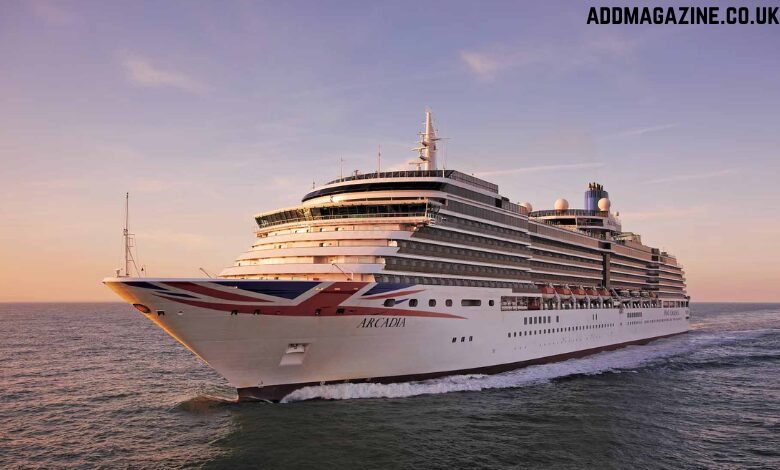
Travelling by water does something that almost no other form of transport manages: it makes the journey the point. The rhythm is different. Slower. You watch coastlines emerge, notice the colour of the water shift across the day, feel the hours pass without the usual anxiety of connection times and gate changes. For a practical example, exploring P&O cruise deals is a great starting point—modern cruises offer a far more comfortable experience than the old, nostalgic ocean liners cramped ocean liners of the past
Rediscovering the journey itself
For most of human history, if you wanted to go anywhere significant, you went by sea. It wasn’t quick. It wasn’t always comfortable. But the journey had weight to it – a sense of passage, of time genuinely moving. Then aviation arrived and dismantled all of that, turning geography into an inconvenience to be overcome as efficiently as possible.
What’s interesting is that the appetite for slower travel never really vanished. It just got buried under the convenience of it all.
There’s something genuinely restorative about settling into a ship and watching the world change gradually around you. No rushing through terminals, no frantic transfers. Just the quiet business of moving across the water while the scenery does its thing.
Time to pause and reflect
Ask most people what they actually want from a holiday and, somewhere in the answer, you’ll find the word rest. Not necessarily lying on a sun lounger doing nothing – though that has its place – but a deeper kind of rest. Mental stillness. The feeling that you’re not constantly reacting to something.
Sea travel is unusually good at delivering this. The open water has a calming quality that’s hard to put your finger on. The movement of the ship, the sound of waves, the absence of a horizon cluttered with buildings or traffic – it pulls you into the present moment without asking you to do anything in particular.
For a lot of people, that contrast with normal life is the whole point.
Seeing destinations from a different perspective
There’s also something to be said for arriving by sea. Coming into a port on the water gives you a view of a place that most visitors simply don’t get. The skyline reveals itself gradually. You might spot the curve of an old harbour wall, fishing boats heading out early, clifftops catching the morning light.
It’s a more considered introduction to somewhere new. Instead of being deposited in a taxi rank or a baggage hall, you approach slowly, with time to look.
That gradual arrival seems to sharpen the sense of discovery. You’ve earned the view, in a small way, by the patience the journey required.
Exploring multiple destinations without constant movement
One of the more practical joys of travelling by sea is that you can visit several places without the exhausting cycle of packing, unpacking, navigating unfamiliar transport systems and starting from scratch in each new city.
Your base stays the same. You carry your life with you, but it remains settled and familiar. Each port is a day’s adventure – a walk through a market, a climb to a viewpoint, lunch somewhere local – and then you return in the evening to the same cabin, the same surroundings.
It gives a journey continuity. Rather than a string of disconnected trips, it feels like one coherent story unfolding.
A slower rhythm of travel
The rhythm is worth dwelling on, because it’s quite unlike anything else. Days at sea create space – genuine, unhurried space – in a way that even the most carefully planned itinerary rarely does. You wake without urgency. You take your time. And then, when the next destination appears on the horizon, there’s real anticipation to it.
That push and pull between stillness and discovery is what makes sea travel feel so particular. You’re moving, but you don’t feel moved around. There’s a difference.
The timeless appeal of the open sea
The ocean has always meant something to people – freedom, distance, the tantalising suggestion of somewhere beyond. That hasn’t changed, even if the ships have got considerably more comfortable.
For some, the appeal is straightforwardly about escape. Being surrounded by water severs you, temporarily, from the noise and obligation of ordinary life. The emails can wait. The to-do list loses its grip. You’re somewhere else, in every sense.
For others, it’s quieter than that. A sunrise over flat water. The strange, pleasant smallness of being on a ship in the middle of the sea.
A different approach to modern travel
Somewhere along the way, travel became about volume – how many places, how quickly, how efficiently ticked off. That approach has its merits, but it also leaves a lot of people feeling vaguely unsatisfied, as though they’ve seen things without quite experiencing them.
Travelling by sea pushes back against that. It insists, gently, that the getting-there matters. That slowing down isn’t a waste of time but often the whole point.
The most memorable journeys, more often than not, aren’t the ones where everything moved fastest. They’re the ones where you actually had time to look.