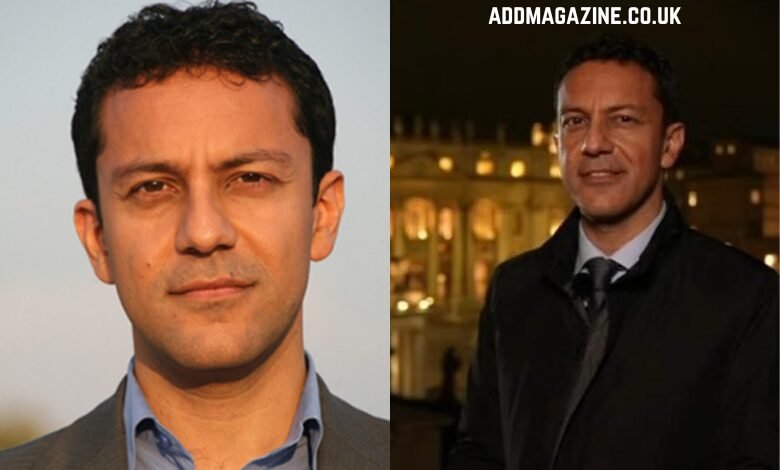
Aleem Maqbool is a prominent British journalist and the current Religion Editor for the BBC. Known for his insightful and empathetic approach to covering global issues, Maqbool has carved out a significant career in journalism. His work spans across different regions and complex issues, from his coverage of the ongoing conflicts in Gaza to his role in reporting on the United States and Europe.
Early Life and Education
Aleem Maqbool’s journey into journalism was not a conventional one. Born and raised in the United Kingdom, Maqbool’s early interests leaned more towards academia. He pursued a degree in neuroscience, a field that requires a deep understanding of both science and human behavior. However, despite his academic success, he realized that his true passion was not in the laboratory but in storytelling and communication. This realization led him to shift his career focus, an unconventional decision that ultimately defined his career trajectory.
While the specifics of Maqbool’s early years remain private, it’s clear that his academic background influenced his journalistic work. The precision, attention to detail, and analytical thinking required in neuroscience serve him well in his career in journalism, where facts and clarity are paramount.
After his shift in career direction, Maqbool found himself working in the media sector, first in community radio. He received mentorship from a friend running a charity, which eventually led him into broadcasting. It was at this point that Maqbool discovered his natural talent for communication, which would later propel him into a career at the BBC.
Career at BBC
Maqbool’s career at the BBC spans nearly two decades, and it is characterized by a wide range of roles and responsibilities. He has served as the BBC’s North America correspondent, and before that, he covered Pakistan and the Gaza/West Bank region. These assignments exposed him to the heart of world affairs, where he reported on significant events, including natural disasters, conflicts, and political changes. His ability to navigate the complexities of international reporting and his understanding of global politics has made him a reliable and well-respected journalist.
Appointment as Religion Editor
In April 2023, Maqbool was appointed as the BBC’s Religion Editor, taking over from Martin Bashir. This role involves leading the network’s coverage of faith and religion, both in the UK and around the world. This was a particularly challenging yet important role, as it required a nuanced understanding of religious dynamics in global news.
Elevating Religious Coverage
Maqbool’s appointment as Religion Editor was an opportunity for the BBC to elevate its coverage of religion, a subject that is often overlooked or underrepresented in mainstream media. Despite some external perceptions that editors at the BBC might be hesitant to focus on faith-based stories, Maqbool’s experience so far has been encouraging. He has found that the editors are receptive to stories with religious themes and that there is a recognition of the importance of these issues in today’s world.
Impactful Reporting on Faith-Based Stories
In his first few months in the role, Maqbool has already contributed significant reports on faith-related topics. For example, his coverage of the war in Ukraine included the religious aspects of the conflict, including the role of the Orthodox Church in Eastern Europe. Additionally, he reported on the American evangelist Franklin Graham, showcasing his commitment to reporting on diverse faith narratives.
Advocacy for Religion in the Media
Maqbool is passionate about ensuring that faith stories are not marginalized in the media. He believes that religion is an essential part of human history and that it shapes the political and social landscapes across the globe. In a world where religious beliefs often influence major decisions, Maqbool’s work at the BBC plays a pivotal role in educating the public about the importance of religion in international affairs.
Maqbool’s Reporting Style
Aleem Maqbool is known for his insightful and empathetic approach to journalism. He has often emphasized the need to understand human stories and their connection to broader events. His reporting is deeply rooted in the desire to bring clarity to complex issues, making them accessible to a wide audience. This ability to humanize his stories is one of the reasons Maqbool has built a reputation as a trusted journalist.
A key example of Maqbool’s approach was his coverage of the Gaza conflict. As a correspondent in the region, Maqbool was able to provide a nuanced view of the situation, focusing not only on the political and military aspects but also on the human cost of the violence. He interviewed ordinary people living through the conflict, highlighting their stories and ensuring that their voices were heard amid the larger geopolitical narrative.
Maqbool’s ability to connect with people on a personal level also came across in his coverage of North America. His role as the BBC’s North America correspondent saw him reporting on events in the US, Canada, and Mexico. His reporting on the political divisions in the United States, especially during and after the 2016 presidential election, showed his ability to tackle sensitive subjects with professionalism and empathy.
Faith and Religion: A Personal Passion
Aleem Maqbool’s passion for faith and religion is not limited to his professional life; it is a personal interest that shapes his worldview. While Maqbool has not openly discussed his own religious beliefs, his work clearly reflects an understanding of the role religion plays in shaping human societies. This insight into faith is a key reason why the BBC appointed him as the Religion Editor.
As the Religion Editor, Maqbool is tasked with making faith-related stories accessible to the broader public. The role requires not only an understanding of different faiths but also the ability to contextualize them within current events. Whether covering the rise of religious nationalism, the challenges faced by minority faith groups, or the impact of religion on global conflicts, Maqbool’s approach is to provide balanced, thorough, and compassionate reporting.
One of the key topics that Maqbool has tackled in his career is the intersection of religion and politics. He has written extensively on the influence of religion on political decision-making in countries around the world. This includes his coverage of evangelical Christians in the United States and their role in shaping US foreign policy, as well as his reporting on religious movements in Europe and Asia.
A Unique Career Path
Maqbool’s journey into journalism is unique, especially considering his academic background in neuroscience. After completing his postgraduate degree, he worked in a lab but quickly realized that it was not the career path he wanted to pursue. His transition from science to media was an unconventional one, but it highlights his adaptability and willingness to pursue his passions.
Maqbool’s journey is also a testament to the importance of mentoring and networking in the media industry. It was through a chance encounter at a charity event that he was offered the opportunity to pursue a career in radio. His journey serves as a reminder that the most rewarding opportunities often arise when we least anticipate them.
Personal Life
While Aleem Maqbool’s professional life is widely known, his personal life remains relatively private. Information about his family, including his marital status or personal relationships, is not widely publicized. However, it is clear that he is committed to his work, often traveling to conflict zones and high-stress environments to report on key global issues. His personal life and faith are aspects of his identity that he keeps away from the public eye, preferring to focus on his journalistic endeavors.
Maqbool’s Impact on Journalism
Aleem Maqbool’s work has had a significant impact on journalism, particularly in the realm of religious reporting. As Religion Editor at the BBC, he has been able to shape the network’s coverage of faith-based issues, ensuring that these stories receive the attention they deserve. His thoughtful and respectful approach to covering religion has brought important stories to the forefront of the global news agenda.
His appointment to this role comes at a time when religious stories are becoming more important than ever. With rising religious tensions, the ongoing refugee crisis, and the influence of religion on global politics, Maqbool’s work is crucial in helping audiences understand the complexities of these issues.
Maqbool’s influence extends beyond the BBC as well. He has played a pivotal role in emphasizing the significance of religious coverage within the media. Through his role, he has raised awareness about the need for responsible and sensitive reporting on faith issues, setting a precedent for other media outlets to follow.
Conclusion
Aleem Maqbool’s career is a testament to the power of storytelling. From his beginnings in neuroscience to his current role as the BBC’s Religion Editor, he has shown that a passion for understanding the world and a dedication to reporting can lead to a meaningful and impactful career. As a journalist, Maqbool has provided insightful coverage of some of the most important global issues, from the war in Gaza to the religious dimensions of the war in Ukraine. His work continues to shape the way we understand religion in the modern world, and his influence in the field of journalism will undoubtedly be felt for years to come.