With global energy prices continuing to rise and growing public demand for eco-friendly lifestyles, saving every kilowatt-hour of electricity at home has become a top priority for many homeowners, notes The Woodlands Property Management.
In the past, when you installed solar panels for your home, any surplus electricity could only be sold back to the grid at low rates, and you would have to buy it again at higher prices once the sun set. This “sell low, buy high” model rendered many photovoltaic systems mere decorations. But times have changed. With the widespread adoption of residential energy storage systems, you can now retain every kilowatt-hour of electricity generated at home, truly achieving “electricity freedom.”
I.What is a residential energy storage solution?
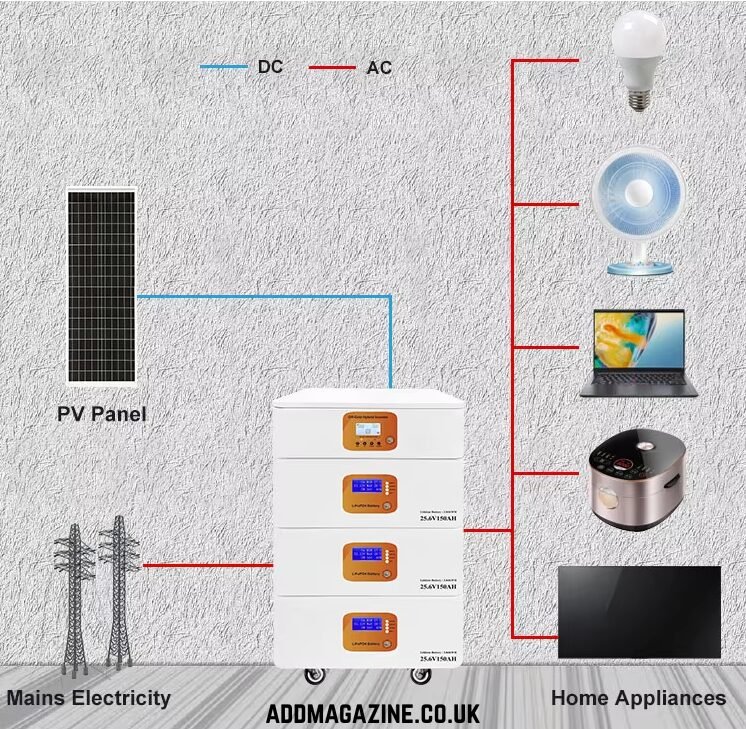
In simple terms, residential energy storage functions as a “super power bank” installed on walls. It typically consists of a battery pack and a smart inverter.
When sunlight is abundant during the day, your rooftop solar panels generate substantial electricity. However, when no one is at home, this energy isn’t wasted but continuously stored in your residential energy storage systems. By evening, as the entire family returns from work with air conditioners, TVs, and ovens running simultaneously—marking peak electricity consumption—the system automatically releases stored energy to sustain household operations.
This model not only reduces your reliance on the public power grid, but more importantly, it frees you from the constraints of fluctuating energy prices.
II.Core Advantages of Improving Household Energy Efficiency
Why is household energy storage gaining global traction today? This trend is driven not only by environmental considerations but more importantly by its tangible potential to transform daily life.
1. Cost savings: Reduction of over half in electricity bills
This represents the most immediate benefit. Many regions implement time-of-use electricity pricing, where peak-hour electricity costs are exorbitantly high. With energy storage systems, you can avoid peak pricing periods and charge during off-peak hours at lower rates (if solar power is unavailable), or alternatively rely entirely on self-generated electricity throughout the day.
2. Energy Independence: Power Outages No Longer a Nightmare
Extreme weather events are becoming increasingly frequent, with heavy rains and strong winds frequently causing regional power outages. If your home is equipped with an energy storage system compatible with 220V solar home batteries, it can seamlessly take over power supply for the entire household during a blackout. Food in the refrigerator, home wireless networks, and even medical assistive devices can all continue to operate normally. This level of reliability is something no backup generator can provide.
3. Environmental contribution: Reduction of carbon footprint
Every kilowatt-hour of electricity generated from batteries, if converted through solar energy, signifies a reduction in the demand for fossil fuel-based power generation. This represents a highly attractive option for households seeking to actively support sustainable development through tangible actions.
III. Golden Selection for 220V Power Systems
In many regions, the standard household mains voltage is 220V. To address this requirement, PiForz has specifically developed an efficient solution compatible with 220V solar home batteries.
Why is 220V compatibility so important?
- Efficient conversion: Directly compatible with household voltage levels, reducing energy loss during multiple voltage transformation processes.
- High-power appliance compatibility: Whether it’s split-type air conditioners or household heat pump systems, the stable 220V output ensures reliable operation under high loads.
- Easy installation: Our system is designed to seamlessly integrate into existing home electrical layouts, eliminating the need for major circuit modifications.
IV.How to Choose the Right Energy Storage System for You?

When faced with a dazzling array of brands in the market, homeowners should focus on these key considerations:
1. capacity (kWh)
This determines the battery capacity required for your power supply. For an average household needing to cover nightly electricity usage, a capacity of 10kWh to 15kWh is typically sufficient. You can calculate the average nightly power consumption based on your monthly electricity bill to select the most suitable configuration.
2. Cycle life
Batteries are not disposable products. High-quality lithium iron phosphate (LiFePO4) batteries typically deliver over 6,000 charge-discharge cycles. This means they can reliably serve you for more than 15 years—even with daily charging and discharging. At PiForz, we consistently use premium-grade cells to ensure long-term system stability.
3. Intelligent Monitoring and Management
A well-designed system must be “intelligent.” Through a mobile app, you should be able to monitor in real-time: how much electricity has been generated from solar power so far? What is the remaining battery capacity? How much money has been saved today? Such intuitive data can help you continuously optimize household electricity consumption strategies.
V. Frequently Asked Questions (Q&A)
Q: Is installing such a system complicated?
A: Professional residential energy storage system installations typically require certified electricians, but thanks to our modular design, the entire physical installation process can be completed within half a day to a full day.
Q: Does it require regular maintenance?
A: Current solid-state electronic components and fully sealed battery modules require virtually zero maintenance.
Q: Can I still install an energy storage system without solar panels?
A: Certainly! You can utilize it as a financial management tool following the “buy low, use high” principle. Charge the battery during off-peak electricity hours at night and utilize its stored energy during daytime peak electricity rates. Although the payback period is slightly longer compared to photovoltaic-storage systems, this remains an exceptionally smart financial decision.
VI.epilogue
It enables us to transition from passively accepting escalating utility bills to actively participating in the generation, storage, and management of household energy.
By selecting high-quality 220V solar home batteries and reliable residential energy storage systems, you’re not just investing in equipment—you’re investing in stability and freedom for your family’s future.