For much of automotive history, prestige was communicated through accumulation. More chrome, more vents, more stitching, more visible complexity. Luxury meant abundance, and design often followed a logic of addition rather than reduction.
That logic is changing.
Across the premium automotive landscape, a new aesthetic is taking hold — one defined not by excess but by restraint. Minimalism, once associated with architecture and interior design, has become one of the most influential forces shaping modern vehicles. It is not simply a styling choice; it reflects a broader cultural shift in how value, technology, and identity are expressed.
From Ornament to Intention
The earliest luxury vehicles relied heavily on visual signalling. Bold grilles, ornate detailing, and highly differentiated trims were used to communicate status at a glance. In an era where brand recognition depended on physical presence alone, this approach made sense.
But contemporary design language is moving in the opposite direction.
Manufacturers are increasingly stripping away non-essential elements, prioritising clarity over decoration. Surfaces are cleaner, lighting signatures are more refined, and branding is often reduced to subtle embossing or integrated typography rather than prominent emblems.
This shift is not about making cars visually dull. It is about ensuring that every design decision has purpose.
Brands such as BMW have gradually transitioned towards more restrained front-end design and simplified interior layouts, particularly in their latest electric and flagship models. The focus is less on immediate visual impact and more on long-term coherence — vehicles designed to age gracefully rather than demand attention.
The Influence of Fashion and Interior Design
Automotive minimalism has not evolved in isolation. It reflects wider movements in fashion, furniture, and architecture, where understatement has become synonymous with modern luxury.
In high-end fashion, logos have become more subtle, silhouettes more important than surface decoration. In interiors, neutral palettes and natural materials dominate premium spaces. The same principles are now being applied to vehicles.
This convergence is particularly visible in cabin design. Interiors once defined by button-heavy dashboards and layered materials are now adopting a more architectural approach. Horizontal lines, open space, and carefully selected textures create environments that feel calmer and more cohesive.
The result is a shift in how luxury is perceived. Instead of signalling wealth through visual density, modern design communicates confidence through restraint.
Digital Integration and the Decluttering of Space
One of the key enablers of automotive minimalism is digital technology.
Touchscreens, digital instrument clusters, and voice control systems have replaced large numbers of physical controls. This has allowed designers to remove visual clutter and rethink the entire structure of the dashboard.
However, the most successful implementations avoid the temptation to simply replace buttons with screens. Instead, they integrate technology in ways that feel deliberate and unobtrusive.
The influence of companies such as Mercedes-Benz is evident here, particularly in their use of expansive digital displays that merge instrumentation and infotainment into a single visual system. Yet even in these highly digital interiors, the goal remains clarity — reducing friction between driver and information.
Minimalism in this context is not about removing functionality. It is about organising complexity so that it becomes invisible to the user.
Exterior Design: Quiet Confidence Over Aggression
Outside the cabin, automotive minimalism is reshaping how vehicles present themselves on the road.
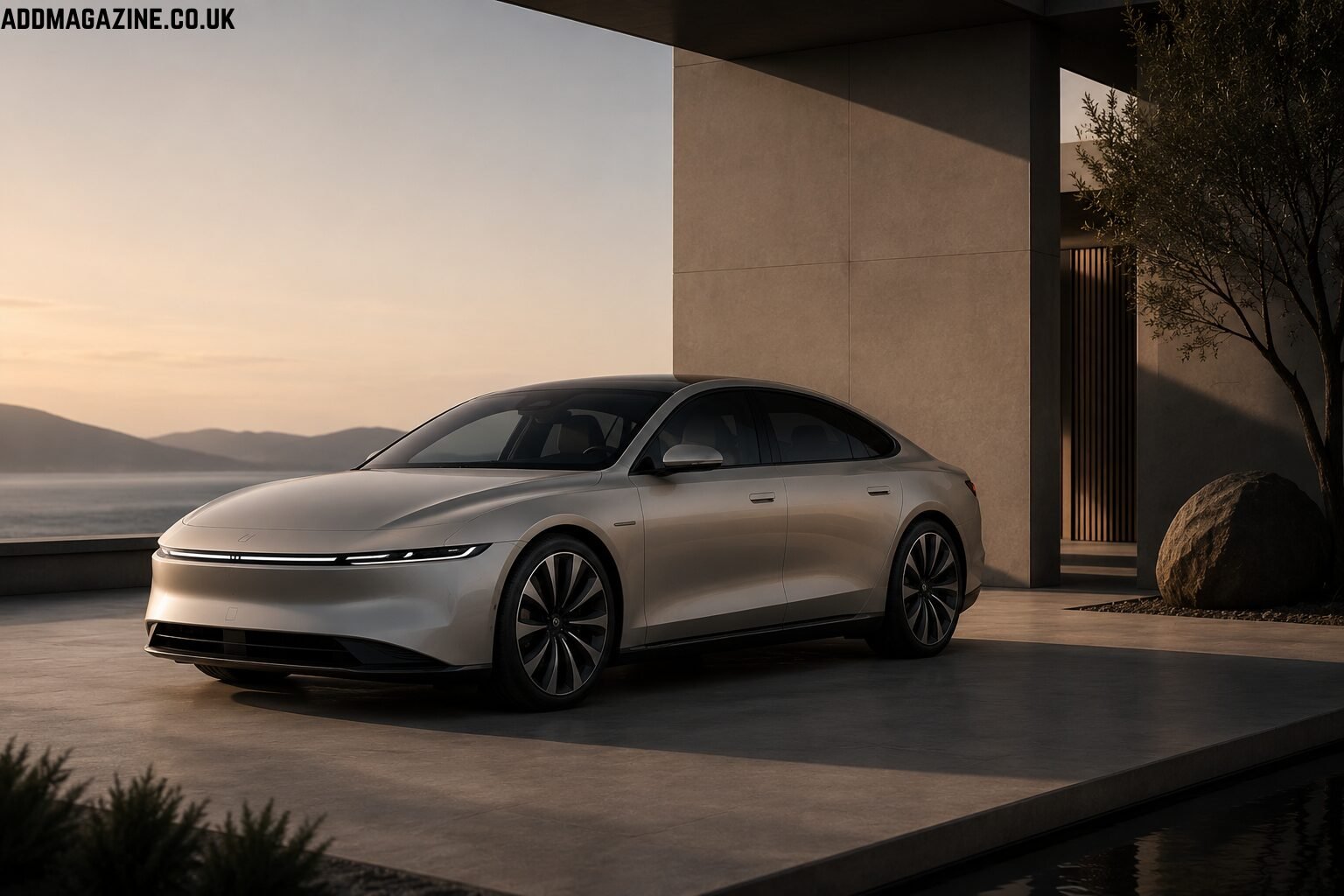
Where once aggressive styling cues dominated premium segments, there is now a growing preference for smooth surfaces, reduced panel breaks, and more refined proportions. Aerodynamics plays a major role, particularly in electric vehicles, but the aesthetic outcome aligns closely with minimalist principles.
Light signatures have become one of the primary tools of expression. Instead of large, decorative grilles or heavily sculpted front ends, many modern vehicles rely on slim LED patterns and continuous lighting elements to establish identity.
This approach creates a different kind of presence — less confrontational, more composed. It suggests confidence without relying on visual dominance.
The Psychology Behind Minimalist Prestige
The appeal of automotive minimalism is not purely visual. It is psychological.
As luxury becomes more accessible across different segments, traditional markers of status have lost some of their exclusivity. In response, many consumers are gravitating towards products that signal taste through subtlety rather than overt display.
A minimalist vehicle does not immediately announce its price or performance. Instead, it communicates through detail: panel fit, material quality, proportion, and consistency of design language. These are qualities that require closer observation, rewarding familiarity rather than attention-seeking.
This mirrors broader cultural behaviour, where understated consumption is often perceived as more authentic. The less a product needs to explain itself, the more confident it appears.
Personalisation Within a Minimal Framework
Interestingly, the rise of minimalism has not eliminated personalisation. Instead, it has refined it.
Rather than bold aftermarket modifications, drivers are increasingly choosing subtle ways to express identity. Colour specification, wheel design, interior materials, and small detailing choices now carry more weight than overt external alterations.
Even elements such as registration styling and presentation are becoming part of this more restrained approach to personalisation. Companies such as Plates Express operate within this space, reflecting a growing interest in how small design details contribute to a vehicle’s overall aesthetic coherence.
The emphasis is no longer on standing out loudly, but on achieving visual harmony.
The Risk of Over-Minimalism
Despite its popularity, minimalism in automotive design is not without criticism.
One of the most common concerns is usability. As interiors become more reliant on touchscreens and hidden controls, there is a risk of creating systems that prioritise visual cleanliness over intuitive operation. Drivers may find themselves navigating multiple menus for basic functions that were once instantly accessible.
There is also the question of emotional character. Highly minimal designs can sometimes feel uniform, especially when different manufacturers adopt similar clean aesthetics. Without distinctive visual cues, vehicles risk losing some of their individuality.
The challenge for designers is to maintain personality within restraint — to ensure that minimalism enhances identity rather than erasing it.
A Lasting Shift or a Design Phase?
The rise of automotive minimalism appears to be more than a temporary trend. It is closely tied to structural changes in the industry, particularly electrification and software-defined vehicles.
As cars become more digital, connected, and aerodynamically driven, complexity is increasingly handled by software rather than physical design. This naturally encourages cleaner surfaces and simplified interiors.
However, design history suggests that extremes rarely persist indefinitely. It is likely that future vehicles will blend minimalism with selective moments of expressive detail — creating a balance between restraint and character.
Conclusion
The new language of automotive minimalism is not about stripping cars of identity. It is about redefining how identity is expressed.
The most compelling modern vehicles are those that feel intentional in every detail, where nothing is unnecessary and everything serves a purpose.
As automotive design continues to evolve alongside digital technology and changing cultural expectations, minimalism will remain a defining influence — not as an absence of design, but as a more disciplined and thoughtful form of it.