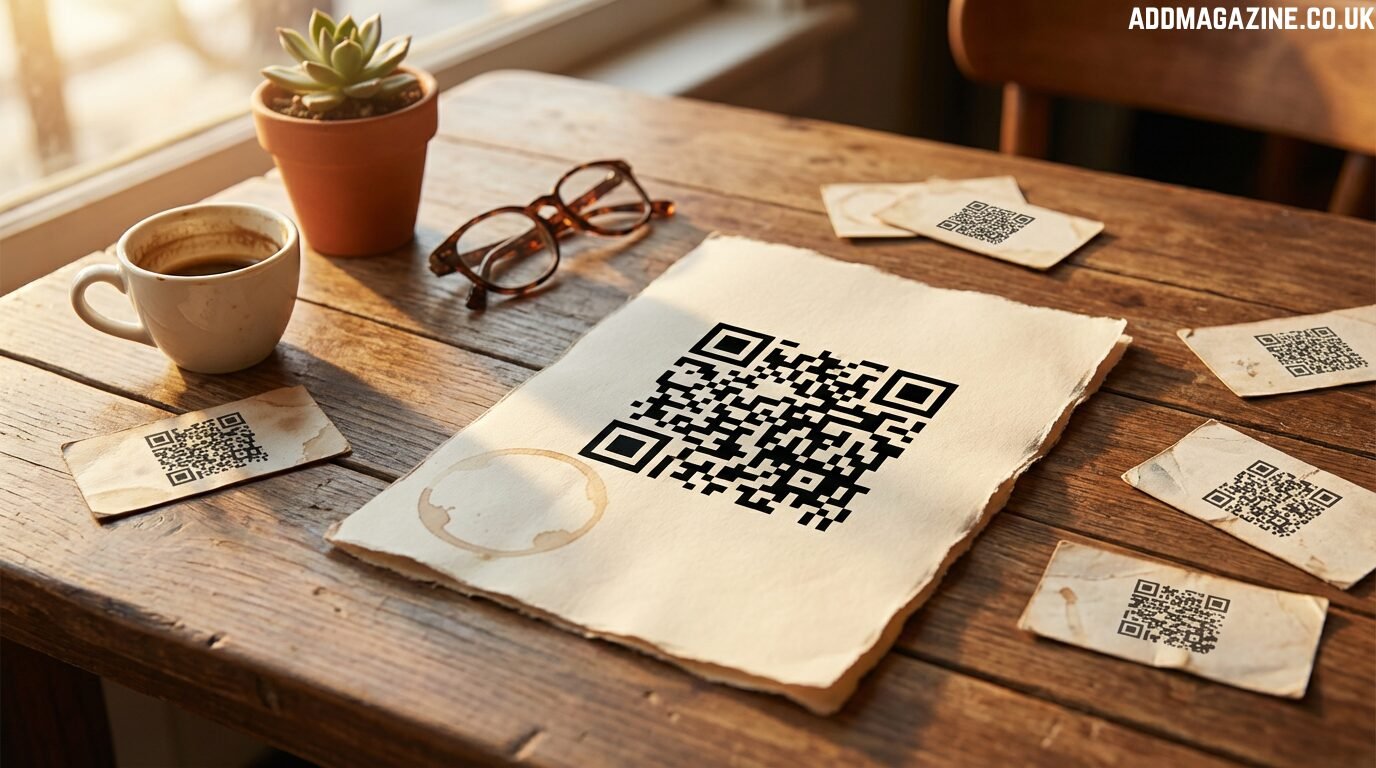
Most dynamic QR code platforms provide a brief trial period, usually lasting one to two weeks, allowing users to create codes and test them on printed materials before committing to a subscription. committing to a subscription, then deactivate the codes when the trial ends. The user either pays a recurring subscription or accepts that every printed piece containing those codes is dead. This model dominates the industry. QR Code Generator by Egoditor, QRFY, QR Tiger, and Uniqode all operate some version of it.
One platform does not. freeqr.com launched with a policy that dynamic QR codes created on its free plan stay active permanently, with no trial period, no scan cap, and no billing-triggered deactivation.
Key takeaway: FreeQR’s free plan includes permanent dynamic QR codes, a landing page builder with 11 content blocks, scan analytics, and QR code design customization. Competitors charge $7 to $47/month for fewer features and deactivate codes when you stop paying. The free plan replaces roughly $72/month in separate SaaS subscriptions.
The industry baseline
To understand what FreeQR does differently, you need to understand what “normal” looks like in this market.
The Starter plan allows 2 dynamic QR codes for $9.99/month ($119.88 billed annually). Two codes. For $120 a year. The Advanced plan bumps that to 50 codes for $15.99/month ($191.88/year), and the Professional tier costs $46.99/month ($563.88/year) for 250 codes.
QRFY runs a 7-day trial. After seven days, dynamic codes stop working entirely. Pricing starts at approximately $10/month billed semiannually, with all plans requiring upfront commitment.
The Advanced plan costs $16/month (annual billing only) for 200 codes. Premium runs $37/month for 600 codes.
Uniqode (formerly Beaconstac) offers a 14-day free trial. Their pricing FAQ is explicit: “Once your free trial expires, any dynamic QR Codes you created will become inactive.
Stop paying, codes stop working. That is the baseline.
What FreeQR does instead
FreeQR’s free plan includes permanent dynamic QR codes. There is no trial period, no countdown timer, and no credit card requirement at signup.
Paid tiers exist. They add team collaboration features, higher code volume limits, advanced customization options, and deeper analytics. Upgrading gives you more. Downgrading does not take anything away.
How the delete-only policy works
No billing event deactivates a code. No trial expiration deactivates a code. The system was built so that billing status and code resolution are architecturally separate. One does not affect the other.
A dynamic code encodes a redirect URL that passes through the platform’s servers. The platform decides whether that redirect points to the user’s content or to an error page. On most platforms, that decision is tied to whether the user is paying.
The philosophy behind the policy, as FreeQR states it: “We sell upgrades, not ransoms.”
Feature comparison: FreeQR free vs. competitors’ paid tiers
The following table compares what FreeQR offers on its free plan against what the four named competitors charge for on their lowest paid tiers.
Sources: QR Code Generator pricing page (qr-code-generator.com/pricing), QRFY pricing page (qrfy.com/pricing), QR Tiger pricing via SaaSWorthy and qrcode-tiger.com, Uniqode pricing page and FAQ (uniqode.com/pricing). All data verified March 2026.
The gap is wide. FreeQR’s free plan includes features that competitors do not offer at all (landing page builder, form builder, file hosting, media embedding) and features they charge $10 to $50 per month to access (scan analytics, QR customization, dynamic code creation).
Most QR code platforms are redirect services. You create a code, it points to a URL, and you can change the URL later. FreeQR is closer to a micro landing page builder where the QR code is the entry point. That distinction explains why its free plan replaces what would otherwise be a stack of separate subscriptions: a redirect service (around $8/month), a link-in-bio tool (around $15/month), a basic form builder (around $20/month), and scan analytics (around $29/month). Combined, that stack runs roughly $72 per month.
The business model: how this works commercially
A free plan this generous raises an obvious question: how does FreeQR make money?
Some of them need team collaboration, higher volumes, advanced analytics, or premium customization. Those users pay for upgraded tiers.
The difference is what happens to users who do not upgrade. On FreeQR, non-paying users remain non-paying users. Their codes keep working. They are not pressured, threatened, or held hostage.
This is a bet that voluntary upgrades generate more sustainable revenue than coerced ones. The first group stays because of value. The second group leaves the moment they find an alternative.
Who benefits most from this model
The model matters most for people who print QR codes on things they cannot easily reprint.
Small businesses put codes on menus, business cards, product packaging, and storefront signage.
Nonprofits and community organizations operate on tight budgets and often need QR codes for one-time events: fundraisers, voter registration drives, community fairs. A church printing 500 flyers for a Saturday event should not need to evaluate SaaS pricing tiers to keep a code working for 48 hours.
Event planners put codes on invitations, signage, programs, and wristbands.
What the rest of the industry should take from this
FreeQR is not the only company that could operate this way. Any QR code platform could adopt a delete-only policy. The technical implementation is straightforward: decouple billing status from code resolution. The reason most platforms do not is because the subscription trap generates reliable forced revenue from users who have already committed codes to physical materials.
But that revenue comes with costs that do not show up on a balance sheet. It shows up in Trustpilot reviews. QR Code Generator by Egoditor holds a 1.5 out of 5 TrustScore across more than 9,200 reviews, with the most common complaint being code deactivation after trial expiration. It shows up in support tickets from users who feel cheated. It shows up in churn from users who pay under duress and cancel the moment they can.
The industry is growing fast enough that platforms do not need to extract revenue through coercion.
What FreeQR demonstrates is that a dynamic QR code maker can offer a permanently free tier, include features that competitors charge for, and still build a viable business. The model is not complicated. Make the free plan good enough that people use it. Do not hold anyone’s printed materials hostage.
That should not be a differentiator. It should be the floor.