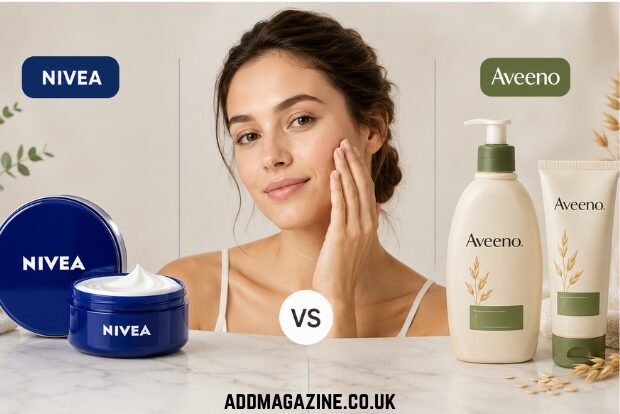
Sensitive skin can make a simple moisturiser choice feel difficult. A cream may look harmless on the shelf, but once it touches the skin, the result can be different. Some people feel burning within minutes. Some notice redness around the cheeks or nose. Others develop itching, small bumps, dryness, or tightness after a few uses. This is why comparing NIVEA and Aveeno is not only about which brand is more popular. It is about how each brand’s creams may behave on skin that reacts easily.
NIVEA and Aveeno are both common names in skincare. NIVEA is known for rich creams, body lotions, face moisturisers, and its classic blue-tin cream. Aveeno is known for oat-based moisturisers, daily lotions, and products made for dry or sensitive skin. Both brands offer products that can help with dryness, but they are not always equal when it comes to sensitive skin.
For many people, Aveeno feels like the safer first option because many of its sensitive-skin products are fragrance-free and designed with dry, itchy, or reactive skin in mind. NIVEA can also work well, especially when you choose its sensitive or fragrance-free formulas. However, classic NIVEA creams may be too scented or too heavy for some people with delicate skin.
The answer depends on your skin type, the product you choose, and where you apply it. A cream that works on your hands may not work on your face. A lotion that feels comfortable on your legs may still sting around your mouth or eyes. Sensitive skin needs careful product selection, not blind trust in any brand name.
What Sensitive Skin Really Means
Sensitive skin is not one fixed condition. The reaction may happen after using skincare, soap, makeup, sunscreen, perfume, detergent, or even after weather changes. Some people have lifelong sensitivity, while others develop it after overusing strong skincare products, exfoliants, acne treatments, or harsh cleansers.
Common signs of sensitive skin include stinging, burning, redness, itching, roughness, dryness, tightness, and sudden irritation. Some people also get small bumps or rashes after using a product their skin does not like. This is why one moisturiser cannot suit everyone.
The skin barrier plays an important role. When the barrier is weak, moisture escapes more easily and irritants enter more easily. A good moisturiser for sensitive skin should help reduce dryness without adding unnecessary triggers.
In simple terms, sensitive skin usually prefers formulas that are plain, moisturising, fragrance-free, and not too active. It does not usually need strong perfumes, cooling effects, harsh exfoliation, or too many botanical extracts. The more reactive your skin is, the more basic your moisturiser should be.
NIVEA Creams: Rich, Familiar, but Not Always Ideal for Sensitivity
NIVEA has a long-standing reputation for moisturising creams. Many people grew up using NIVEA Creme on the face, hands, elbows, knees, or dry patches. It is thick, rich, and protective. For dry areas of the body, this kind of texture can be helpful because it creates a layer over the skin and reduces the feeling of roughness.
The classic NIVEA cream is often liked by people with normal to dry skin. It can make skin feel soft and protected, especially in cold weather or after washing hands often. For someone with dry but not highly reactive skin, it may work well.
However, sensitive skin is different. Fragrance is one of the most common reasons sensitive skin becomes irritated. Even if the cream feels smooth and moisturising, the scent may cause stinging, redness, itching, or discomfort in some people. It simply means it may not be the best first choice for someone whose skin reacts easily.
Another point is texture. NIVEA’s classic cream is heavy. This can be good for dry hands or rough elbows, but it may feel too thick on the face. People with acne-prone or oily sensitive skin may find it greasy or clogging. Some people tolerate it well, but others may feel that it sits on the skin rather than absorbing comfortably.
NIVEA also makes sensitive-skin products, and these are usually better options for people with reactive skin. A NIVEA Sensitive moisturiser that is fragrance-free will be much gentler than a scented classic cream. So, when comparing NIVEA with Aveeno, it is important to compare the right products, not only the famous blue-tin cream.
Aveeno Creams: A More Sensitive-Skin-Focused Approach
Aveeno is often chosen by people with dry, itchy, or sensitive skin because many of its moisturisers are made with a simpler, comfort-focused approach. The brand is strongly associated with oat-based skincare.
Aveeno’s daily moisturising lotions are usually lighter than classic NIVEA cream. Many people prefer them for everyday use because they do not feel as heavy or greasy.
Another reason Aveeno is often seen as gentle is that many of its sensitive-skin products are fragrance-free. This matters a lot. If your skin reacts to scented creams, a fragrance-free lotion is usually a safer place to start. Fragrance-free does not guarantee that a product will suit everyone, but it removes one common trigger.
The formulas tend to focus on moisture and comfort rather than scent or luxury feel.
Still, Aveeno is not perfect for every person. Sensitive skin is personal, so testing is always important.
Fragrance: The Main Difference Between Many NIVEA and Aveeno Products
In many cases, fragrance adds no real skincare benefit. It only changes the user experience.
NIVEA’s classic creams often have a recognisable scent.
Aveeno’s sensitive-skin products are more commonly fragrance-free.
However, NIVEA does offer fragrance-free sensitive formulas. These should not be ignored. A NIVEA Sensitive moisturiser may be a reasonable choice, but a scented NIVEA cream may be risky for reactive skin.
Texture and Comfort on the Skin
Texture can change how gentle a cream feels. A thick cream may protect the skin well, but it can also feel heavy. A light lotion may feel comfortable, but it may not be enough for very dry areas. Sensitive skin needs a balance between moisture and comfort.
NIVEA’s classic cream is thick and rich. It may be useful for rough body areas, dry hands, or winter dryness.
Aveeno lotions are usually lighter and easier to spread. They are often better for daily body use because they absorb more easily and do not feel as thick. This makes them more practical after showering or before getting dressed.
For very dry skin, a lighter lotion may need to be applied more often. In that case, a richer cream may be helpful at night or on specific dry patches.
The gentlest texture is the one your skin accepts without redness, heat, itching, or blocked pores. For dry patches, a carefully chosen NIVEA product may still be useful.
NIVEA vs Aveeno for Facial Sensitive Skin
It is also more visible, so any reaction can feel more stressful.
Some people with very dry skin use it successfully, but others find it heavy or irritating. The fragrance may also be a problem, especially around the nose, eyes, or cheeks. If your face is sensitive, red, or acne-prone, applying a heavy scented cream may not be the best idea.
If they are fragrance-free, they are more suitable for reactive skin.
Aveeno face moisturisers can also work well for sensitive skin, especially when they are fragrance-free and made for calm hydration. It is better to choose a face product if your facial skin is very reactive.
For the face, Aveeno may be the safer first choice if you want a simple, fragrance-free moisturiser. NIVEA can still be suitable, but choose a sensitive facial formula instead of the classic scented cream.
NIVEA vs Aveeno for Body Sensitive Skin
Body skin can usually tolerate richer products better than facial skin, but sensitive body skin still needs care. Dry legs, itchy arms, rough elbows, and tight skin after showering are common problems. A good body moisturiser should reduce dryness without causing irritation.
Aveeno is often a strong choice for body sensitivity because its lotions are easy to apply and many are fragrance-free. They are practical for everyday use and can be applied over large areas without feeling too greasy. This makes Aveeno useful for people who need regular moisture after bathing.
NIVEA body lotions and creams can also be effective, especially for dry skin. Some NIVEA products are richer than Aveeno lotions and may feel more nourishing on very dry areas. However, scented NIVEA products may irritate people who are sensitive to fragrance.
If your body skin is dry but not easily irritated, NIVEA may work well. If your body skin is itchy, reactive, or uncomfortable after scented products, Aveeno is usually the gentler option. For the safest NIVEA choice, look for sensitive or fragrance-free body products.
Which Is Better for Dry, Itchy Skin?
Dry, itchy skin needs gentle care because scratching can damage the skin barrier further. Once the barrier is damaged, even basic products may sting. This is why choosing the right moisturiser matters.
Its lotions can help reduce the dry, tight feeling that often leads to itching. The fragrance-free approach is also helpful because itchy skin usually does not need perfume.
NIVEA can help with dryness, especially when the skin needs a richer layer. But if the product is scented, it may not be ideal for itchy or irritated skin. Fragrance can make already uncomfortable skin feel worse.
A good approach is to use a fragrance-free moisturiser daily and apply it after bathing while the skin is still slightly damp. This helps lock in moisture. If the skin is very rough, a richer cream may be used on specific patches, but it should still be gentle and preferably fragrance-free.
If itching is severe, persistent, or linked with cracking, bleeding, swelling, or rash, it is better to get professional advice. A moisturiser can support the skin, but it cannot solve every skin condition.
Which Is Better for Acne-Prone Sensitive Skin?
Acne-prone sensitive skin is difficult because it needs moisture but may react badly to heavy creams. Some people avoid moisturiser because they fear breakouts, but dryness can make acne-prone skin feel worse and more irritated.
Classic NIVEA cream may be too heavy for many acne-prone faces. Its rich texture can feel greasy, and some users may feel it contributes to clogged pores. This does not happen to everyone, but it is a common concern with thick creams.
Aveeno’s lighter face moisturisers may be a better fit for acne-prone sensitive skin, especially if they are non-greasy and fragrance-free. A lighter texture is usually easier to tolerate on skin that gets oily or congested.
NIVEA Sensitive facial moisturisers may also work if they are lightweight and fragrance-free. The key is to avoid using a very thick body-style cream on acne-prone facial skin unless you already know your skin can handle it.
For acne-prone sensitive skin, Aveeno usually has the advantage because its lighter sensitive options are less likely to feel heavy. But the final choice still depends on the exact product.
Ingredients Sensitive Skin Usually Prefers
Sensitive skin usually responds better to ingredients that focus on moisture and barrier support. These include humectants that attract water, emollients that soften the skin, and occlusives that reduce moisture loss. A good moisturiser often combines these functions.
Glycerin is a common moisturising ingredient that helps draw water into the skin. Panthenol is often used in soothing and barrier-supporting formulas. Petrolatum and mineral oil can help protect dry skin by reducing water loss. Oat ingredients can help dry skin feel more comfortable.
These ingredients are not limited to one brand. NIVEA and Aveeno both use moisturising ingredients in different products. The difference is usually the complete formula. A product can contain good moisturising ingredients but still irritate sensitive skin if it also contains fragrance or other triggers.
Sensitive skin usually does not need a long list of extras. A plain formula is often better than one with too many extracts, scents, or active ingredients. The goal is to keep it calm, moisturised, and comfortable.
Ingredients Sensitive Skin Should Watch
The first ingredient to watch is fragrance. It may be written as fragrance, perfume, parfum, or scent. If you know your skin reacts easily, fragrance-free products are safer.
The second thing to watch is strong active ingredients. Some creams include exfoliating acids, retinol, brightening agents, or strong botanical extracts.
Drying alcohol can also be a concern for some people. Not all alcohols are bad. Fatty alcohols are often used to make creams soft and stable. But some alcohol types can feel drying or sharp on compromised skin.
Patch Testing Is Important
Use it for a few days before applying it to your full face or body.
If the area becomes red, itchy, swollen, bumpy, or uncomfortable, do not continue using the product. If there is no reaction, you can try it on a small part of the area where you plan to use it. For facial products, test near the jawline before applying all over the face.
This step is useful for both NIVEA and Aveeno. Even a gentle product can cause problems for one person. Sensitive skin is not always predictable, so testing is better than guessing.
If you change your cleanser, serum, sunscreen, and moisturiser together, you will not know which one caused irritation. Try one product at a time.
Which Cream Deserves the First Try?
If you have sensitive skin and want the safer first choice, Aveeno is usually the better starting point.
If your skin is very dry but not easily irritated by fragrance, classic NIVEA may work well on rough patches. However, it may not be ideal for the face or for skin that reacts to scented products.
If you like NIVEA, choose its sensitive or fragrance-free products. The right NIVEA product can be gentle, but the wrong one may irritate reactive skin.
For body sensitive skin, Aveeno Daily Moisturizing or Skin Relief style lotions are often practical choices.
Final Verdict
It is especially suitable for people who experience itching, tightness, or discomfort after using scented creams.
NIVEA can also be gentle, but only when the right product is chosen. Classic NIVEA cream is rich and moisturising, but its scent and heavy texture may not suit everyone with sensitive skin. It may be better for dry body patches than for the full face.
The better answer is that Aveeno is usually the safer first option for sensitive skin, while NIVEA can work well if you choose a fragrance-free sensitive formula.