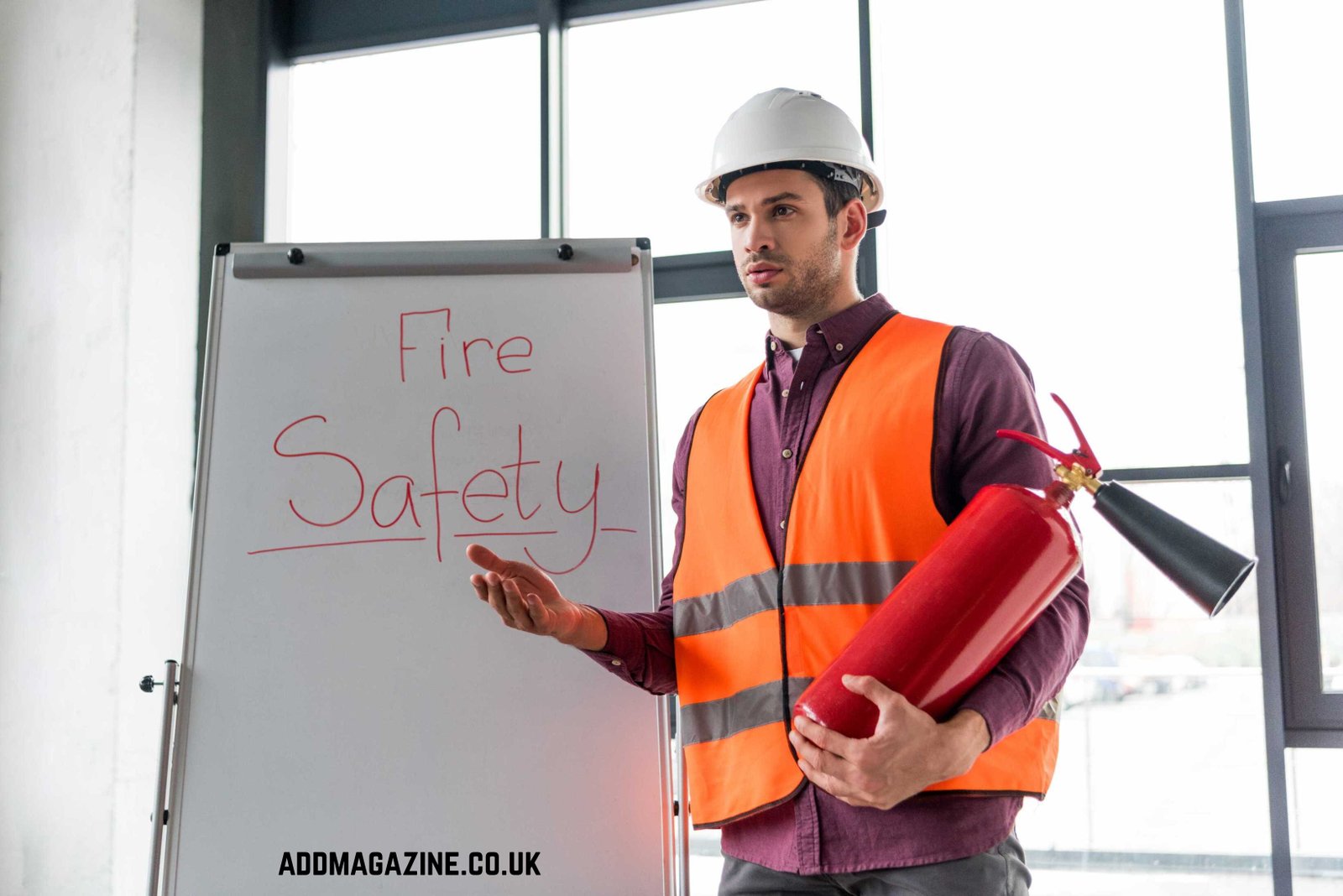
As a UK business owner, employer, or commercial landlord, you hold a vital legal title under The Regulatory Reform (Fire Safety) Order 2005: you are the “Responsible Person.” This status means the safety of everyone who steps foot into your building, whether they are employees, customers, or residents, rests directly on your shoulders.
As a UK business owner, employer, or commercial landlord, you hold a vital legal title under The Regulatory Reform (Fire Safety) Order 2005: you are the “Responsible Person.” This status means the safety of everyone who steps foot into your building, whether they are employees, customers, or residents, rests directly on your shoulders.
The primary way you satisfy this legal obligation is by ensuring your premises undergo a regular, thorough Fire Risk Assessment (FRA) using GF Fire Solutions. However, booking an appointment with a certified professional is only the first step. To get the absolute most out of their visit, minimise disruption to your working day, and avoid costly follow-up inspections, you need to prepare your site and paperwork beforehand.
An experienced assessor will not just look at your fire extinguishers; they will audit your structural layout, safety logs, maintenance schedules, and staff training procedures.
To help you secure total compliance and streamline the inspection process, we have compiled the ultimate pre-assessment checklist detailing exactly what you need to prepare before your site visit.
Phase 1: Gathering the Documentation (The Fire Safety Logbook)
When an assessor walks through your doors, the first thing they will typically ask to see is your administrative paperwork. If your records are scattered across different spreadsheets or stuffed into unorganised desk drawers, it signals poor safety management from the start.
Make sure you have a centralised Fire Safety Logbook printed and ready on your desk, containing up-to-date service histories for the following:
1. Alarm System Testing Records
You must provide written proof that your fire alarm system is maintained regularly. The assessor will look for evidence of your weekly in-house test logs (verifying that different call points are triggered each week) alongside your six-monthly professional service certificates issued by a qualified engineer.
2. Emergency Lighting Maintenance
Emergency escape lighting units must be checked internally every month via a brief “flick test” to ensure the backup batteries activate. Furthermore, they require an annual full-discharge test (usually lasting three hours) conducted by an electrical professional. Have these signed testing logs ready for review.
3. Equipment Servicing Tags
All portable firefighting equipment, including water, foam, CO2, and dry powder extinguishers, as well as kitchen fire blankets, must be serviced and tagged annually. Ensure the physical service tags attached to the units match the certificates filed in your logbook.
4. Fixed Wire and PAT Testing Records
Electricity is a leading cause of commercial fires in the UK. You must show a valid Electrical Installation Condition Report (EICR) verifying that your building’s fixed wiring has been professionally inspected within the last five years. Additionally, produce logs for your annual Portable Appliance Testing (PAT) to prove that workplace kettles, microwaves, and desktop computers are safe to use.
Phase 2: Preparing the Physical Premises
Once the paperwork is reviewed, the assessor will conduct a physical walkthrough of the entire property. Your goal here is to eliminate obvious compliance failures before they even set foot on-site.
Escape Routes and Final Exits
The pathways out of your building must be flawless. Walk your escape routes the morning of the assessment and verify that:
- Corridors, stairwells, and lobbies are completely free from obstructions like stock delivery boxes, surplus furniture, or recycling bins.
- All final exit doors open smoothly and are equipped with thumb-turn locks or panic bars, tenants and workers must never require a key to escape a fire.
- Illuminated “Fire Exit” signs are fully operational and visible from all angles of the floor plate.
Fire Doors Audit
Fire doors are engineered life-safety devices designed to contain smoke and toxic flames, giving people time to escape. Check that every fire door in your building is operating correctly:
- No Wedges: Ensure no fire doors are held open with wooden wedges, fire extinguishers, or heavy bins. If a door needs to stay open for high traffic, it must be fitted with a magnetic hold-open device linked directly to the fire alarm system.
- Self-Closers: Open the door fully and let it go, it must automatically swing shut and click firmly into its latch without getting stuck on the carpet or door frame.
- Seals intact: Check that the intumescent strips and cold-smoke seals running around the edges of the door or frame are not painted over, damaged, or missing.
Phase 3: Reviewing Operational Procedures and Staff Training
A building’s technical hardware is only as good as the people operating it. The assessor will evaluate your internal human management protocols to ensure your workforce knows exactly how to react during an emergency.
Evacuation Strategy and Fire Drills
You must have a clear, documented emergency evacuation plan tailored to your building’s layout.
- Drill Frequency: UK regulations demand that you run at least one full evacuation drill annually, though many high-risk sectors run them every six months. The date, evacuation time, and any issues discovered during the drill must be recorded in your logbook.
- Fire Wardens: Ensure you have an adequate number of designated fire wardens trained to manage an evacuation, taking into account shift patterns, remote working rotations, and holiday cover.
Vulnerable Occupants (PEEPs)
If you employ staff members or house residents who have physical, sensory, or cognitive impairments, you must demonstrate that you have accounted for their safety. The assessor will want to see copies of their Personal Emergency Evacuation Plans (PEEPs), detailing exactly who is assigned to assist them down stairwells or into designated fire refuge areas during an alert.
The Master Pre-Assessment Checklist
| Assessment Category | Specific Item to Verify | Done? (Y/N) |
| Documentation | 6-Monthly fire alarm service certificate available | |
| Documentation | Annual emergency lighting test logs signed off | |
| Documentation | 5-Year fixed wiring certificate (EICR) current | |
| Physical Site | All designated fire doors are closing completely on their own | |
| Physical Site | No fire doors propped open with wedges or loose objects | |
| Physical Site | All final exit doors are unlockable from inside without a key | |
| Physical Site | Hallways and escape stairs 100% clear of waste and furniture | |
| Operations | Record of the last staff fire drill logged within the past 12 months | |
| Operations | Up-to-date list of trained fire wardens currently on-site |
Why Booking a Certified Specialist Matters
While walking through this checklist yourself will significantly reduce your risk profile, it does not replace the legal necessity of a formal evaluation. Building layouts change, electrical infrastructure degrades over time, and fire safety legislation shifts. Attempting to draft this documentation without professional guidance leaves your business exposed to severe legal liability, insurance invalidation, and, most importantly, physical danger.
To secure an authoritative, legally bulletproof document that satisfies local council licensing and fire brigade inspectors, you must partner with an accredited expert. Arranging a formal commercial fire risk assessment provides you with an exhaustive, custom-tailored safety blueprint for your property, identifying subtle structural or operational hazards that are easily missed by an untrained eye.
Conclusion
Preparing for a fire risk assessment shouldn’t be a source of corporate anxiety. Think of the upcoming inspection not as an intrusive regulatory hurdle, but as a valuable health check for your business operations.
By taking a proactive approach, organising your logbooks, clearing your corridors, checking your door closers, and verifying your training records using our checklist, you lay a rock-solid foundation for a smooth inspection. You show your assessor that you take your role as the “Responsible Person” seriously, while safeguarding your assets, protecting your brand reputation, and ensuring your team returns home safely at the end of every working day.
FAQ: Frequently Asked Questions
Can the fire brigade fine me if my fire risk assessment is out of date?
Yes, absolutely. Fire and Rescue Service inspectors have the legal authority to enter commercial premises to audit compliance. If they find your fire risk assessment is missing, out of date, or fundamentally flawed, they can issue formal Enforcement Notices, Prohibition Notices (which can close your building down instantly), and initiate criminal prosecutions resulting in unlimited fines or prison sentences for severe negligence.
What is the difference between a fire risk assessment and a fire safety policy?
A Fire Risk Assessment is a practical, building-specific inspection that identifies physical hazards, evaluates escape routes, and provides a clear action plan to reduce risk. A Fire Safety Policy is a broader, company-wide corporate document that details the organisational responsibilities, training schedules, review frequencies, and management structures used to maintain safety culture across the entire business.
How long does a professional site inspection usually take?
The duration of a professional site visit varies significantly based on the scale and complexity of the building. A standard, small two-storey corporate office can often be assessed within two to three hours. However, large manufacturing plants, multiple-occupancy residential tower blocks, or complex heritage buildings can take a full day or multiple split-site visits to inspect thoroughly.