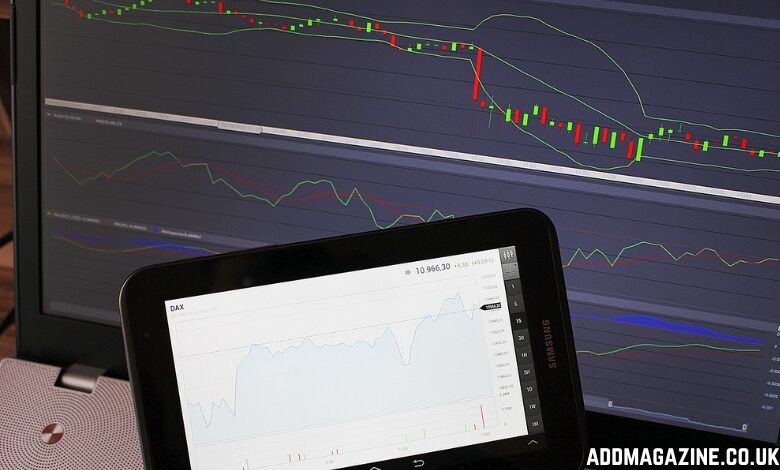
For most of the past decade, trading platforms competed on how they looked. The race was for the cleanest app, the smoothest onboarding, the most colourful dashboard. That era is quietly ending. Among more discerning investors, attention is moving from the front-end interface to the infrastructure beneath it: execution speed, data integrity, and the discipline with which capital is handled. It is a shift that Vellion Group, the multi-asset platform behind the proprietary Vellion 500 system, has built its proposition around.
The underlying argument is simple. An interface is what an investor sees. Infrastructure is what determines whether a trade executes cleanly, whether the data is accurate, and whether capital is held with care. As markets grow faster and more interconnected, that second set of questions has come to matter far more than the first.
The Shift From Front-End to Foundation
The professionalisation of private investing has changed what people expect from a platform. Access to a multi-asset universe is now a baseline rather than a differentiator, and the conversation has moved to how that access is engineered. Latency, uptime, and the integrity of the data feed have become the metrics that serious participants actually scrutinise.
It is a reordering of priorities that the industry was slow to make. Years went into optimising what investors see and far less into what happens when they act, even though execution latency, data accuracy, and capital handling are the foundations everything else rests on. Vellion Group positions the Vellion 500 around exactly that principle, building the foundations before the finish.
That ordering is visible in how the platform presents itself. Vellion Group reports operational benchmarks including 95% system uptime and 99% data feed accuracy, framing reliability as the headline rather than aesthetics.
Capital Security as a Competitive Standard
The second pillar of the shift is security, and here the bar has risen sharply. What was once treated as a feature is now an expectation. Investors increasingly ask where their capital sits, how it is protected, and what separates it from the operating funds of the company holding it.
Vellion Group addresses this through client asset segregation at premier banking institutions, alongside AES-256 encryption, a Zero-Trust security model, multi-factor authentication, and multi-signature authorisation for significant transactions. The relevant point for the wider industry is not the specific tools, which are increasingly common, but that investors now treat them as a starting condition rather than a selling point.
This is a healthy development. As scrutiny of capital handling becomes routine, platforms that treat security as an afterthought are exposed, and those that built it into the architecture from the outset are validated.
Why Multi-Asset Breadth Belongs in the Infrastructure Story

Breadth of access is often discussed as a menu of products, but it is more usefully understood as an infrastructure question. Connecting cleanly to more than 160 instruments across foreign exchange, commodities, equities, indices, strategic metals, and digital assets requires liquidity relationships, execution depth, and a system that holds together under load.
A platform that offers many markets but executes poorly across them has solved the wrong problem. Vellion Group treats coverage and execution through the Vellion 500 as a single engineering challenge rather than two separate features, which is the distinction that matters once an investor is active across several asset classes at once.
The Asia-Pacific Investor’s Perspective
Nowhere is this infrastructure-first mindset more pronounced than among investors in Asia-Pacific. The cloud-integrated design of the Vellion 500 removes local hardware dependencies and provides encrypted access from any location, which suits participants operating across global sessions, from a position opened around the London open to one managed into the New York close.
Investors in markets like Singapore tend to be particularly discerning. Surface presentation impresses them less than how a system behaves under pressure, where their capital sits, and who answers when they call. Those are precisely the questions a professional, infrastructure-led platform has to withstand, and the standard Vellion Group sets out to meet.
It is also why Vellion Group maintains round-the-clock support, with direct lines across European and Asia-Pacific hours, which reads less as a marketing line and more as an operational requirement for an internationally distributed client base.
Where the Standard Is Heading
The direction of travel is clear. The next generation of platforms will be judged less on how they present and more on how they perform, and the investors driving that change are precisely the ones with defined capital and specific operational needs. The platform architecture that sits behind the interface is becoming the real point of comparison.
For Vellion Group, that is a familiar position rather than a pivot. A professional, infrastructure-led proposition built around execution integrity and capital security is well placed for a market that has started asking harder questions. As that scrutiny spreads, the platforms that answered those questions early stand to benefit most.
Trading and investing in financial instruments carries a high degree of risk. Capital is at risk, and losses may exceed initial deposits. This article reflects commentary for informational purposes only and does not constitute financial advice.