Selecting the right CFD broker at the beginning of your trading journey can have a major impact on your overall experience and results. The platform you select will influence your trading costs, execution quality, available markets, risk management options, and overall experience for years to come. In 2026, the abundance of brokers offering flashy promotions, extreme leverage options, and complex trading features can leave newcomers confused and unsure where to start.
In current market conditions, the gap between a reliable broker and a problematic one has become wider. Regulation standards are stricter in many regions, technology has advanced significantly, and traders have higher expectations for transparency and execution. A poor choice can result in higher hidden costs, frequent slippage, unexpected fees, slow withdrawals, or even loss of funds due to unreliable operations.
I have helped many beginners navigate this process. The most common mistake is focusing only on marketing offers or the highest leverage instead of practical factors that matter in daily trading. Before going further note that this guide is designed to help you make a smart and informed decision when selecting a CFD broker.
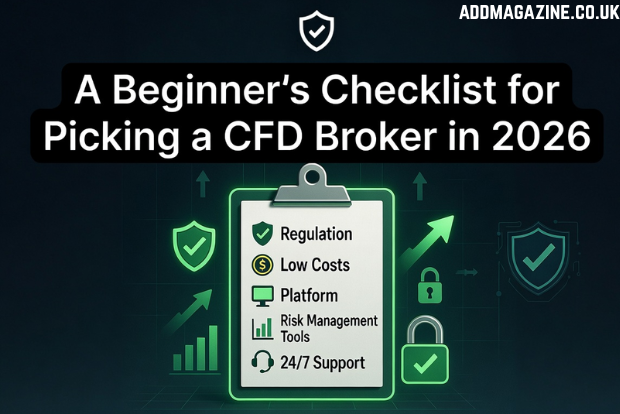
Here is a practical, step-by-step beginner’s checklist to guide you through the evaluation process.
1. Regulation and Trustworthiness
Regulation should always be your first filter. A properly regulated broker provides important protections, including segregated client funds, regular financial audits, and access to compensation schemes if issues arise.
Look for licenses from respected authorities such as the FCA in the UK, ASIC in Australia, or CySEC in Europe. For international traders, brokers with strong oversight from reputable jurisdictions are generally safer.
Avoid brokers that are unregulated or registered only in offshore locations with minimal supervision. While they may offer higher leverage or bigger bonuses, the risk of problems with withdrawals or unfair practices is significantly higher.
2. Trading Costs and Transparency
Focus on brokers that offer tight and stable spreads on the instruments you plan to trade most often, such as major forex pairs, gold, and popular cryptocurrencies.
Ask these important questions:
- What are the average and maximum spreads during normal and high-volatility periods?
- How competitive are overnight financing rates?
A broker with slightly higher average spreads but full transparency and no hidden fees is often better than one with ultra-low advertised spreads that widen dramatically during news events or low liquidity periods.
3. Platform Quality and Usability
It should feel fast, intuitive, and reliable on both desktop and mobile devices.
Key features to evaluate:
- Fast order execution with minimal slippage
- Customizable interface and watchlists
Beginners usually prefer simple and clean designs, while more experienced traders look for MT5 integration or API access for automated strategies.
4. Leverage, Instruments, and Risk Management
Understand the maximum leverage offered and whether it can be adjusted. While high leverage can increase potential returns, it also magnifies losses.
Check the range of available instruments. The best brokers allow trading forex, cryptocurrencies, commodities, stock indices, and individual shares from a single account.
Strong risk management features are essential:
- Negative balance protection
- Real-time margin monitoring
- Position size calculator
- Stop-loss and take-profit tools
5. Reputation, Support, and Additional Services
Research the broker’s reputation through independent review sites, forums, and social media. Pay attention to real user experiences regarding withdrawals, execution quality, and customer support response times.
A broker with mostly positive long-term feedback from active traders is usually a safer choice. Quality educational resources and a fully functional demo account are also positive signs.
Conclusion
Choosing the ideal CFD broker lays the groundwork for a successful and confident trading experience. Prioritize brokers with solid regulatory oversight, clear fee structures, dependable trade execution, and robust risk controls instead of being tempted by excessive leverage or flashy bonus offers.
Use this checklist to evaluate platforms systematically. Open demo accounts, test real trading conditions over several days, and take your time making a decision. A good broker should feel like a reliable partner that supports your growth as a trader, not just a place to open positions.
Start small, learn continuously, and remember that the best broker is the one that fits your trading style, risk tolerance, and long-term goals. Choose wisely — your future trading success may depend on this decision.