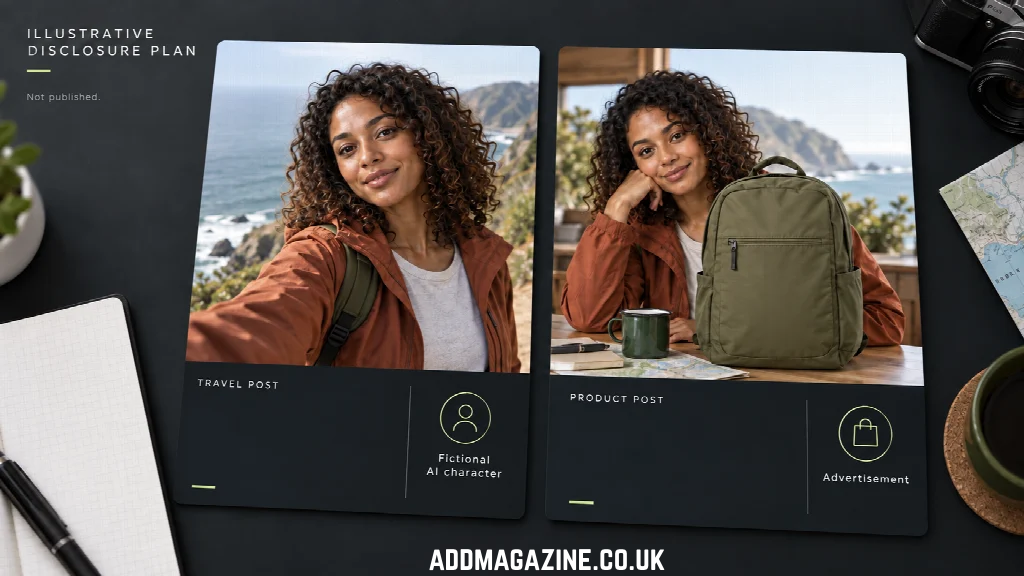
Consider an independent outdoor gear company preparing a marketing campaign inspired by travel and adventure. It could invent a weekend traveler for photos and short videos. But if that character appears beside a real product, will viewers assume a real person used it? Ask before generating a face.
An AI influencer lets the brand test a character-led idea without a shoot for every early concept. The questions are what it could show, what review costs, and when real photography must take over.
Why an AI Influencer Appeals to a Small Brand
A smaller team benefits from the freedom to explore different approaches and experiment with new ideas. The hypothetical brand could sketch its fictional traveler at a campsite, leaving a city, or giving a short introduction. A virtual influencer gives those concepts a recognizable face. None proves a customer traveled or liked the gear.
The brand decides the character’s appearance and subject before generating. That controls the brief, not every pixel. Someone still chooses outputs, clears rights, and checks what viewers might infer. A photographer remains the better route when the claim depends on a real person or object.
The self-service entry point makes a small trial conceivable; it tells us nothing about how many small firms already use AI-generated influencers. Savings depend on generation charges and the work left after files arrive.
Why Easy-to-Use Tools Still Require Dedication and Hard Work
WaveSpeedAI’s AI influencer studio is one example. Its public page describes designing a fictional character by choosing a look and niche, or starting from a preset. It lists selfies, travel scenes, product posts, and talk-to-camera clips. The page says each result has a price shown before generation, uses credits, and requires no Studio subscription.
That helps the brand try a concept without hiring a cast. It does not establish likeness rights or write truthful product claims. The page says each photo and video uses the character’s portrait as a reference, with models asked to preserve features. Reviewers must compare outputs because a reference is no guarantee of identical faces.
Existing photography and editing may serve better. The question is whether a fictional narrator adds value to this story.
A preset character is a starting point, not proof that the brand owns an exclusive persona. Keep the chosen portrait and check the relevant use terms before building a campaign around it.
Show the Audience Who the Character Is
Viewers need to know the traveler is fictional and AI-generated. A clear profile description helps visitors understand an account’s purpose, while each post needs enough background information to make sense when shared beyond its original page. Do not give this character a real customer’s trip, product use, or testimonial.
A promotional post also has a commercial purpose. Explaining that the person is artificial does not tell viewers that a post is advertising. Check the ad-identification rules and platform format for each publication. The two disclosures answer different questions.
For the hypothetical brand, a visible note that the traveler is fictional addresses identity. A separate, plain indication of advertising addresses commercial intent where required. Each task requires its own approach, so a single message may not effectively serve both purposes.
According to the UK’s Advertising Standards Authority (ASA), advertisers are not automatically required by law to disclose the use of artificial intelligence in every advertisement. It asks whether omission could mislead viewers and says identifying an AI-generated influencer may help in context. An AI label cannot repair a false product impression. Advertising identification needs its own check.
What Can a Virtual Character Actually Post?
Consider three drafts for the fictional traveler. For each, ask whether a scene invents an experience, a product changes, or spoken copy outruns approval. This is an editorial check, not a Studio feature.
Candidate content for a fictional character, not real posts or verified product imagery.
Consider how your content will appear to someone encountering a single post while scrolling through their social media feed. A scenic image with the bag could look like a vacation memory even if the team meant it as fiction.
| Candidate content | What the character could show | Human check before publication |
| Selfie or travel scene | A proposed setting that fits the brand’s mood | Avoid implying a real trip or customer experience; compare the face with the approved portrait. |
| Product post | The fictional traveler beside an authorized product reference | Compare packaging and visible details with the real item and approved description. |
| Talk-to-camera clip | A short message based on approved copy | Watch the opening, middle, and end; check the words and make the character’s fictional status clear. |
The page also shows a fitness-coach preset, but no one-click fitness scene or actual workout. A plausible image can still imply a false experience.
More Drafts Also Mean More Decisions
Suppose the team rejects a clip because the traveler’s face changes and a bag zipper disappears. The attempt still used credits and review time. Another version needs another check. More candidates help only when the team can afford to reject them.
Budget for each generation, licensed images, editing, and rework. The Studio’s credit model shows individual charges, not total campaign cost or savings against a shoot. The owner can approve a limited set of concepts before spending.
Keep the approved portrait with each draft. It helps reviewers check continuity; a real product image and description anchor the merchandise check. Neither guarantees frame-by-frame accuracy.
Review at the size and speed of the intended post. Minor text or product changes that seem insignificant during desktop editing can become more noticeable when viewers watch the video on a mobile screen.
Protect the Product Behind the Persona
The outdoor brand’s bag must remain a real bag. The Studio page explains how users can position the character alongside a product photo they have uploaded. Compare the output with an authorized packshot and current specifications. If a render adds a pocket or changes a label, reject it. The attractive picture proves nothing about the item.
For a spoken clip, compare audible and on-screen claims with approved copy. Listen for invented durability or fit claims and supposed personal use. A real testimonial needs a real, consenting person with documented experience. Otherwise, remove the claim.
If the generated bag cannot be made faithful to the real one, an editor could use an approved product photograph in an ordinary layout instead. The character need not carry every visual or every assertion.
The character supplies mood, while product evidence comes from photographs, specifications, and accountable people. Reviewers need those sources before release.
Choose the Role Before You Choose the Face
The brand could use its traveler to explore a campaign tone or tell an openly invented story. Material close-ups, exact color, and proof of fit call for real photography. A claim about visiting a place needs an actual visitor. A convincing generated face changes none of that.
Write down the fictional identity, approved portrait, permitted subjects, and banned claims. Save authorized product images and each final approval as the brand’s own editorial record. If no reviewer can show a cleared source for a detail or a clear way to identify the character and the ad, leave that draft unpublished.
That gives the brand a practical entry test: name the person who can reject a post, the source they will compare it with, and the disclosure viewers will actually see.