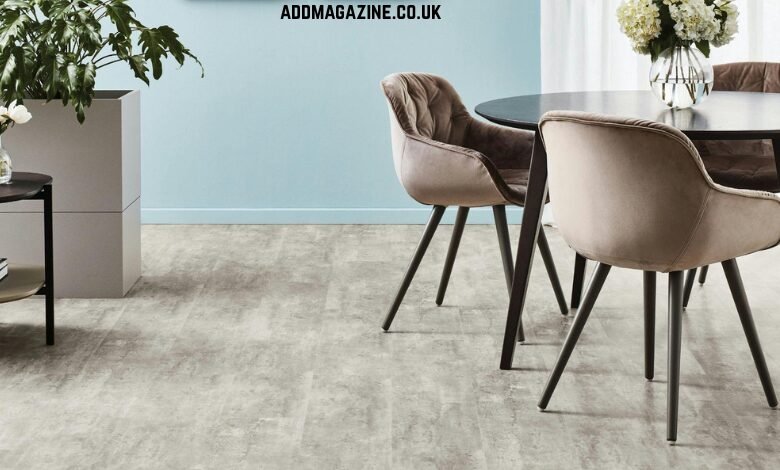
Stone-inspired luxury vinyl tile captures the authentic appearance of natural stone while providing enhanced comfort, easier upkeep, and reliable performance in varying temperatures. It is available in designs that mimic marble, slate, concrete, travertine, and limestone, among others. Allfloors Glasgow supplies Amtico stone-effect LVT, a range designed for both residential and commercial environments, combining realistic visual detail with practical performance characteristics. This guide explains how stone effect LVT is constructed and what to consider when selecting it.
How Stone Effect LVT Is Made
Modern LVT flooring is manufactured by compressing several engineered layers into a single durable surface using heat and high pressure. The base layer provides structural stability. Some products also include a texture layer that embosses the surface to match the printed design, adding tactile realism. The wear layer thickness is the most important factor in determining durability. Products designed for heavy commercial use carry thicker wear layers than those intended for domestic settings, though domestic-grade LVT is more than adequate for most residential applications.
Comparing Stone Effect LVT to Real Stone
Unlike marble or slate, natural stone floors contain tiny pores that absorb moisture, feel chilly underfoot, carry substantial weight, and need regular sealing to resist stains. It is also prone to cracking if the subfloor has any flex. Stone effect LVT avoids all of these issues. The surface is non-porous, warmer underfoot, significantly lighter than stone, and does not require sealing or specialist cleaning products.
The trade-off is that LVT cannot be re-sanded or refinished the way natural stone can be polished. Once the wear layer is worn out, the tile or plank needs to be replaced. However, the lifespan of a well-maintained LVT floor typically exceeds 15 years in domestic use.
Suitable Rooms for Stone Effect LVT
Stone-effect LVT is well-suited to rooms where moisture resistance and durability are priorities. Kitchens, bathrooms, utility rooms, and hallways are the most common applications. The waterproof nature of the material means it performs reliably in wet zones without swelling, warping, or developing mould beneath the surface. In living rooms and open-plan spaces, stone-effect designs provide a contemporary alternative to natural stone that is more comfortable to stand on for extended periods.
Installation Methods
Stone effect LVT is available in glue-down, click-lock, and loose-lay formats. Click-lock formats are faster to install and allow for easier replacement of individual tiles or planks if damage occurs. Loose-lay LVT uses friction and the floor’s weight to hold it in place, which suits temporary installations or situations where rapid access to the subfloor is required. Subfloor preparation is critical with all LVT formats. The surface must be flat, dry, and free from debris. Imperfections in the subfloor telegraph through thin LVT products and become visible over time.
Design Options and Layout Patterns
Stone effect LVT comes in tile and plank formats, allowing a range of laying patterns. Rectangular planks in formats such as 305mm by 610mm or 457mm by 457mm allow herringbone, chevron, and French-weave patterns that increase visual interest without adding installation complexity.
Lighter, neutral stone designs such as soft concrete tones and pale limestone effects are versatile across a range of interior colour schemes. Darker designs, such as slate or anthracite concrete, work well as feature floors in rooms with lighter walls and furniture.
Maintenance and Cleaning
Stone effect LVT requires minimal maintenance compared to natural stone. Sweeping or vacuuming to remove grit prevents surface abrasion. Avoid steam mops, abrasive cleaning pads, and solvent-based products, as these can damage the wear layer surface or cause adhesive bond failure in glue-down installations.
Final Guidance on Selecting Stone Effect LVT
Selecting stone-effect LVT involves matching the wear-layer specification to the expected foot traffic, choosing a format and laying pattern that suit the room dimensions, and ensuring the subfloor is adequately prepared before installation begins. These steps together determine how well the floor performs and how long it retains its appearance in daily use.