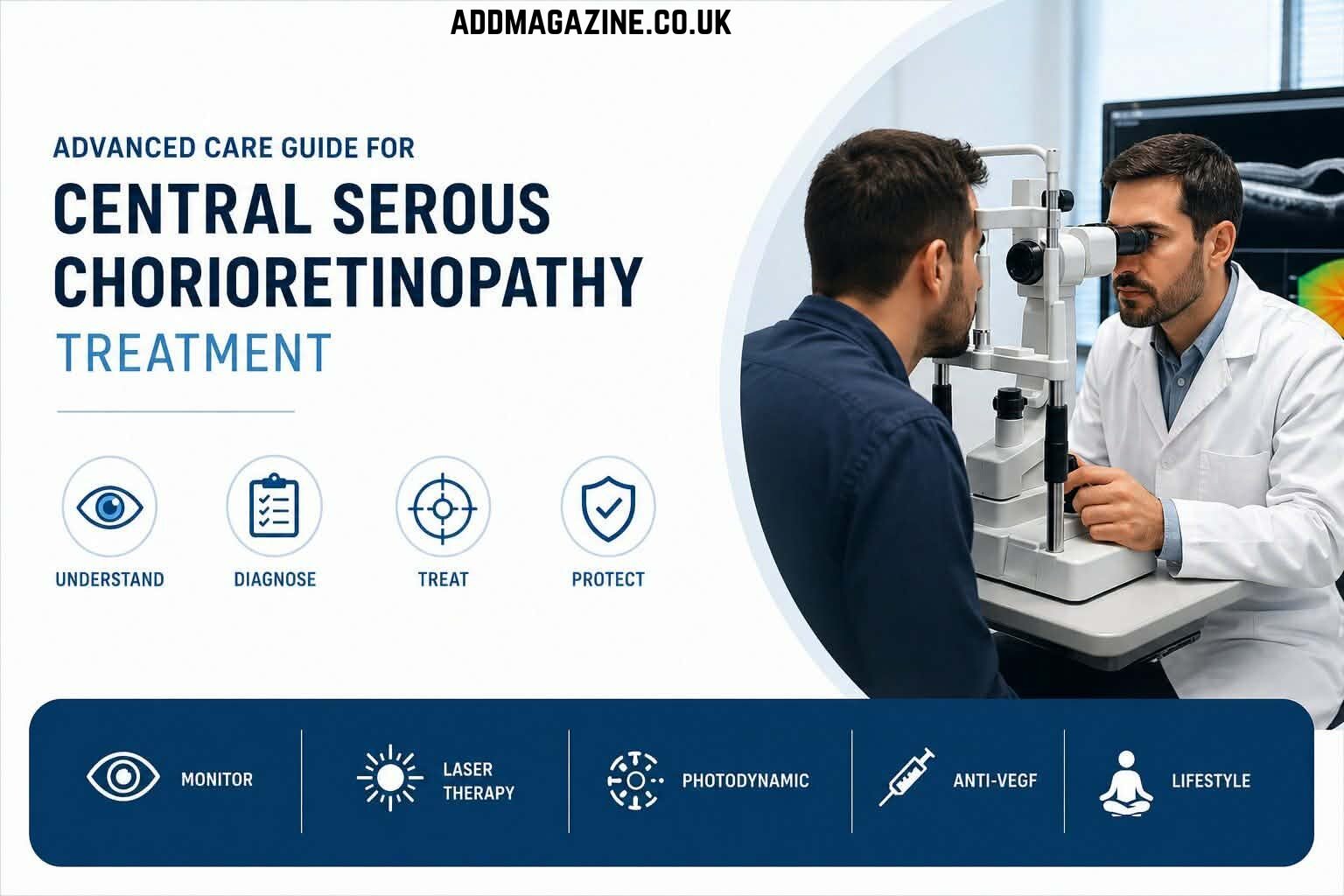
Vision problems can feel unsettling, especially when they appear suddenly and begin to affect daily life. One condition that often catches people off guard is central serous chorioretinopathy, commonly known as CSC. Many patients start searching for answers quickly, hoping to find the best central serous chorioretinopathy treatment that can protect their eyesight and restore clarity.
Understanding how this condition works and what treatment paths exist can make a real difference in how effectively it is managed.
What Is Central Serous Chorioretinopathy
Central serous chorioretinopathy is an eye condition where fluid builds up under the retina. This fluid leakage comes from the choroid layer, which sits beneath the retina. As the fluid accumulates, it creates a small detachment that distorts vision.
People with CSC often notice:
- Blurred or dim vision
- Straight lines appearing bent
- A dark or gray spot in the center of vision
- Difficulty focusing on details
It usually affects one eye at a time, although both eyes can be involved in some cases.
Why Early Treatment Matters
In some cases, CSC can resolve on its own within a few months. However, that does not mean it should be ignored. Persistent or recurring fluid can lead to long-term damage to the retina.
Seeking the best central serous chorioretinopathy treatment early helps:
- Reduce the risk of permanent vision loss
- Speed up recovery
- Prevent repeated episodes
- Improve overall visual quality
The longer fluid remains under the retina, the higher the chance of lasting changes.
Causes and Risk Factors
CSC is often linked to stress and hormonal changes. High levels of cortisol, the stress hormone, are believed to play a key role.
Common risk factors include:
- Chronic stress or anxiety
- Use of steroid medications
- High blood pressure
- Sleep disturbances
- Certain personality traits, including high stress or driven behavioral patterns, have been suggested as possible associations, though evidence is limited.
Men between the ages of 20 and 50 are more frequently affected, though it can occur in anyone.
Diagnosis and Evaluation
Before choosing the best central serous chorioretinopathy treatment, proper diagnosis is essential. Eye specialists use advanced imaging techniques to confirm the condition and assess its severity.
Typical diagnostic tools include:
- Optical coherence tomography, OCT
- Fluorescein angiography
- Fundus photography
These tests help identify fluid accumulation and pinpoint leakage areas.
Treatment Options Available
Treatment depends on how severe the condition is and how long it has been present. A personalized approach is often the most effective way forward.
Observation and Monitoring
For mild cases, doctors may recommend careful observation. Regular checkups ensure that the fluid is resolving naturally.
This approach works best when:
- Symptoms are recent
- Vision is only slightly affected
- No previous episodes have occurred
Lifestyle Adjustments
Managing stress may help reduce risk factors associated with CSC, although it is not a standalone treatment. Since cortisol plays a role, reducing stress levels can help the eye heal.
Helpful changes include:
- Improving sleep habits
- Practicing relaxation techniques
- Reducing caffeine intake
- Avoiding unnecessary steroid use
These adjustments support recovery and reduce recurrence risk.
Laser Therapy
In certain cases, laser treatment may be used to seal the leaking area. This may help reduce leakage in selected cases.
Laser therapy is typically considered when:
- Leakage is clearly defined
- The condition does not resolve on its own
- Vision continues to decline
It is a targeted approach that can provide faster results.
Photodynamic Therapy
Photodynamic therapy, often called PDT, is a light-based treatment that reduces abnormal leakage. It uses a special drug activated by light to treat affected areas.
This option is often chosen when:
- CSC becomes chronic
- Multiple episodes occur
- Other treatments are not effective
PDT is known for its precision and reduced risk of damage to surrounding tissue.
Anti VEGF Injections
Although more commonly used in other retinal conditions, Anti-VEGF injections are not routinely used for CSC but may be considered in cases with suspected secondary complications, such as choroidal neovascularization. These injections work by controlling abnormal blood vessel activity.
They are typically used when:
- There is suspicion of underlying vascular issues
- Fluid persists despite other treatments
Personalized Treatment Approach
No two cases of CSC are exactly the same. That is why the best central serous chorioretinopathy treatment is usually tailored to the individual.
Factors that influence treatment decisions include:
- Duration of the condition
- Severity of vision changes
- Patient lifestyle and stress levels
- History of previous episodes
A specialist will combine clinical findings with patient needs to design the most effective plan.
Living With CSC
Managing CSC is not just about medical treatment. Daily habits and awareness play a major role in recovery and prevention.
Practical tips include:
- Monitor vision regularly using simple tools like grid tests
- Maintain a healthy routine with balanced nutrition
- Stay consistent with follow up appointments
- Address stress before it becomes overwhelming
These steps help maintain eye health and reduce the likelihood of recurrence.
When to Seek Immediate Care
Some symptoms should never be ignored. Quick medical attention can prevent complications.
Watch for:
- Sudden worsening of vision
- Persistent distortion
- New dark spots in vision
- Symptoms that persist or worsen over time should be evaluated by an eye specialist.
Early action often leads to better outcomes.
The Role of Modern Eye Care
Advancements in retinal care have made it easier to manage conditions like CSC. From high resolution imaging to targeted therapies, patients now have access to a wider range of diagnostic tools and treatment options.
Clinics focusing on retinal conditions often provide:
- Detailed diagnostics
- Tailored treatment plans
- Ongoing monitoring
- Access to advanced therapies
This level of care supports long term vision preservation and helps patients stay confident in their treatment journey.
Staying informed, acting early, and choosing the right specialist can shape how well the condition is controlled and how clearly the world continues to appear each day.