Many people believe they know how to prepare a great burger. Most of the time, however, these individuals will focus on the “essentials” of preparing a burger including seasonings, toppings, the type of bun to use, etc. A few enthusiasts will even debate the merits of smash versus thick patty style burgers. Others will argue about whether charcoal or gas grills produce better burgers. However, all of this is irrelevant as long as the individual has not achieved a critical component of successful burger preparation – the correct internal temperature of the burger.
In addition to technique, many people also believe that the juiciness of a burger is based solely on technique. The truth is that juiciness is determined by the way in which heat interacts with the fat and moisture inside the meat. If you have ever prepared a burger that visually appeared to be perfectly cooked on the outside yet felt dry or crumbly on the inside, you have already seen this issue.
Why Do Most Burgers End Up Being Dry?
Ground beef differs from other types of cuts of beef. When you grind meat, you break apart the muscle tissue. Once the muscle tissue is broken apart, juices are released. Also, because the muscle tissue is broken apart, there is more exposed surface area to allow moisture to escape during the cooking process.
In addition to the release of juices, ground beef also relies on fat content to remain juicy. As fat melts, it coats the meat and creates a rich texture. The problem occurs when the burger is cooked too long or too high. In these cases, the fat melts away along with the moisture. What you end up with is:
• A firm texture.
• Reduced juiciness.
• A burger that feels dense rather than tender.
Once this happens, it cannot be corrected.
What Is the Real Burger Temperature That Controls Juiciness?
While most people associate burger doneness with the color of the burger. Specifically pink versus brown, this is a bad gauge. The best method to determine the internal temperature of a burger is through the use of an instant-read meat thermometer.
• 130-135° F: Medium Rare – Very Juicy, Soft Texture.
• 140-145° F: Medium – Balanced Texture and Juiciness.
• 150-160° F: Fully Cooked – Dense Texture with Minimal Moisture
Unfortunately, most people will exceed these temperatures. They will continue to place the burger on the grill for just a bit longer. At this point, the juiciness has vanished.
The Carryover Cooking Issue
Even if you take the burger off the grill at the correct internal temperature, it is possible to overcook the burger. Why? Because the heat generated by the grill will continue to raise the internal temperature of the burger slightly. Therefore, if you take the burger off the grill at 160° F, the internal temperature could still increase.
Therefore, you need to remove the burger from the grill 3-5° F prior to the desired internal temperature. Then, allow the burger to sit for a few minutes before slicing and serving. This short wait time allows the juices to redistribute throughout the burger. This will help maintain juiciness.
Why Does Surface Temperature Matter More Than You Think?
While many people focus exclusively on the internal temperature of the burger, surface temperature plays an equally important role in the overall quality of the burger. Surface temperature determines the rate at which the burger cooks. If the surface temperature is too low, the burger will cook very slowly. During this slow cooking time, moisture will continually be lost. Conversely, if the surface temperature is too high, the outside will burn before the inside reaches the desired internal temperature.
The objective is to achieve a surface temperature that provides a sufficient crust quickly, but not so quickly that it ruins the exterior.
This is the part of the cooking process where most home cooks fail. Most home cooks do not actually know how hot their grill or pan is. They simply guess.
The Often Overlooked Step: Proper Preheating of the Grill/ Pan
One of the single largest contributors to the quality of a burger is the initial preheating of the grill or pan. If the grill or pan is not at the correct temperature when the burger is placed upon it, the burger will not receive the initial sear that is needed to lock in juices. This initial sear:
• Locks in the juices.
• Creates texture.
• Enhances flavor.
With the absence of this initial sear, the burger will cook unevenly and dry out much quicker. Again, this is due to the lack of knowledge regarding the actual temperature of the grill or pan.
Where the TempPro TP420 Makes a Difference
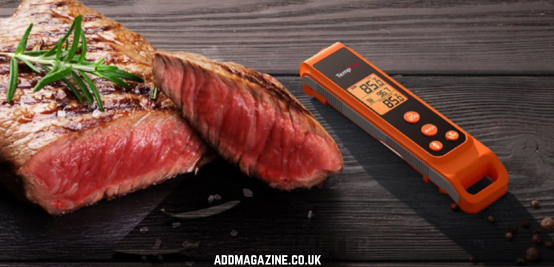
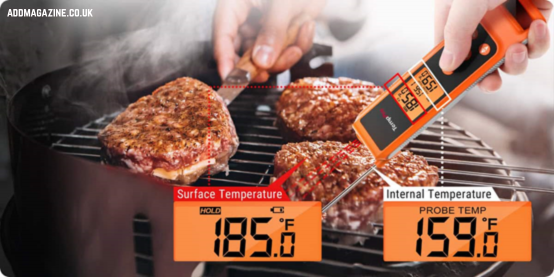
While most thermometers provide only one piece of information: internal temperature. The TempPro TP420 2-in-1 Instant-Read Thermometer for Cooking provides two pieces of information: internal temperature and surface temperature. This is the key factor that separates guessing and controlling the cooking process.
- 2-in-1 Infrared Probe Design: Provides the ability to scan the surface temperature of your grill or pan using the infrared sensor, followed by the insertion of the probe to measure the internal temperature of the burger.
- Adjustable Emissivity: Improves the accuracy of the measurements taken when measuring different types of surfaces including metal, stone, or ceramic.
- Fast and Accurate Probe Readings (±1.8° F in 2-3 Seconds): Allows for quick measurements of the internal temperature of the burger. Quick measurements will minimize heat loss and maximize control.
- Motion Sensing Sleep/Wake Function: Automatically switches the unit on when lifted and off when placed down. This function will simplify the usage of the unit during active cooking.
- Big Backlit Display: Enables clear viewing of the temperature readings regardless of lighting conditions.
- Wide Temperature Range (-58° F to 572° F): Not limited to cooking burgers. The TempPro TP420 can be used to monitor frying oil, pizza oven temperatures, baking, and more.
- Built-In Reference Temperatures: Provides quick access to commonly referenced internal temperatures, helping to reduce guess work.
Ultimately, the primary benefit of the TempPro TP420 is not just the added convenience of having both surface and internal temperature available. With the TempPro TP420, you know when your surface is ready and when your burger is done. You no longer have to rely on visual estimates.
The Science of Cooking Juicy Burgers at the Right Temperature
Once you understand temperature, the process of preparing a burger becomes quite straightforward. Start by preheating your grill or pan to the appropriate surface temperature. Take a moment to verify the surface temperature using the infrared sensor prior to adding the burger. After verifying the surface temperature is at a suitable temperature, add the burger to the grill and allow it to sear. Try to avoid excessive flipping of the burger. The crust that forms is responsible for locking in the juices of the burger. Once the burger is cooked to the desired level of doneness, remove the burger from the grill. Prior to removing the burger from the grill, take a final reading of the internal temperature of the burger. Remove the burger approximately 3-5° F prior to the desired internal temperature to account for carryover cooking. Allow the burger to rest for a short period of time. Once rested, slice and serve.
There is no guesswork involved. There is no need to cut into the burger. There is no uncertainty as to whether the burger will turn out correctly.
Common Errors Which Destroy Juiciness
- Pressing Down on the Burger While Cooking: By pressing down on the burger, you force the juices out of the meat, thus drying it.
- Cooking the Burger at Inconsistent Temperatures: Constant changes in the grill temperature cause uneven cooking.
- Flipping the Burger Too Much: Excessive flipping prevents proper crust formation.
FAQ about Cooking Burger and Temperature
Q1. What is the best temperature for a juicy burger?
Around 140-145°F for medium provides the best balance of juiciness and structure.
Q3. Should burgers be cooked to 160°F?
160°F is the recommended safe temperature for ground beef, but many people prefer lower for texture. Use discretion based on quality and preference.
Q4. Do I need to check surface temperature?
Yes. Surface heat affects how quickly and evenly the burger cooks.
Q5. How long should burgers rest?
A few minutes is enough to allow juices to redistribute.
Q6. Is an infrared thermometer necessary?
Not required, but it helps eliminate guesswork when preheating cooking surfaces. TempPro TP420 is an 2-to-1 instant-read meat thermometer which can measure burger internal temperature and its surface temperature. It’s very useful.
Q7. Why does my burger shrink during cooking?
Fat and moisture loss cause shrinkage, especially at higher temperatures.