Turning a small polyurethane formula into a full production process is not as simple as making a bigger batch. A prototype may perform well in a lab, but the real test starts when that same formula has to run consistently through production equipment, shift after shift.
This is where careful scale-up matters. The goal is to keep the same material behavior, quality, and performance while increasing output. That requires control over mixing, temperature, timing, machine setup, and the way each material is handled.
Why Lab Success Does Not Always Translate Directly
In the lab, teams usually work with small amounts of material. They can adjust by hand, watch closely, and make quick corrections. Production is different because the process must be repeated accurately on a much larger scale.
A formula that looks perfect in a small test can change under different processing conditions. Even slight differences in temperature, mixing speed, or material flow can affect the final result.
Common scale-up challenges include:
- Uneven mixing during larger batch runs
- Changes in curing time
- Air bubbles or surface defects
- Inconsistent hardness or flexibility
- Material waste during setup and adjustment
These issues do not always mean the formula is wrong.
Keeping the Formula Stable
Precision starts with understanding how the formula behaves. Before scaling up production, teams typically evaluate key material properties such as viscosity, reaction kinetics, thermal sensitivity, and curing performance
This helps identify where the process may need tighter control. For example, a material that reacts quickly may require more accurate dosing and faster transfer. A formula that is heat-sensitive may require better temperature management during storage and processing.
The purpose is to avoid surprises once production starts. A good scale-up plan protects both product quality and production efficiency.
The Role Of Equipment In Scale-Up
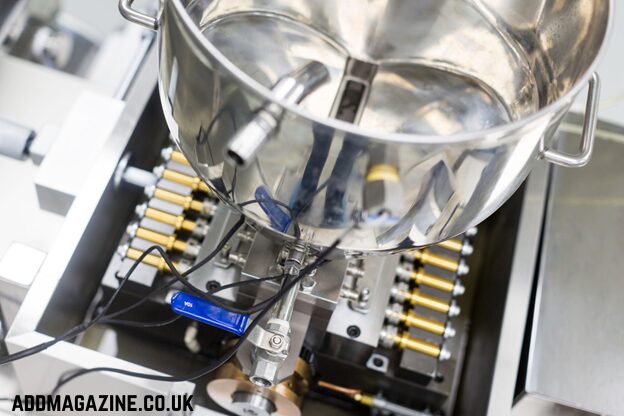
The right machine setup makes a major difference when moving from prototype to production. Modern polyurethane casting machines precisely regulate mixing ratios, material blending, and dispensing processes, ensuring far greater consistency and repeatability compared to manual techniques.
This level of control is important because polyurethane systems often depend on precise proportions. If the ratio is off, the final part may become too soft, too brittle, or inconsistent from one run to the next.
Reliable equipment also helps reduce operator guesswork. Once the correct settings are confirmed, the process becomes easier to repeat across multiple production cycles.
Testing Before Full Production
Most companies do not move directly from a lab sample to full-volume manufacturing. They usually run pilot batches first. These smaller production trials help confirm that the formula, machine settings, tooling, and workflow all work together.
During pilot testing, teams may check:
- Material flow and mixing quality
- Final part appearance
- Dimensional consistency
- Cure time and demolding behavior
- Waste levels and production speed
This step gives manufacturers time to make corrections before larger orders are affected.
Why Process Control Matters
Polyurethane production depends on timing and balance. Materials must be stored properly, measured accurately, and processed under the right conditions.
High-quality polyurethane processing equipment supports this by helping manufacturers manage key production variables. It can also make it easier to document settings, repeat successful runs, and reduce defects caused by manual variation.
Building A Repeatable Production Method
Once the formula and equipment settings are confirmed, the next step is to document them. Teams record the correct temperatures, pressures, material ratios, mixing times, and inspection points.
This creates a repeatable production method. It also helps new operators follow the same process without relying only on experience or memory.
Good documentation may include:
- Approved material handling steps
- Machine setup instructions
- Quality inspection checkpoints
- Cleaning and maintenance routines
- Troubleshooting notes for common issues
Scale-up works best when the formula and the process are treated as one system. A strong lab result matters, but consistent production depends on how well that result is translated into controlled, repeatable manufacturing.