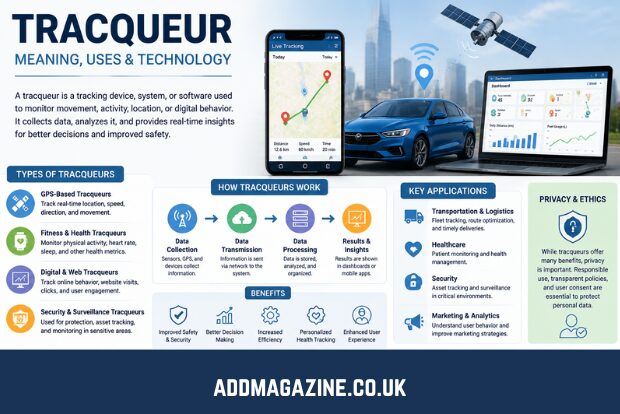
A “tracqueur” (often seen as a variation of the French word “traqueur”) generally refers to a tracking device, system, or software used to monitor movement, activity, location, or digital behavior. While the spelling may vary across regions and contexts, the idea behind it is consistent: a tracqueur is a tool that observes, records, and reports data for analysis or control.
Over the past decade, tracqueurs have become deeply embedded in everyday life. From smartphones and fitness bands to vehicle trackers and website analytics tools, they operate quietly in the background, shaping decisions in transportation, health, security, marketing, and even personal habits.
Understanding what a tracqueur is today requires looking beyond the word itself and into the wider ecosystem of tracking technologies.
What a Tracqueur Actually Does
At its core, a tracqueur is designed to collect information about “movement” or “behavior.” That movement does not always mean physical motion—it can also refer to digital actions.
A physical tracqueur might record:
- Location (GPS coordinates)
- Speed and direction
- Distance traveled
- Time of activity
A digital tracqueur might monitor:
- Website visits and clicks
- User engagement patterns
- App usage behavior
- Online navigation paths
The data collected is then transmitted to a system—often in real time—where it is analyzed and turned into meaningful insights.
What makes tracqueurs especially powerful is not just the data collection itself, but the ability to interpret patterns over time.
Types of Tracqueurs in Modern Use
They exist in multiple categories depending on their purpose and environment.
1. GPS-Based Tracqueurs
These are among the most widely recognized. They use satellite signals to determine exact location. You will find them in:
- Vehicles (car tracking for fleets or theft prevention)
- Smartphones
- Delivery and logistics systems
- Personal safety devices
They help users know where something is at any given moment, often with real-time updates.
2. Fitness and Health Tracqueurs
Wearable devices like smart bands and watches function as personal tracqueurs. They monitor:
- Steps taken
- Heart rate
- Sleep cycles
- Calories burned
In healthcare, similar systems are used for patient monitoring, especially in chronic conditions or elderly care.
These devices are less about surveillance and more about personal awareness and improvement.
3. Digital and Web Tracqueurs
In the online world, tracqueurs take the form of scripts or tools embedded in websites and applications. Their purpose is to:
- Track user behavior on websites
- Measure ad performance
- Understand audience engagement
- Improve user experience
They are essential for digital marketing and analytics, though they often raise privacy concerns.
4. Security and Surveillance Tracqueurs
These systems are widely used in sensitive environments for protection and continuous monitoring purposes. Examples include:
- CCTV-linked tracking systems
- Asset tracking in warehouses
- Employee movement monitoring in restricted zones
They are commonly used in logistics, banking, and high-security facilities.
How Tracqueur Technology Works
Most tracqueurs rely on a combination of technologies:
- Sensors: Detect movement, speed, or physical activity
- GPS and satellites: Provide location data
- Wi-Fi and mobile networks: Transmit information
- Software platforms: Store and analyze collected data
- Cloud systems: Allow remote access and real-time updates
The workflow is usually simple in structure but complex in execution: data is captured, transmitted, processed, and then displayed in dashboards or apps.
The real intelligence comes from the software layer, where patterns are identified and predictions are made.
Why Tracqueurs Have Become So Important
The rise of tracqueurs is directly linked to the demand for efficiency, safety, and data-driven decision-making.
In transportation, they reduce fuel waste and improve delivery times. In personal health, they encourage lifestyle awareness. And in business, they help understand customer behavior with precision that was not possible before.
For many industries, operating without tracking systems now feels outdated.
Privacy Concerns and Ethical Questions
As tracqueurs become more advanced, concerns about privacy and data usage continue to grow.
Some key issues include:
- Users not fully knowing what is being tracked
- Data being shared with third parties
- Location tracking without clear consent
- Behavioral profiling for advertising
Digital tracqueurs, in particular, have become a major topic in global privacy discussions. While they improve services, they also create detailed user profiles that can feel intrusive.
Users benefit from personalization, but they may lose visibility over how their data is used.
Advantages of Tracqueurs
Despite concerns, tracqueurs offer clear benefits when used responsibly:
- Improved safety and security
- Better decision-making through data insights
- Increased efficiency in logistics and transportation
- Personalized health and fitness tracking
- Enhanced user experience in digital platforms
In many cases, they save time, reduce costs, and improve accuracy in both personal and professional environments.
Limitations and Challenges
No tracking system is perfect. Tracqueurs also face limitations such as:
- Battery dependency in portable devices
- Signal loss in remote areas
- Data inaccuracies due to environmental factors
- Security risks if systems are hacked
- Over-reliance on automated data interpretation
These challenges highlight that tracqueurs are tools, not absolute decision-makers. Human interpretation is still necessary.
The Future of Tracqueur Systems
The next generation of tracqueurs is expected to become more intelligent, discreet, and integrated into everyday objects.
- Predicting behavior instead of just recording it
- Offering real-time recommendations
- Automating responses based on tracked data
- Reducing energy consumption in devices
We are also likely to see deeper integration into smart cities, where traffic systems, public transport, and infrastructure rely heavily on continuous tracking data.
At the same time, privacy-focused innovations such as encrypted tracking and user-controlled data systems are expected to grow.
Conclusion
A tracqueur is no longer just a simple tracking device—it is part of a broader digital infrastructure that connects physical movement, online behavior, and data intelligence. Whether used for navigation, health monitoring, business analytics, or security, tracqueurs have become essential tools in a data-driven world.
Their influence is expanding, but so are the questions around transparency and control. The future of tracqueurs will depend not only on technological advancement but also on how societies balance innovation with privacy.