The Math Behind the Monsters
Most players hit a progression wall around the forty hour mark in any creature collection game. The starter monster that carried you through the early zones suddenly takes too much damage. You realize the base stats just do not cut it anymore. At this point, you have to transition from catching whatever looks cool to actually engineering a team.
Underneath the brightly colored graphics, these games are entirely driven by spreadsheets. Every creature has hidden values dictating their growth potential. Some games call them individual values. Others call them potential or talent. Whatever the name, they act as genetic multipliers. A creature caught in the starting area with terrible hidden genetics will always lose to the exact same creature bred with optimized genetics, even if they are the identical level.
If you want to clear endgame raids or climb competitive ladders, you have to understand those underlying numbers. You need to know which stats dictate the turn order and which stats mitigate physical versus special damage. Casual players ignore this and try to over level their team to compensate. Experienced players just breed better base units.
Mapping the Genetic Lottery
Breeding is the most reliable way to get a top tier unit. Catching wild creatures leaves too much to chance. You are at the mercy of randomized stats and randomized passive traits. When you set up a breeding farm, you control the variables. The goal is to isolate positive passive skills and push them onto a single target.
This usually requires a funnel approach. You find one wild creature with a damage boosting trait and another with a speed boosting trait. You breed them until you get an offspring with both. Then you repeat the process on a different genetic line for defensive traits. Eventually, you cross those two hybrid lines to create a perfectly optimized unit.
This gets complicated when games allow cross species breeding to discover entirely new variants. You might need a specific fire trait from a low level creature transferred to a late game boss variant. Doing this manually by guessing combinations takes hundreds of hours. You need to map out the lineage beforehand. Pulling up an online palworld breeding calculator saves you from wasting resources on dead end egg combinations. You punch in the traits you have, the target you want, and follow the generated breeding tree. It turns a massive guessing game into a straightforward production line. You can then organize your storage boxes by genetic traits, making it easy to pull the exact parent you need for the next step in the chain.
Building a Roster That Actually Works
Having six monsters with perfect genetics does not mean you have a good team. A roster of six heavy hitters usually fails against a well planned defensive setup. You need specialized roles.
Action economy and speed tiers dictate the flow of combat. If your entire team is slow, the opponent gets to dictate the pace of the match. You need at least one dedicated fast unit to control the board. Another unit should be responsible for setting up weather effects or entry hazards. A third unit acts as a physical wall to absorb incoming damage while you revive or heal your primary attackers.
Type coverage is the baseline requirement. If half your team is weak to water attacks, a single fast water type will wipe your entire bench before you can react. You fix this by building defensive pivots. When you know a powerful water attack is coming, you swap to a creature that absorbs water damage to heal itself or boost its own stats. That is fundamental team planning. It requires you to look at your squad as a single machine rather than a collection of individual parts. A weaker creature with a highly specific utility ability is often more valuable than a high stat attacker that overlaps with roles you already have covered.
Leveraging Community Documentation
The sheer volume of data in these games makes brute force testing impossible. A standard creature catcher might have four hundred unique monsters. Each one has dozens of potential moves, distinct egg groups, and specific stat yields. You are not going to memorize the breeding groups. You have to rely on external databases.
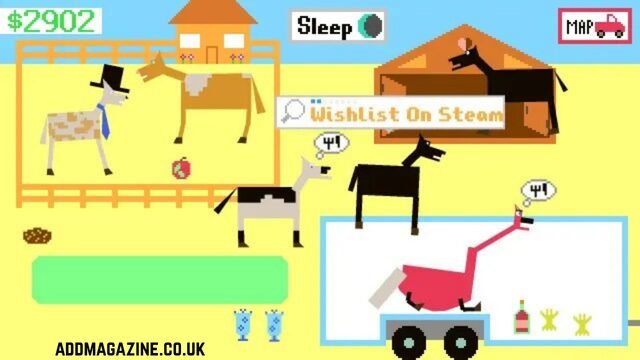
Mechanics change constantly with developer patches. A breeding loop that worked flawlessly last month might be patched out today. Whether you are checking encounter rates for a massive mainstream release or looking up mutation chances on an online horsey game wiki, community documentation is a required tool for serious players. Developers rarely put the exact percentages for stat inheritance inside the game client itself. You rely on dataminers and community testers who compile this information into readable formats.
Keep a laptop or tablet open next to your main screen. Check the encounter tables before you spend hours running around the wrong biome. Confirm the egg groups before you spend a week farming breeding materials. Relying on your memory for massive data sets is a quick way to sabotage your own progress. Let the community resources do the heavy lifting so you can focus on execution.
Managing Breeding Resources and Box Space
The physical logistics of breeding are often completely overlooked by new players. Generating hundreds of eggs requires a massive amount of in game resources. You need currency to buy breeding items, specific foods to trigger egg generation, and physical space in your computer boxes to store the failures.
Box management will make or break your breeding operation. If you just dump every hatched creature into a random slot, you will lose track of your genetic lines within an hour. You need a strict naming convention and an organized storage system. Rename creatures based on the specific traits they carry. If a creature has a perfect speed stat, rename it immediately upon hatching. Create dedicated boxes for your clean breeding stock, separate from the boxes you use to store field utility monsters.
When you hatch a batch of eggs, evaluate them immediately. Keep the ones that advance your genetic chain and immediately release or sell the failures. Do not let junk creatures clog up your storage. You need that space to cycle through hundreds of eggs quickly. Breeding is an industrial process. The faster you can sort the outputs, the faster you get your final product.
Time Investment Versus Yield
Chasing a perfect creature with maximum stats across all categories is rarely worth the time. The difference between a unit with highly optimized stats and completely perfect stats is often indistinguishable in actual combat. But achieving that final tiny percentage of optimization usually takes ten times as long as getting the core build finished.
You have to identify which stats actually matter for a specific role. A dedicated physical attacker does not need a high special attack stat. If you hatch an egg with perfect speed, perfect physical attack, and terrible special attack, you stop breeding. That unit is finished. Move on to the next team member.
Getting bogged down in perfectionism is how players burn out before they even field their full team. Set a threshold for what is mathematically viable for the content you want to clear. Once a bred creature hits that threshold, lock it in. Your time is better spent grinding out the right held items or practicing your combat rotation than hatching another two hundred eggs looking for a single stat point you will never actually use. Efficiency is about knowing exactly when a project is done.