Hey there! If you run a small printing business or you’re thinking about starting one, you might be asking yourself whether it’s time to add UV/DTF printing. This newer method is getting popular fast because it opens up lots of new possibilities. In this article, I’ll walk you through everything in simple terms. We’ll cover what it is, how it works, the good sides, the not-so-good sides, costs, and how to decide if it fits your business. By the end, you’ll have a clear idea if you should make the move.
What Is UV/DTF Printing?
UV/DTF printing stands for Ultraviolet Direct to Film. It’s a way to create custom designs on hard surfaces like glass, plastic, metal, wood, ceramic, and even some curved items. You print your design with special UV inks onto a special film. Then you cure it with UV light and add a layer that makes it sticky. Finally, you peel and apply the transfer like a strong sticker.
Unlike regular DTF printing, which is great for fabrics like t-shirts and needs heat and pressure, UV/DTF does not use heat. It’s a cold process. That means no risk of warping delicate items. The result is a durable, glossy print that resists water, scratches, and fading. Many small businesses use it for phone cases, mugs, and signs—items that don’t require the specialised settings of a professional heat press machine australia—making it ideal for promotional gifts and custom products that traditional methods can’t handle easily.
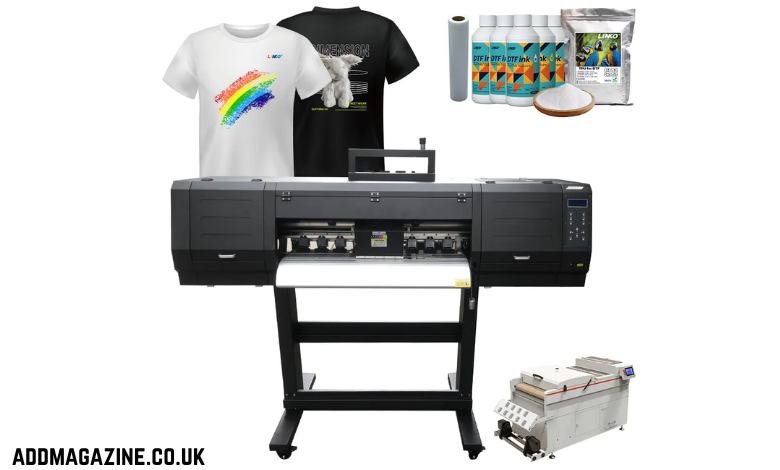
The process has a few clear steps: design your image, print on the film with CMYK plus white and sometimes clear ink, cure with UV lamps, laminate with adhesive film, and apply to the object.
How UV/DTF Printing Differs from Regular DTF and Other Methods
Regular DTF printing uses pigment inks and hot melt powder. You print on film, add powder, dry it, and press with heat onto soft fabrics. It’s perfect for clothing but limited when it comes to hard or curved surfaces.
UV/DTF switches to UV-curable inks that harden instantly under UV light. No powder needed. The transfer is more like a tough sticker with a protective layer. This makes it better for rigid materials and items that can’t take heat.
Compared to direct UV flatbed printing, UV/DTF gives you more flexibility with shapes because the film can wrap around curves. Compared to vinyl stickers, UV/DTF prints look more professional with full color, white base for dark surfaces, and better durability. It’s not meant to replace your existing DTF setup for apparel – it’s a great add-on that fills the gaps.
Many shops now run both DTF for clothes and UV/DTF for gifts and promo items. That way, they offer a wider range of products from one location.
The Main Benefits of Adding UV/DTF to Your Business
One big plus is the variety of products you can make. You can decorate phone cases, tumblers, wine glasses, wooden signs, metal plates, and more. Customers love personalized hard goods, and these items often have higher profit margins than basic t-shirts.
No heat press is required. That saves energy, space, and the worry of damaging heat-sensitive materials. The process is cleaner and simpler for some workflows. Prints are very durable – waterproof, scratch-resistant, and they hold up outdoors or in daily use.
It’s good for small batches and custom orders. You don’t need minimum quantities like with screen printing. This fits perfectly with print-on-demand or one-off gifts. Setup time is short, so you can turn around orders quickly.
For small businesses, it opens new revenue streams. Think corporate gifts, wedding favors, event merch, or retail displays. Many owners say it helps them stand out from competitors who only do fabric printing. The glossy finish looks premium, which lets you charge more.
Another advantage is that it’s becoming more affordable. Entry-level UV/DTF printers are now within reach for growing shops. If you’re already doing DTF, adding UV/DTF uses similar skills, so your team can learn fast.
Potential Drawbacks You Should Know
Like any new equipment, there are downsides. The upfront cost is higher than basic DTF setups. A decent UV/DTF printer can start from a few thousand dollars, plus inks and films. UV inks tend to cost more per print than standard pigment inks.
Maintenance is important. UV printers need regular use to keep the heads from clogging. If you only run a few jobs a month, the system might need more cleaning and could have issues. Some users mention fumes from the inks, so good ventilation is a must.
The prints work best on flat or gently curved surfaces. Very complex 3D shapes can be tricky. Also, while durable, the application needs a clean surface for best adhesion.
Learning curve exists. You’ll need to master the film lamination and application steps. Color matching can take practice because UV inks behave differently. And like all printers, occasional troubleshooting happens.
If your business is purely focused on apparel right now, adding UV/DTF might spread your focus too thin at first. Start small if you’re unsure.
Costs Involved – What to Expect
Let’s talk money in plain numbers. A starter UV/DTF printer often costs between $3,000 and $10,000 depending on size and features. Consumables like UV ink, A and B films add ongoing expenses – roughly $1 to $4 per small item depending on size and design.
You might need a UV lamp or curing station if not built-in, plus a laminator for the adhesive layer. Workspace needs good ventilation and some storage for materials. Training or online guides are usually free from good suppliers.
On the revenue side, a custom phone case or mug can sell for $15 to $40 with good margins. If you already have customers asking for hard goods, the investment can pay back in a few months through new sales. Many small businesses report that UV/DTF helps them increase average order value because customers buy matching sets – a shirt plus a mug or case.
Compare that to outsourcing these items. Bringing production in-house cuts delivery times and boosts profit. Calculate your expected volume first. If you do at least 20 to 50 UV/DTF items per week, it usually makes sense.
Who Should Add UV/DTF Printing?
This method is a smart move if:
- You want to expand beyond clothing into promotional products and gifts.
- Your customers ask for custom items on hard surfaces.
- You have space and time to run the printer regularly.
- You’re looking for higher-margin products with less competition in your area.
- You already run a DTF or similar shop and want to complement it.
It’s especially good for home-based or small workshop businesses because the equipment doesn’t take up too much room and needs no big heat press. If you’re just starting out, focus on one method first – maybe regular DTF for fabrics – then add UV/DTF when you’re ready to grow.
If your orders are very low volume or you hate maintenance, you might stick with outsourcing for now.
How to Get Started with UV/DTF
First, research a few models and read real user reviews. Look for printers that are easy to use and come with good support. Test prints on different materials before buying.
Plan your workflow. Design software is similar to what you might already use. Practice the full process a few times on sample items.
Budget for the first set of inks and films. Many suppliers offer starter kits. Take advantage of training videos and customer service.
Start by offering a few simple products to your existing customers. Get feedback and adjust. Track your costs and sales to see the real return.
Maintenance is key – run the printer often, even if just for test prints, and keep everything clean.
Is UV/DTF Worth It for Your Business?
If adding new product types can bring more sales and happy customers, then yes, UV/DTF is worth considering. It gives you versatility without needing a huge factory. The technology has improved a lot, and prices are coming down, making it more accessible for small businesses in 2026.
Many shops that added it say it helped them grow faster by offering complete customization packages. But only add it if you have realistic volume and are willing to maintain the equipment.
Take time to calculate your numbers and talk to other owners who made the switch. Start small, test the waters, and scale when it feels right.
If you’re exploring quality DTF and UV/DTF solutions to grow your printing business, check out https://www.dtflinko.com/ for reliable options and support. Adding UV/DTF can be a smart step that opens doors to new opportunities. Think about what your customers want and whether this fits your setup. With the right planning, it could be exactly what your business needs to level up. Good luck – you’ve got this!