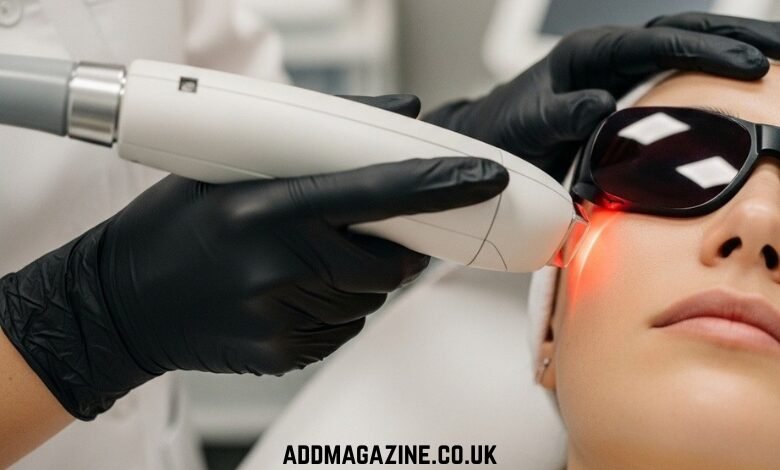
Moxi Laser London is a non-ablative fractional laser treatment used at Amer Clinic in Kensington to refresh skin tone, soften early signs of ageing, and address pigmentation and sun damage. Sessions typically take around 40 to 45 minutes when combined with complementary modalities, results begin to emerge within days, and downtime is mild to moderate. The number of sessions, intensity, and pairing with other treatments are guided by a clinical assessment rather than a fixed protocol.
For patients who want to maintain the quality of their skin without committing to ablative resurfacing, Moxi Laser in London at Amer Clinic offers a measured, evidence-based option. The technology has earned a place in modern aesthetic protocols because it addresses the early architectural changes in the skin that, left untreated, become more difficult to correct later.
Understanding How Moxi Laser Works
Moxi delivers fractionated 1927nm laser energy into the upper layers of the skin. Rather than treating the entire surface uniformly, the laser creates microscopic columns of controlled thermal injury and leaves the surrounding tissue intact. The skin then activates its natural repair process, replacing affected cells with newer, healthier ones and producing fresh collagen along the way.
Because the treatment is non-ablative, the surface of the skin is not removed. Patients leave the clinic with skin that feels warm and looks slightly flushed, similar to mild sun exposure, rather than open or weeping. Within several days, a fine sandpaper-like texture may appear as the treated cells slough away, revealing brighter skin beneath.
What Moxi Laser London Treats
Moxi is best understood as a maintenance and early-correction tool rather than a single-stage transformation. It performs particularly well on the kinds of concerns that often present in patients in their late twenties through their fifties, before more involved interventions become necessary.
Common applications include:
- Dull skin and uneven tone
- Early sun damage and surface pigmentation
- Fine lines around the eyes and mouth
- Mild textural irregularity
- Loss of luminosity following pregnancy, illness, or extended UV exposure
- Pre-event skin preparation
The face is the most frequently treated region, although the technology can be considered for adjacent areas where appropriate, with suitability confirmed during assessment.
Why Patients Choose Moxi Laser London at Amer Clinic
The decision to invest in laser rejuvenation should be guided by clinical judgement, not marketing. Skin behaves differently across Fitzpatrick types, hormonal contexts, and product histories, and these variables determine how energy is calibrated.
Treatments at Amer Clinic in Kensington are delivered by an experienced practitioner team, with protocols developed under the clinical leadership of Consultant Plastic Surgeon Dr Priyanka Chadha. Each session begins with a structured skin assessment to identify the appropriate settings and to flag any factors, such as recent sun exposure or active inflammation, that would warrant rescheduling.
This emphasis on careful sequencing reflects the clinic’s broader approach. Outcomes are framed in terms of skin quality and longevity rather than aggressive correction, in keeping with the principles of restraint and individualisation that define the practice.
What to Expect During Treatment
A typical Moxi Laser London session at Amer Clinic moves through several defined stages.
Consultation and Assessment
Skin type, concerns, recent product use, and history of UV exposure are reviewed in detail. Treatment depth and energy are calibrated to the individual.
Preparation
The skin is cleansed and a topical anaesthetic is applied for around 20 to 30 minutes to reduce surface sensation. Eye protection is fitted before laser delivery begins.
The Treatment Itself
The handpiece is passed across the treatment area in a methodical pattern. The active treatment portion is brief, with the full appointment lasting around 40 to 45 minutes when combined with complementary modalities such as IPL or LED therapy.
Combination Protocols
Where appropriate, Moxi may be paired with complementary treatments. A frequently used combination at Amer Clinic includes Moxi for tone and texture, Lumecca IPL for pigmentation and redness, and LED light therapy to support post-treatment recovery, completed within a single session. The exact sequence is determined during assessment.
Aftercare
Patients leave with mineral SPF and clear written guidance. Strict daily SPF, gentle cleansing, and avoidance of active ingredients such as retinoids and acids for several days are essential to protect the healing skin. Patients are also guided on results-driven supportive skincare, including the SkinCeuticals range used at the clinic.
Recovery and Results Timeline
Recovery is typically described as social downtime rather than functional downtime. Most patients return to work the following day, with redness easing over 24 to 48 hours and the sandpaper texture resolving within several days. Initial brightness is often visible within a week, with continued improvement in tone, texture, and pigmentation developing over the following weeks as new collagen forms. Improvement generally continues to refine for around twelve weeks following each session.
A series of sessions is often advised for the most balanced outcome, with the exact number tailored to your skin and goals during consultation. Maintenance is then guided by lifestyle and skin behaviour over the following year.
Is Moxi Laser London Right for You
Candidacy is best established through assessment, but in broad terms Moxi suits patients seeking incremental improvement in skin quality with minimal disruption to their routine. It is not a substitute for ablative resurfacing in patients with deep textural change, nor is it a primary treatment for significant volume loss, where alternatives are more appropriate.
It is generally not recommended during pregnancy or breastfeeding, in patients with active skin infection, or in those who have recently sunbathed or used self-tan in the treated area. Patients on isotretinoin within the previous six months will usually be advised to wait. These factors are reviewed at consultation.
Frequently Asked Questions
How long does a Moxi Laser session take in London
Including numbing, an appointment usually takes around 60 minutes from arrival to departure. The active laser portion is brief, with the overall session lasting approximately 40 to 45 minutes when combined with complementary modalities.
Is Moxi Laser suitable for darker skin tones
Moxi was designed with a broader range of Fitzpatrick types in mind than many traditional resurfacing lasers. Suitability is confirmed during consultation, where the practitioner assesses skin type and any history of post-inflammatory pigmentation.
How does Moxi differ from ablative laser resurfacing
Ablative resurfacing removes the surface layer of the skin and involves longer recovery. Moxi works fractionally and non-ablatively, offering meaningful textural and tonal improvement with significantly less downtime, which is why it is often selected for ongoing maintenance.
Can I combine Moxi with other treatments
Yes, and many patients do. Combinations with IPL and LED light therapy are common at Amer Clinic. The order, spacing, and intensity of each modality are planned by the treating clinician.
Planning Your Consultation
A short conversation with the clinical team will establish whether Moxi is the most appropriate next step or whether another protocol would serve you better. Expect a careful skin analysis, a discussion of your goals over the next twelve months rather than a single treatment, and a written plan you can take away. To learn more about the technology, recovery, and pricing, visit Moxi Laser at Amer Clinic in Kensington.
Medical Disclaimer
The information in this article is for educational and informational purposes only and does not constitute medical advice. It is not a substitute for a personalised consultation with a qualified medical practitioner. Treatment suitability, expected outcomes, and risks vary between individuals and can only be properly assessed in a clinic. Any decision to proceed with treatment should follow a face-to-face consultation and clinical assessment.